

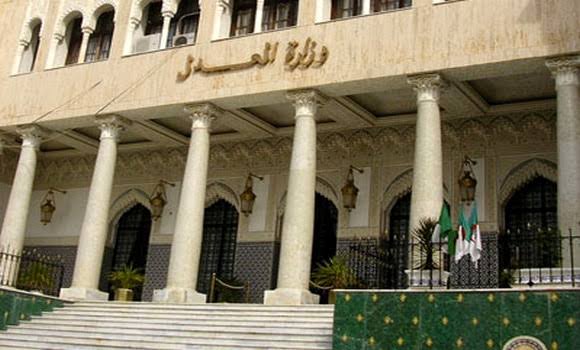
Expanding the network of specialized commercial tribunals brings the alignment of their operations and procedural application back to the forefront to enhance efficiency. Within this outlook and following observations of complications emerging throughout the initial three operational years of early setups, a study workshop was organized Thursday by the Legal and Judicial Research Center at the Superior School of Judiciary in Kolea, located in Tipasa province.
This gathering, held under the oversight of Minister of Justice and Keeper of the Seals Lotfi Boudjemaa, follows the establishment of thirteen new specialized jurisdictions last September, complementing the initial twelve facilities. Accumulated field feedback across this period highlighted “practical complexities and hurdles” encountered by commercial justice practitioners.
Under these circumstances, the Legal and Judicial Research Center aims to provide “a scientific platform for exchanging perspectives and insights among judges, scholars, and practitioners.” This approach works notably toward “standardizing judicial interpretations and rulings,” “reinforcing best practices,” and “elevating judicial performance standards within specialized commercial justice,” stated the justice ministry.
The proceedings gathered two hundred in-person participants, including presidents and magistrates from commercial divisions of appellate courts, directors of specialized commercial tribunals, heads of commercial sections, Supreme Court justices, attorneys, and academics. One hundred additional judges attended remotely.
The opening session focused on the positioning of commercial justice between standard tribunal commercial divisions and specialized jurisdictions. The primary presentation addressed “functional synergies between commercial divisions and specialized commercial courts,” analyzing the division of responsibilities concerning commercial dispute resolution.
This matter holds paramount importance within system operations, specifically in defining respective mandates for these courts and providing improved case management. Clarifying this distribution serves as a foundation for consistent rule application regarding jurisdiction and more streamlined handling of litigation.
Disputes Involving Significant Economic Stakes
The remaining segment addressed during this session involved “procedural specificities before specialized commercial courts, spanning conciliation requirements and litigation settlement.” Discussions thus focused on coordinating amicable settlement attempts with formal judicial decisions. Mandatory preliminary conciliation represents a distinct feature of this procedure. Legislation prescribes appointing a judge mandated to lead this step within five days, while its timeframe cannot exceed three months. Should efforts fail, the plaintiff can launch formal litigation by attaching the non-conciliation report.
The secondary session was dedicated to specialized commercial litigation across three sectors, namely disputes tied to commercial enterprises, banking contentions, and international trade matters. These spheres directly impact relationships between economic operators, financial transactions, and commercial exchanges. Such cases present distinct traits requiring detailed understanding of commercial mechanisms, contractual arrangements, and financial operations. Assigning specialized jurisdictions serves to tailor judicial handling to the nature of disputes and requirements of business activities.
Their jurisdiction extends to judicial reorganization and insolvency proceedings, maritime litigation, air transport, commercial insurance, and intellectual property. Their structure, combining one judge alongside four assessors possessing expertise in commercial affairs holding deliberative votes, reflects this intent to embed specialized knowledge into case examinations.
The participation of delegates from the Algerian Economic Renewal Council, the National Union of Public Entrepreneurs, the Algerian Chamber of Commerce and Industry, and the National Institute of Industrial Property enabled integrating economic players into discussions surrounding these courts’ operations.
It is worth noting that expanding the network to twenty-five jurisdictions, mandated under executive decree number 26-133 of last March 30, encompassed thirteen provinces, namely Adrar, Chlef, Batna, Bejaia, Tebessa, Tiaret, Saida, Guelma, El Bayadh, Illizi, Boumerdes, El Oued, and Ghardaia.
Following this territorial expansion, focus shifts toward harmonizing court operations and consolidating practices. A step carrying exceptional weight for strengthening legal security for economic stakeholders, expediting dispute resolution, and contributing toward improving the business environment.