

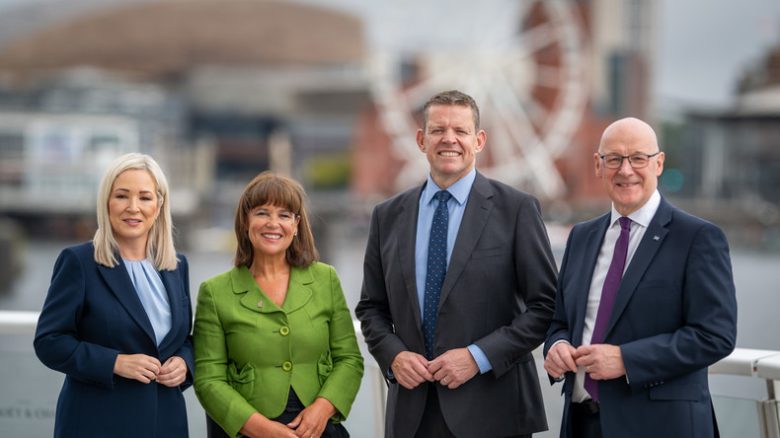
The Cardiff summit marks a pivotal turning point regarding the future architecture of the United Kingdom. Nationalist factions currently leading all three regions seek to safeguard their right to sovereignty, demanding structural constitution revisions that London has routinely suppressed amid escalating unionist friction. Leaders from Scotland, Wales, and Northern Ireland endorsed a unified accord on Tuesday in Cardiff focused entirely on democratic self-governance. John Swinney, Rhun ap Iorwerth, and Michelle O’Neill convened alongside Mary Lou McDonald, president of Sinn Fein. This text was signed strictly through their political organizations—the Scottish National Party, Plaid Cymru, and Sinn Fein—rather than as an official intergovernmental treaty. That nuance carries heavy weight inside Northern Ireland, where power-sharing mandates co-governance between Michelle O’Neill and unionist deputy leader Emma Little-Pengelly. Still, this gathering highlights deep constitutional fault lines dividing the United Kingdom today. For the first time since devolution began, all three territories feature regional leaders belonging to parties rejecting the current constitutional framework, actively championing either total independence or Irish reunification. The accord urges London to “prepare, arrange, and accommodate constitutional transitions” enabling every nation to shape its own destiny. It further outlines deeper collaboration across economic policy, green energy, and foreign affairs. The framework also reasserts a clear European focus: positioning Scotland and Wales as future European Union member states, while placing Northern Ireland within a unified Irish Republic context.
Scotland and Northern Ireland leading the push
In Scotland, the defining milestone occurred back in 2014. During that independence vote, 55 percent selected to remain inside the United Kingdom. The SNP has persistently sought a fresh referendum, arguing Brexit fundamentally altered the nation’s political landscape. Back in 2016, a clear majority of Scots overwhelmingly rejected leaving the European Union. John Swinney described the Cardiff meeting as a “defining milestone” and insists Scottish voters deserve full authority over their constitutional destiny. In Northern Ireland, a formal statutory path already exists. The 1998 Good Friday Accord permits a border poll concerning Irish reunification whenever public consensus appears likely to back that change. However, triggering that ballot remains the sole discretion of the British Northern Ireland Secretary. Sinn Fein is demanding London immediately begin planning for such a vote, as unification rhetoric takes center stage across contemporary political debate.
Wales moves forward gradually
In Wales, the political timeline moves slower. Rhun ap Iorwerth specified no definitive target date for a referendum, while Plaid Cymru explicitly ruled out any ballot before the 2030 Welsh elections. Presently, the Welsh administration focuses primarily on securing expanded legislative powers for Cardiff alongside greater control over local natural resources. The Welsh leader maintains his strategy isn’t meant to merely “dismantle the United Kingdom,” but to grant Wales full authority to drive its economic evolution and sovereign future. Although these three movements pursue distinct strategies, their joint effort exposes growing resistance toward Westminster’s centralized authority. They contend London should never hold exclusive veto power over their nations’ constitutional paths. The joint declaration stresses that “no Westminster administration holds the authority to obstruct democracy” and that every nation retains the inherent right to determine its trajectory “on its own terms and schedule.” Meanwhile, the British government continues defending the Union, firmly refusing to grant additional independence referendums.