

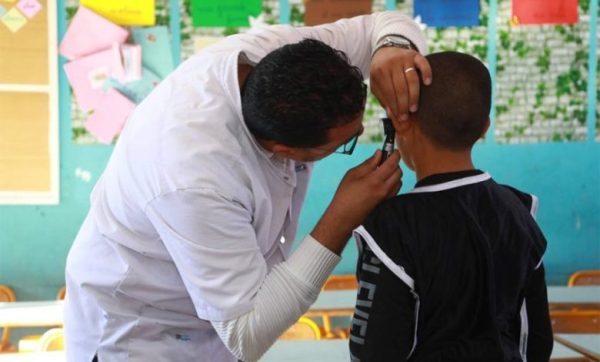
The Ministry of Health announced, Monday, the expansion of the school health framework for the 2026/2027 academic year, with a sharp focus on prevention, screening, medical monitoring, and sanitary vigilance, to guarantee a safe and healthy return. This was outlined, Monday, in an official ministry press release.
The Ministry of Health expressed its commitment to supporting students and the entire educational community, emphasizing that this milestone was preceded by “early and coordinated” preparation conducted alongside the national education sector, as well as various involved sectors and bodies.
It was also noted that this strategy relies on three main pillars: prevention, sanitary vigilance, and rapid intervention at school health facilities. This coordination aims to deliver tailored care for students’ health needs right from the start of the academic year, while maintaining consistent monitoring within schools. The ministry intends to prioritize foresight and early detection to enable swift action whenever situations demand.
Furthermore, the Health Department highlighted the “special importance” placed on strengthening school health initiatives. These focus specifically on student screening, medical follow-ups, infectious disease prevention, and the promotion of healthy habits.
The release clarified that screening serves as a primary tool to identify early on specific conditions requiring special care. When necessary, it helps direct students to appropriate healthcare facilities for suitable management. Medical follow-ups follow this exact logic, ensuring continuous health support to better address student needs throughout their educational journey. This approach proves particularly crucial during childhood and adolescence, a stage when certain challenges require early detection and guidance.
Preventing infectious diseases also ranks among the stated priorities. In school environments where students gather in large numbers, raising awareness and promoting health-conscious behaviors form essential protective measures. “The sanitary framework also rests on heightened vigilance and early intervention capabilities should a health event arise requiring attention in a school setting, within a preventive and responsible framework,” the same source specified.
Sanitary monitoring thus complements preventive efforts. It tracks evolving conditions that might affect students and facilitates an appropriate response when needed. This early intervention capacity should also help mitigate the impact of potential health issues in educational settings, where coordination between health services and the education sector plays a decisive role.
Additionally, the ministry announced its continued mobilization throughout the 2026/2027 school year. This ongoing effort will sustain preventive actions, screenings, and medical care, while maintaining suitable sanitary oversight across institutions. The health sector also intends to pursue its work in close collaboration with relevant partners. This cooperation primarily aims to streamline reporting for cases requiring special attention, allowing quick referral to suitable medical facilities when necessary. For the ministry, school health extends beyond treating medical issues as they arise.
It encompasses a major preventive component designed to educate students, encourage healthy choices, and help protect them within their learning environment. It further asserted that school health stands as “a vital pillar of health prevention and promotion,” reassuring that this mission helps “safeguard students and provide them with a school environment conducive to their development, well-being, and academic success.”
In conclusion, the ministry underscored that “a successful school reopening is above all a prepared, protected, and supported reopening.” This direction places student health at the center of conditions needed for a peaceful academic year, making prevention an indispensable element of their well-being and success.