

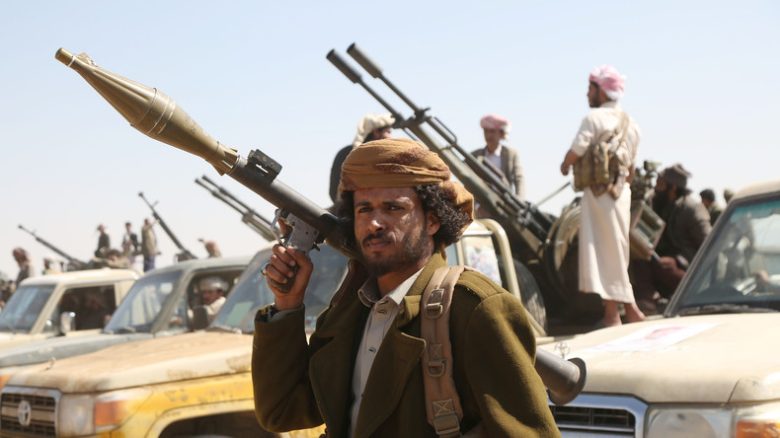
Houthis captured Mokha and now push toward Dhubab, Hanish islands, and Bab el-Mandeb. Despite dozens of Saudi strikes, government forces retreated along the western coastline. This advance threatens a shipping route made even more vital by Hormuz Strait disruptions. Houthis achieved on Thursday, September 10, one of their significant territorial gains in several years by seizing Mokha, a strategic port on Yemen’s western coast. Government forces supported by Saudi Arabia had to retreat southwards, while rebels currently maintain their progression heading toward Bab el-Mandeb and the Hanish islands. Mokha’s fall represents a severe setback for Yemen’s government. The town served as a primary foothold for forces commanding the Red Sea shore. The next stronghold is now Dhubab, located directly on the strait, facing the strategic island of Perim. Control over these positions would yield Houthis enhanced capabilities for surveillance and leverage across Bab el-Mandeb, a transit point for roughly 7% of global oil supply. Saudi Arabia in difficulty This advance occurs despite a heavy resumption of Saudi intervention. Following Houthi attacks against the kingdom’s south and multiple energy facilities, Riyadh escalated its raids in Yemen. A Houthi military spokesman reported Wednesday 54 Saudi strikes within twelve hours across several provinces. These bombardments nevertheless failed to halt rebel progression along the maritime front. For Riyadh, stakes now transcend Yemen. With oil traffic already heavily disrupted at Hormuz, a concurrent threat against Bab el-Mandeb would likewise endanger the Red Sea route utilized to bypass the Gulf. Mokha’s capture consequently alters power dynamics: despite aerial superiority, Saudi Arabia and its Yemeni allies currently struggle to stop the Houthi ground offensive. Escalation is equally aerial. Houthi military spokesman Yahya Saree claims Saudi Arabia conducted 54 strikes in merely twelve hours against six provinces, including al-Jawf, Marib, Taiz, Hodeidah, and Saada. Houthis pledge to retaliate. Simultaneously, they claim strikes targeting Aramco installations and several southern Saudi cities, notably Abha, Jizan, Najran, and Khamis Mushait. Riyadh previously reported 73 wounded during recent strikes. On the ground, government forces maintain they are advancing in al-Jawf, where they claim to have severed several Houthi supply lines. Reinforcements are also dispatched toward the western coast. Primary stakes center now on Bab el-Mandeb: Houthis advance toward several strategic positions around al-Makha and Dhubab, threatening to expand their authority over this crucial passage for oil exports and global commerce. This widespread revival of fighting stands as the most severe since the 2022 truce. According to WHO, over 1,000 individuals have already been killed or wounded and tens of thousands displaced. The danger currently involves returning to open warfare, carrying an increasingly pronounced regional dimension.
Houthis captured Mokha and now push toward Dhubab, Hanish islands, and Bab el-Mandeb. Despite dozens of Saudi strikes, government forces retreated along the western coastline. This advance threatens a shipping route made even more vital by Hormuz Strait disruptions. Houthis achieved on Thursday, September 10, one of their significant territorial gains in several years by seizing Mokha, a strategic port on Yemen’s western coast. Government forces supported by Saudi Arabia had to retreat southwards, while rebels currently maintain their progression heading toward Bab el-Mandeb and the Hanish islands. Mokha’s fall represents a severe setback for Yemen’s government. The town served as a primary foothold for forces commanding the Red Sea shore. The next stronghold is now Dhubab, located directly on the strait, facing the strategic island of Perim. Control over these positions would yield Houthis enhanced capabilities for surveillance and leverage across Bab el-Mandeb, a transit point for roughly 7% of global oil supply. Saudi Arabia in difficulty This advance occurs despite a heavy resumption of Saudi intervention. Following Houthi attacks against the kingdom’s south and multiple energy facilities, Riyadh escalated its raids in Yemen. A Houthi military spokesman reported Wednesday 54 Saudi strikes within twelve hours across several provinces. These bombardments nevertheless failed to halt rebel progression along the maritime front. For Riyadh, stakes now transcend Yemen. With oil traffic already heavily disrupted at Hormuz, a concurrent threat against Bab el-Mandeb would likewise endanger the Red Sea route utilized to bypass the Gulf. Mokha’s capture consequently alters power dynamics: despite aerial superiority, Saudi Arabia and its Yemeni allies currently struggle to stop the Houthi ground offensive. Escalation is equally aerial. Houthi military spokesman Yahya Saree claims Saudi Arabia conducted 54 strikes in merely twelve hours against six provinces, including al-Jawf, Marib, Taiz, Hodeidah, and Saada. Houthis pledge to retaliate. Simultaneously, they claim strikes targeting Aramco installations and several southern Saudi cities, notably Abha, Jizan, Najran, and Khamis Mushait. Riyadh previously reported 73 wounded during recent strikes. On the ground, government forces maintain they are advancing in al-Jawf, where they claim to have severed several Houthi supply lines. Reinforcements are also dispatched toward the western coast. Primary stakes center now on Bab el-Mandeb: Houthis advance toward several strategic positions around al-Makha and Dhubab, threatening to expand their authority over this crucial passage for oil exports and global commerce. This widespread revival of fighting stands as the most severe since the 2022 truce. According to WHO, over 1,000 individuals have already been killed or wounded and tens of thousands displaced. The danger currently involves returning to open warfare, carrying an increasingly pronounced regional dimension.