

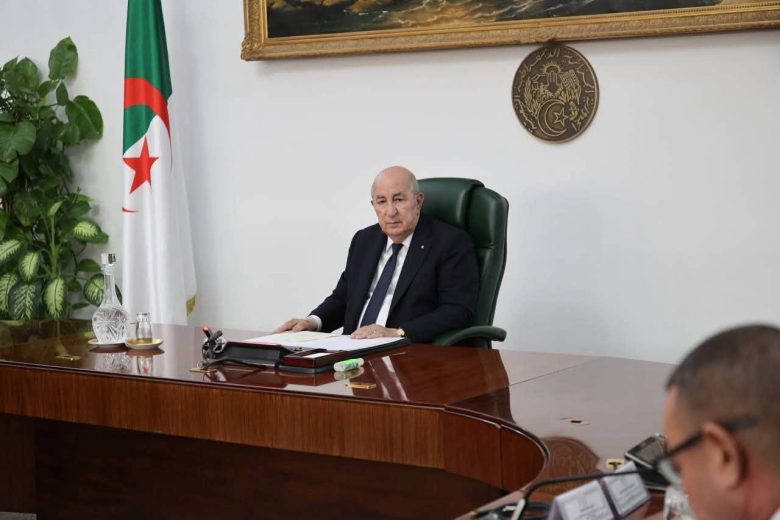
Confronted with the tragedy of recent wildfires that devastated the central and eastern regions of the country, Algeria prepares to execute a historic punitive shift. The Head of State decided to break the moratorium active since 1993 by ordering, Saturday, the strict application of the death penalty against arsonists, marking a clear departure from the nation’s recent diplomatic stance.
Meeting at Presidential headquarters alongside senior civilian and military figures, Abdelmadjid Tebboune imposed a September 15 deadline for the Minister of Justice to amend the Criminal Code. The objective centers on reinstating the effective execution of capital punishment for individuals convicted of intentional arson, once all legal appeals are exhausted. This legislation will be submitted to the Government this week before being presented to the National People’s Assembly.
Until now, Algerian law already reserved the supreme penalty for a range of major crimes, including treason, espionage, aggravated murder, castration resulting in death, acts of torture or cruelty, kidnapping, aggravated robbery, counterfeiting, perjury leading to a death sentence, and specific military offenses, along with their attempts.
The Criminal Code likewise punishes with the death penalty any participation in armed gangs or insurrectional movements, alongside acts of terrorism involving attempts to alter the regime, incitement to hatred, destruction of national territory, massacres, and sabotage of public utilities.
However, regarding criminal arson, destruction of military assets, or explosive attacks, capital punishment was previously incurred only if the act caused a fatality. The new measure intends to eliminate this prerequisite, making deliberate arson punishable by execution regardless of the severity of human consequences.
This firm stance marks a major inflection point. Algeria has carried out no executions since 1993 and even sponsored, in late 2020, a UN resolution supporting a universal moratorium. Nevertheless, facing simultaneous and suspicious fire outbreaks during the night, the Head of State warned that the justice system would show no mercy toward suspects already in custody.
Parallel to the punitive track, an emergency plan is being deployed to revitalize disaster-stricken areas. The administration commits to fully compensating all victims, while the restoration of vital water, electricity, gas, and telecommunication networks must conclude by Saturday. Immediate rehousing of affected residents and updated building codes in forested zones round out this crisis strategy.