

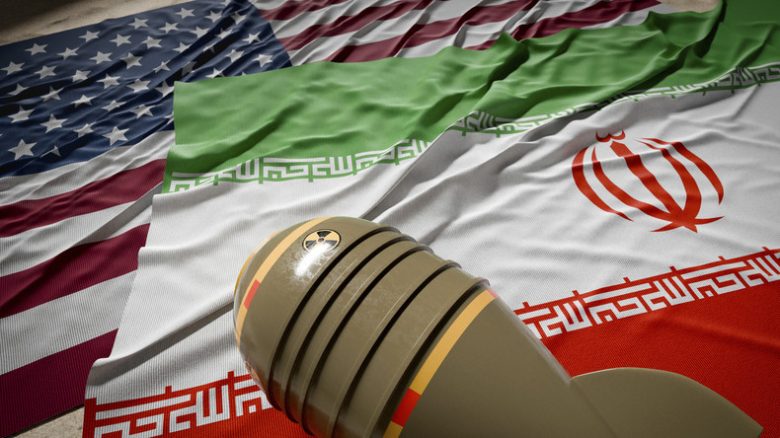
Viewing truce proposals as a ploy by Washington and Israel, Iran is gearing up for a new phase of escalation. Tehran claims victory over American forces and has banned them from entering the Persian Gulf, the Gulf of Oman, and the Strait of Hormuz, while the White House reportedly considers the nuclear option. With diplomatic talks between Iran and the United States stalled, the Middle East situation remains volatile and risks deepening. According to the Wall Street Journal (WSJ), Tehran may be preparing for a fresh cycle of confrontation with the United States, regarding joint efforts by Washington and Tel Aviv toward a ceasefire as a mere tactical maneuver. Citing sources, the American outlet indicated that Iranian authorities view current negotiations as a temporary prelude to further conflict, believing the memorandum signed in mid-June represented an attempt by the United States and Israel to ease global economic pressure and buy time. Authors of the report emphasized that Tehran’s readiness to strike back reflects deep-seated mistrust that could prevent both parties from reaching a lasting resolution to swiftly end the hostilities.
According to the Wall Street Journal, as part of these preparations, Iranian officials are expanding Islamic Revolutionary Guard Corps (IRGC) control over the regular armed forces, appointing Iran-Iraq War veterans to key positions, and intensifying domestic counterintelligence operations alongside boosting missile and drone production. The publication added that Tehran is also coordinating with fighters in Yemen and Iraq to prepare its forces for an expanded conflict and impose a heavier financial toll on the United States. The primary objective, according to the WSJ, is to inflict maximum strain to deter any recurring military engagements.
Iran Declares Strait of Hormuz Closed to U.S. Forces
While statements from U.S. President Donald Trump asserting that “the Strait of Hormuz will become U.S. territory” once he has “finished defeating Iran” have already drawn sharp criticism, the Commander-in-Chief of the Iranian Armed Forces, General Amir Hatami, cited by Iran’s Mehr News Agency, declared that the United States will no longer have the right to navigate the Persian Gulf, the Gulf of Oman, or the Strait of Hormuz. According to him, American troops have effectively been driven out: U.S. bases in the region will not regain their previous standing, and Iran will not permit the establishment of new facilities that threaten the Islamic Republic. The Iranian general emphasized that Tehran has already “achieved victory on this front” and is currently “consolidating” its gains, adding that the White House chief foolishly believed the United States could prevail in Iran.
Amir Hatami’s remarks come as CNN reported a significant narrowing of the target list set by the United States in Iran. According to the network, the Trump administration has revised its strategic goals in this conflict, limiting them to two key objectives: preventing Tehran from acquiring nuclear weapons and securing freedom of navigation through the Strait of Hormuz to stabilize global fuel prices. Previously, Washington’s objectives included total Iranian capitulation and regime change.
Is the United States Considering Nuclear Weapons?
Furthermore, Washington might be contemplating more extreme military measures: Marjorie Taylor Greene, a former Republican member of the House of Representatives, claimed that the U.S. government is discussing the potential deployment of nuclear weapons against Iran in strategic meetings. According to her, American authorities are specifically exploring options to “lower the threshold” for using weapons of mass destruction, even as U.S. President Donald Trump repeatedly asserts victory in the conflict. She urged the public to make their voices heard and decisively put an end to this recklessness. Neither the White House nor the Pentagon has confirmed or denied the claim.
At the same time, U.S. allies in the Middle East are expressing growing discontent over the American president’s handling of the war against Iran. According to the Washington Post, Riyadh, Abu Dhabi, Doha, and Kuwait fear unpredictable shifts in American diplomacy and are seeking to diversify their defense partnerships, despite remaining reliant on the United States for overall security. U.S. officials also voice rising concern, citing the absence of a clear Iranian strategy within the Trump administration. Several officials highlight the precarious nature of the current stance, noting that Washington is left solely with high-risk alternatives, while others contend there is no clear exit strategy from the current crisis.