

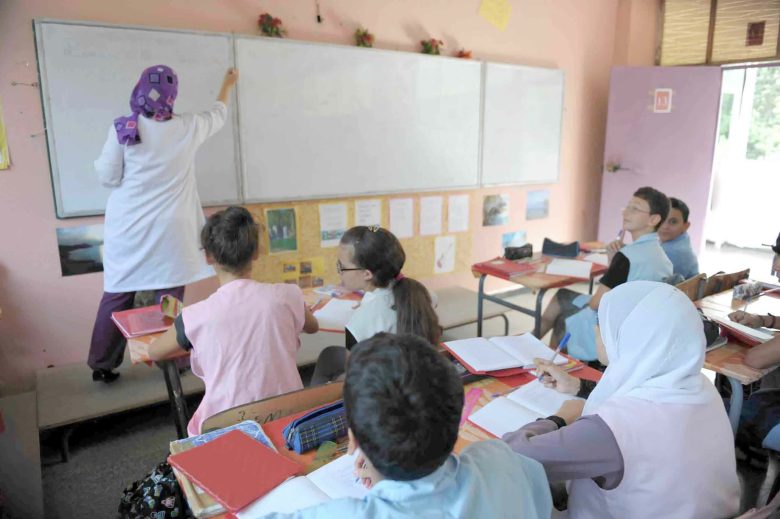
Regional education departments across the country have launched the process of summoning successful candidates from the national teacher recruitment examination for the 2025 academic year. Qualifying applicants are required to submit their administrative files to personnel services before Thursday, August 20, 2026, to finalize their appointments.
This procedure represents a significant advancement in onboarding successful applicants from the 2025 testing session. Successful candidates must report to their corresponding education directorates to complete administrative requirements and submit their paperwork within the designated timeframe.
The employment dossier must be supplied in triplicate. It notably consists of a formal handwritten application detailing the candidate’s phone number and email address, a copy of the national identity card, a birth certificate, proof of residency, a family civil status document, the required academic degree, university transcripts, and a passport photograph.
Applicants are further required to provide a copy of their social security card or a certificate of non-affiliation, alongside documentation verifying their military service status where applicable. Medical certificates covering general medicine and pulmonology are also mandatory.
For civil servants currently employed within the education sector, the file must contain a formal resignation request authenticated by municipal authorities. Public employees hailing from other government sectors must present an approved resignation agreement. These specific records will be submitted once position assignments are selected.
Concurrently with this administrative effort, the Ministry of National Education has approved a specialized training curriculum tailored for newly appointed Class 1 teachers successful in the 2025 external national recruitment drive.
This instruction, scheduled to span nine months, will alternate between theoretical coursework and practical field training. It aims to equip incoming educators with the essential pedagogical skills needed for classroom management, student mentorship, and professional duties.
The framework establishes a standardized training core across all three educational tiers: primary, middle, and secondary schools. Credit hours, module counts, and subject weightings have been formalized in detailed charts crafted by the ministry.
The initial phase will focus on theoretical instruction, comprising 255 total hours spread over seven months. Prospective educators will complete courses in educational sciences and psychology, totaling 60 hours with a weighting factor of 3. Subject-specific pedagogy and instructional methodologies account for 70 hours, also carrying a weighting factor of 3.
The curriculum includes a dedicated module on educational assessment spanning 35 hours, as well as instruction in pedagogical methods set for 30 hours.
Additionally, instruction covers school legislation for 20 hours, information technology for 30 hours, and a dedicated module addressing transparency and anti-corruption measures totaling 10 hours.
This final element seeks to deepen familiarity with legal and administrative standards, prevent procedural oversights in professional duties, and foster principles of integrity and accountability throughout academic institutions.
Following the theoretical phase, incoming teachers will undergo 145 hours of specialized practical training divided across four units. This second stage will be carried out over two months.
Through this comprehensive framework, the ministry intends to ensure a structured preparation for new educators prior to their full classroom assignments. The objective focuses on elevating their professional and pedagogical capabilities to meet the demands of the teaching profession.
The overall training pathway will thus run for nine months, merging theoretical knowledge with practical application to support newly hired staff as they enter the national education system.