

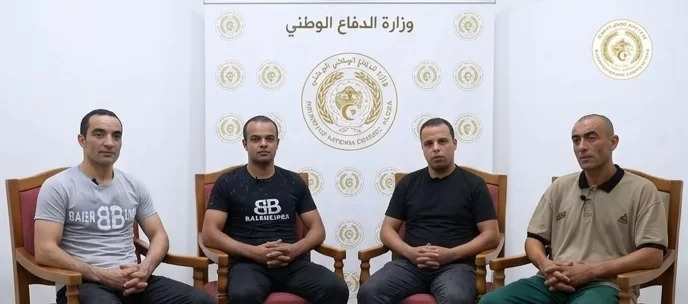
Once again, the subversive scheme of the MAK terrorist organization failed miserably during the legislative elections held last July. The disclosures of six members belonging to a criminal ring linked to the MAK unveiled details of this destabilization plan originating from the province of Tizi Ouzou, aimed at undermining national unity and stability, seeking to disrupt the elections, and above all, attempting to prevent citizens from voting and fulfilling their civic duty.
In the documentary broadcast by national media outlets and platforms of the official news agency, the confessions of this group leave no doubt regarding the role of this terrorist organization, established in the service of a Makhzen-Zionist agenda. This documentary gathered the confessions of six active individuals in Kabylie belonging to this terrorist movement, four of whom hold Moroccan nationality and were residing illegally in Algeria.
This group utilized social media platforms to organize meetings and encounters during which they called for a boycott of the parliamentary elections and aimed to create an unstable environment.
It was owing to the vigilance of the Central Directorate of Army Security (DCSA) services that these attempts were thwarted, defeating the entire MAK scheme.
According to Hakim Hamama, a native of the Tizi Ouzou province, it was via various social media applications that he was placed in contact with members of the organization established in Canada and France, such as Boualem Afer, Zouhir Abdelli (known as Las At Moussa), and Hassane At Omar Ouali, for the purpose of inciting an election boycott in Kabylie.
Hakim Hamama indicated having been active within private groups on the WhatsApp application using a foreign number. He also participated in virtual meetings with Aksel Bellabbaci, Djamel Gouiri, and Azouaou At Kaci, based abroad, to promote hostile discourse against the state in service of the organization’s separatist agenda.
He specified receiving directives from members of the terrorist movement, notably Ferhat Mehenni, explicitly calling to “boycott and prevent the execution of this national event in Kabylie,” thereby confirming reports regarding instructions issued by the MAK to orchestrate this destabilization plot.
Fatah Karim, who resided in Morocco, stated that the MAK plan was not limited to undermining national unity, but “extended to exploiting Moroccan migrants illegally residing in Algeria to deliver sums of money to movement elements from Morocco, thus aiding them in carrying out their terrorist activities in complicity with the Zionist Makhzen regime.”
In this regard, the same individual admitted to having joined, during his stay in Morocco, a cell that included Djamel Azaim, Zergag El-Hadi, and Aksel Bellabbaci, all of whom worked “to disseminate subversive and separatist publications harming Algeria’s unity, their movements having been facilitated by the Makhzen for this purpose.”
Regarding the confessions of the involved Moroccans, the documentary highlighted Mohamed El-Hour, who appeared in a photograph taken in Libya holding a firearm. The individual is known to be an undocumented migrant engaging in suspicious activities. He indicated having joined the activities of the MAK terrorist movement by “providing aid and support to its active members in Algeria and Morocco.”
The same defendant, originating from the Kalaat Sraghna region in Marrakech, Morocco, explained that his arrival in Algeria was due to “the hardship he experienced in his home country, plagued by a precarious economic situation marked by declining job opportunities and decent living conditions, in addition to a deplorable humanitarian situation where Moroccan citizens daily witness violations of their rights.”
The other Moroccan accomplices, Hamid Katoua, Mohamed Messaad, and Khaled El-Zahiri, affirmed that their arrival in Algeria was “motivated by the search for better living conditions and escaping a bitter and painful reality in Morocco.”
It should be highlighted that Hakim Hamama and Fatah Karim expressed regret and remorse in their confessions, stating they were “misled by a deceptive and extremist agenda” conveyed by the MAK terrorist movement within the framework of “false and biased propaganda.”
These two individuals warned citizens, particularly youth, “against the risk of being drawn into hostile Makhzen-Zionist policies targeting the unity, security, and stability of Algeria.