

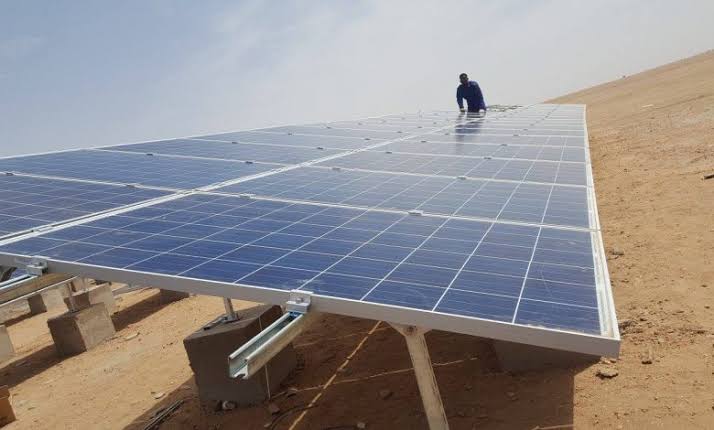
Algeria has marked a significant milestone in energy management and energy efficiency following the creation of a dedicated National Agency tasked with overseeing these files. Its central mission centers on executing the National Energy Management Strategy through 2035 while accelerating the transition toward a leaner, more sustainable energy framework.
Formed through the merger of the National Agency for the Promotion and Rationalization of Energy Use (APRUE) and the Commission for Renewable Energy and Energy Efficiency (CEREFE), both now dissolved, the National Agency for Energy Management and Energy Efficiency (ANMEEE) assumes responsibility for promoting renewable sources and energy conservation. The operational scope, structural setup, and governance rules of the new body were published in Official Gazette issue number 56, which contains Executive Decree No. 26-268 issued on July 23, 2026, establishing the institution.
According to Article 2 of the legal decree, ANMEEE is designated as a public industrial and commercial entity holding legal personality and financial autonomy, operating under the authority of the Minister of Energy with its primary headquarters in Algiers. Alongside its central office, the agency may set up regional branches through ministerial decisions following board approval. The second chapter details the duties assigned to this new body, serving as the primary vehicle for executing national policy regarding the expansion, promotion, and deployment of renewable energy, as well as energy efficiency and resource conservation.
The agency was created as part of an institutional restructuring aimed at optimizing sector governance, broadening the mandate of the energy management authority, and expanding its operational capacity to carry out the National Energy Management Strategy through 2035 and speed up the move toward a cleaner energy model. It will lead the drafting and rollout of national policies concerning renewables and energy efficiency.
Its duties also include formulating, executing, and monitoring the national energy management initiative, promoting renewable adoption and efficiency measures, and designing off-grid energy solutions—particularly solar and green power—for remote regions not connected to the national power grid. Furthermore, it is tasked with providing technical, methodological, and operational support to local municipalities, public bodies, commercial enterprises, and project developers in energy planning and green integration. Technical and economic feasibility studies concerning renewable projects and conservation will also be conducted by the agency, alongside mandatory energy audits across the building and industrial sectors.
Multiple Ministries Represented
The new agency will oversee the creation of energy consumption databases, establish carbon and energy balance sheets, conduct training programs, and evaluate accreditation files for consulting firms and technical audit specialists.
To accomplish these mandates, ANMEEE is authorized to award contracts, sign agreements, establish regional branches or subsidiaries, and build strategic partnerships with domestic and international institutions active in its field.
Regarding governance, the executive decree stipulates that the agency is managed by a board of directors featuring delegates from several ministerial departments, including National Defense, Hydrocarbons, Transport, Finance, Industry, Agriculture, and Housing.
The board may also call upon qualified experts to provide technical counsel, according to the decree.
Pending the formal establishment of the agency’s operational organs, APRUE and CEREFE will continue executing their standard duties, managing payroll and operating expenses, and fulfilling existing contractual and institutional obligations until the new entity is fully installed.