

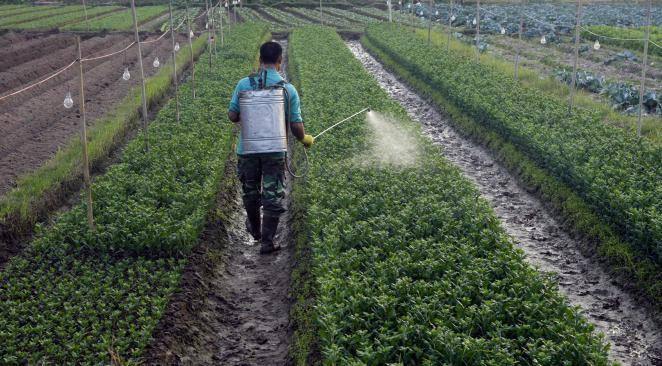
Driven by the race for profits surrounding the first fruits and vegetables harvested at the start of the season, the head of the Consumer Protection and Orientation Organization, Mustapha Zebdi, issued a stern reminder on Thursday to agricultural workers. The issue at stake: the visible presence of chemical residues on produce currently offered for sale.
Through a social media statement published on Thursday, the consumer advocate addressed both the farming community and the general public. Utilizing a photograph of a crop recently delivered to a wholesale hub, the watchdog warned against the violation of safety protocols, a trend frequently fueled by financial greed or a lack of public awareness.
According to the head of the organization, adhering to the pre-harvest interval—the mandatory waiting period required between the final pesticide application and gathering the crop—should no longer be treated as a mere administrative hurdle. “This is a professional and moral obligation that safeguards public health while protecting the standard and credibility of domestic farming in the marketplace,” Mustapha Zebdi emphasized.
Observations on the ground, however, tell a different story. The picture circulated by the agency, sourced straight from a wholesale market, clearly displays white streaks and noticeable deposits on the items and foliage. Whether originating from antifungal operations or other agricultural chemicals, these compounds compromise the safety and nutritional integrity of the food while severely threatening public health, he warned.
Furthermore, Mustapha Zebdi noted that he “fully recognizes” the commercial appeal surrounding early-season harvests, traditionally celebrated as a lucrative milestone. These early goods, he observed, consistently command strong market demand and premium prices.
Nevertheless, the agency firmly insists that commercial success must never come at the cost of public safety. Depending on the specific chemicals utilized, the vital waiting windows necessary for molecular breakdown generally range from one to two weeks. This timeline remains absolute. “A true agricultural professional balances financial gains with public safety, prioritizing crop integrity and consumer trust as their core assets,” he declared.
Ultimately, Mustapha Zebdi called for immediate collective accountability to halt these shortcuts, which are routinely caused by insufficient training or oversight.