

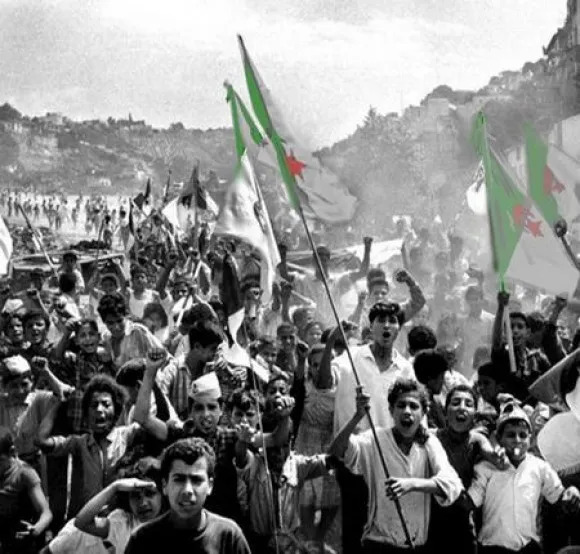
While those nostalgic for “French Algeria” attempt to rewrite history during every commemoration, July 5, 1962, remains the definitive symbol of reclaimed dignity. Standing against 132 years of a fierce colonial system, the generations born after independence now act as guardians of an unassailable heritage: the total refusal to forget.
July 5, 1962, did more than just establish Algerian independence. This historic milestone marked the end of a colonial regime that, for over a century and a third, reduced Algerians to the status of second-class subjects on their own soil. This triumph did not merely return land to its rightful people; it restored their honor, their history, and the unalterable right to remember the long colonial night.
Yet, reviewing certain modern narratives, this independence is framed as though it were stolen or unearned. It is spoken of as if the indigenous Algerians were the actual occupiers of the fertile Mitidja plains or the high plateaux of Constantine—historical breadbaskets that once fueled the opulence of monarchs, princes, and marshals of the Old Empire. With every celebration of July 5 or November 1, viewpoints emerge in France mourning this “lost paradise.” They overlook the reality that this alleged paradise was an absolute hell for the Algerian population.
These mourners, who have built walls of grievances across French media and internet blogs, zealously contributed to the racist subjugation of an entire population. They operated with the blind certainty of projecting the artificial grandeur of a “Christian civilizing mission.” This project, which left a trail of destruction from the Amazon to Vietnam, has been passed down as a legacy to the descendants of those brutal settlers.
The Procession of Plunder
Following the surrender of Dey Hussein, Algeria witnessed an influx of impoverished, desperate, and marginalized individuals fleeing hunger, tyranny, and misfortune across Europe. They arrived to seize, through fire and blood, the lands of a proud and educated people. Their objective was to erase the identity and history of a nation whose existence modern colonial apologists still try to obscure, attempting to justify a heinous crime disguised as a civilizing act.
Many of these European newcomers were outlaws, recruited into the colonial expeditionary forces in exchange for land grants or property stripped from the natives at swordpoint. They spread terror under the command of prejudiced generals whose destructive apparatus crushed Algerians for 132 years—a bloody campaign initiated by figures like Bugeaud and Saint-Arnaud, and concluded by the likes of Salan, Susini, and Lagaillarde. Throughout their occupation, the settlers viewed the native Algerian as mere property.
The Native Code: A system of exceptional justice and cruel laws designed to legitimize an archaic order, stripping Algerians of their most basic civil rights.
Any challenge to this degrading situation was unthinkable to them, so deeply convinced were they of a divine right over the Algerian population. They felt accountable neither for native deaths nor their systemic misery. To them, the local population deserved their subjugated lot, viewing it as a destiny decreed by divine will. The Church, alongside oppressive legislation like the Native Code, worked to legitimize this established hierarchy, which felt pulled straight from the dark ages.
Consequently, demands for equality and justice raised by the populace were universally rejected by colonial France. Anything threatening the status quo and the colonial administration had to be ruthlessly crushed. Massacres, suffocating cave smokeouts, and forced deportations were the sole responses to any sign of resistance. This repressive machine established itself as one of the most brutal in human history.
The napalm bombing of hamlets and villages, summary executions, inhumane torture inflicted on any suspected prisoner, and the collective slaughter of communities based on mere rumors of supporting the freedom fighters—this was the civilizing formula brought to Algerians during the war of liberation.
Today, no Algerian could ever forget this horrific chapter of their history. The generations most deeply impacted by the colonial trauma are no longer just those who endured it physically. Those individuals, by the natural passage of time, are gradually fading away.
Instead, it is the generations born after independence who have uncovered the full extent of the deception, the horror of colonial France, and the vast scale of destruction inflicted upon both the nation and their ancestors. While the settlers passed down a nostalgia for occupation and prejudice against Algerians to their descendants, the liberators of the country instilled in theirs the right to remembrance—a sacred pact to never forget the realities of the long colonial night.