

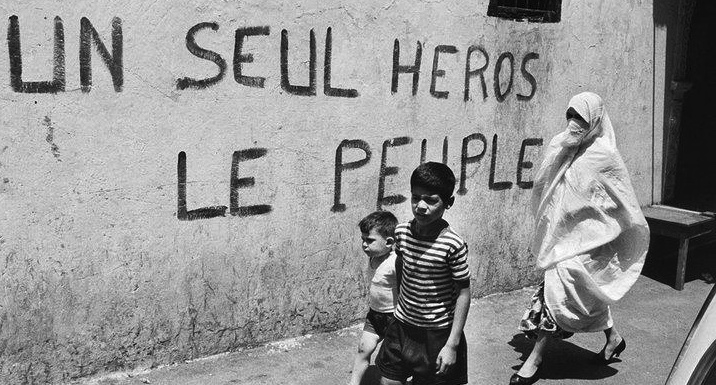
From the unyielding doctrine of Messali Hadj to the historic massacres in Constantine and Kabylia, the narrative of French colonization in Algeria remains a chronicle of profound trauma. Confronted by systemic hostility, wholesale dispossession, and historical division, the Algerian population mounted 132 years of heroic resistance, culminating in the irrepressible celebrations of July 1962.
“France conquered Algeria by arms and not by the spirit, through brutality and not civic virtue, by plunder and not peaceful persuasion.” This memorable declaration by Messali Hadj, an uncompromising champion of independence, resonates as a definitive verdict. It stands as an undeniable historical fact, validated by the relentless atrocities the Algerian people endured to reclaim their sovereignty.
Throughout over a century of foreign occupation, the Algerian population faced systematic degradation. Lands were forcibly confiscated, and the arrogance of the ruling class became codified into state law. Most egregiously, the Native Code of 1881 imposed severe penalties on Muslim Algerians for the slightest perceived offense against Europeans, formalizing a deeply discriminatory legal infrastructure.
Social injustices were compounded by a deliberate political strategy of division. By granting French citizenship to Algerian Jews via the Cremieux Decree in 1870, colonial authorities dealt a massive insult to Algerian Muslims. Yet, this newly naturalized community was hardly embraced by the occupiers; General Bugeaud himself, while feigning appreciation for certain Muslim traditions, harbored deep contempt for the local population. Prompted by the influence of Jewish leadership in mainland France, the Jewish population of Algeria shifted toward the colonial apparatus—severing, involuntarily for some, centuries of peaceful coexistence with their Algerian compatriots.
This artificial partition was deeply felt by the Muslim population. The two communities had coexisted harmoniously for centuries, particularly after 1492, when Algeria warmly welcomed Andalusian Jews who had been ruthlessly expelled by the Spanish Reconquista and denied refuge elsewhere.
The Defilement of Martyrs and Widespread Destitution
The most unpardonable outrage in the eyes of Algerians remains the desecration of fallen freedom fighters, whose bodies were publicly displayed after dying on the battlefield. The most notorious instance involved the courageous Colonel Amirouche. This noble leader, a pivotal figure of Wilaya III, had his remains displayed in a macabre public exhibition after falling in combat, violating all moral and military codes.
The Trauma of Denied Identity: For over a century, the occupying power attempted to uproot the Algerian identity, teaching school children about “Gaulish ancestors” to systematically erase indigenous history.
Broken in body and spirit, the population witnessed a coordinated campaign to steal their heritage. The foundational structures of Algerian social life were deliberately dismantled. Colonization broke down ancestral values of solidarity and mutual aid—specifically the sacred tradition of Touiza. This custom had long enabled traditional communities to live equitably, mobilizing collective resources to eliminate poverty and care for the vulnerable. Under the colonial order, destitution became the standard reality for Algerian Muslims.
By 1939, the celebrated author Albert Camus exposed these wretched conditions in a series of poignant reports titled Misery of Kabylia, detailing the inhumane and intolerable living standards forced upon mountain communities. Algeria had become a tormented land. From the initial invasion of 1830, the local population suffered a devastating demographic collapse that persisted for three decades until 1860. Following the fall of Algiers, every major urban center was conquered through relentless warfare: Blida, Mostaganem, Tenes, Oran, Bejaia, Jijel, and Batna.
The Epic of Resistance: From Constantine to November 1, 1954
One of the bloodiest tragedies of the conquest occurred in Constantine. The colonial army failed in its first attempt and only breached the city gates on its second try after exceptionally violent combat. Upon entering, troops ruthlessly threw the city’s defenders from the cliffs of the Rhummel Gorge, a drop of 140 meters.
Later, in 1871, the massive patriotic uprising led by Cheikh Mokrani in Kabylia was suppressed with extreme brutality, resulting in hundreds of execution victims and sweeping waves of forced deportation. To cement this destruction, the insurgent populations were systematically stripped of their fertile lands and forced to pay a crippling war indemnity equivalent to eight times the standard tax rate. The climax of this state-sponsored violence was reached during the National Liberation War, which claimed the lives of 1.5 million martyrs.
Yet, the Algerian people never ceased resisting foreign invasion since that fateful landing on June 14, 1830. When the armed insurrections of the nineteenth century failed to secure immediate liberation, the struggle transitioned to the political arena. Under the leadership of Messali Hadj, who founded the North African Star and later the Algerian Peoples Party (PPA), total independence became the primary, non-negotiable goal of the nationalist movement. This revolutionary stance was fiercely maintained by the leader despite imprisonment, repeated deportations, and the seizure of his assets. By 1945, Messali Hadj had established the clear blueprints for a permanent break: full independence, the restoration of national sovereignty, and the election of a constituent assembly. This historical position served as the ideological spark that ignited the armed uprising of November 1, 1954.
Ultimately, it was not until July 5, 1962, that Algeria truly attained its freedom. An overwhelming, indescribable euphoria swept across the entire territory. The celebrations continued day and night for weeks throughout the country. It stood as the definitive answer from a proud nation to 132 years of an occupation that had tried, and utterly failed, to break, outrage, and subdue them.