

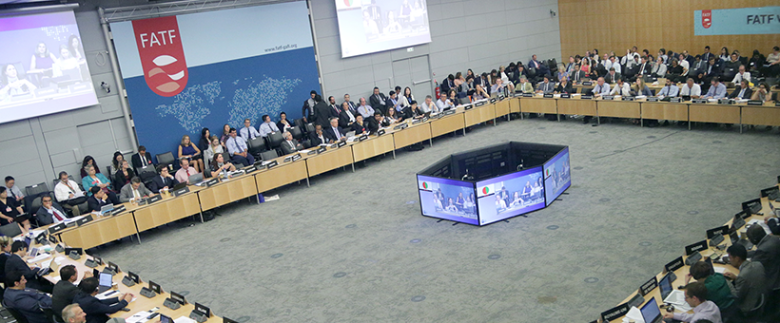
This marks a historic achievement for Algerian financial diplomacy. Meeting in a plenary session on Friday, June 19, 2026, in Paris, members of the Financial Action Task Force (FATF) voted unanimously to remove Algeria from its list of jurisdictions under increased monitoring. This major ruling validates the deep-rooted structural transformations spearheaded by Algiers, which are anchored in the most demanding international standards of economic transparency and financial integrity.
Algeria has been officially and unanimously removed from the “gray list,” which monitors nations undergoing enhanced scrutiny regarding anti-money laundering, countering the financing of terrorism, and combating the proliferation of weapons of mass destruction (AML/CFT/CPF).
The significance of the development was reflected in the high rank of the Algerian delegation present in Paris, led jointly by the Minister of Finance and the Governor of the Bank of Algeria. This high-level deployment illustrates the strategic importance that the national executive places on this dossier. Praised by international delegations, this exit from the gray list crowns the efficiency of the systemic overhauls enacted by Algeria and confirms its full alignment with global financial protocols.
During the deliberations, FATF members warmly commended Algeria for the remarkable progress achieved in executing its strategic action plan. The international watchdog highlighted the “exceptional efforts” deployed across all relevant state institutions, including the banking industry, the judiciary, security services, and the financial intelligence unit.
Furthermore, the FATF underscored the continuous, personal, and determined commitment demonstrated by the highest authorities of the state. This rigorous political steering enabled an exemplary mobilization of all domestic economic actors and regulatory bodies. For the global community, the result achieved by Algiers stands as tangible proof of an unyielding political resolve paired with enhanced resilience across its financial framework.
The Dividend of Comprehensive Legislative Overhaul
This success is no accident, but rather the culmination of an accelerated legislative modernization process carried out over recent years. Algeria has radically reinforced its legal arsenal to dry up illicit financing channels and adapt to shifting transnational threats.
This transformative momentum materialized through major milestones, beginning with the complete revision of the law on the prevention and combating of money laundering and terrorist financing. This foundational text was deeply amended to expand the scope of offenses, stiffen criminal penalties, and strengthen customer due diligence obligations (the “Know Your Customer” or KYC process) imposed on financial institutions and designated non-financial professions. Parallel to this, the modernization of the CTRF (Financial Intelligence Processing Unit), the central tower of the apparatus, expanded its prerogatives, upgraded its technical analysis capabilities, and smoothed its international cooperation networks to secure early detection of suspicious capital flows. On an operational level, the Bank of Algeria tightened controls over foreign exchange transfers and the traceability of cross-border transactions, while accelerating the digitization of payment methods to shrink the informal economy. Finally, the framework was rounded out by strict monitoring of non-profit associations and capital flows to prevent the diversion of charitable activities toward illicit financing networks, thereby instating a tight grid of financial transparency across the civic sector.
By complying with FATF recommendations, Algeria removes one of the primary psychological and technical barriers blocking Foreign Direct Investment (FDI).
Toward a Cleansed and Highly Attractive Business Environment
Beyond the security and regulatory dimensions, Algeria’s exit from the gray list carries substantial economic weight. Inclusion on that list automatically triggered enhanced scrutiny measures by foreign correspondent banks, which increased costs and transaction delays for Algerian enterprises engaged in international trade.
Today, this ruling delivers a vital breath of fresh air to the national economy. It reinforces the confidence of the global community and multilateral financial institutions—such as the World Bank, the IMF, and international investment banks—in the solidity and clarity of the national banking sector. In a context where Algeria is actively seeking to diversify its economic model, attract international capital, and stimulate non-hydrocarbon exports, this badge of financial integrity represents an incredibly powerful argument.
Algeria thus proves that it does not compromise on financial probity. By entering the circle of nations adhering to the most rigorous standards, the country secures elevated credibility on the global economic stage, paving the way for a smoother and more dynamic integration into international financial flows.