

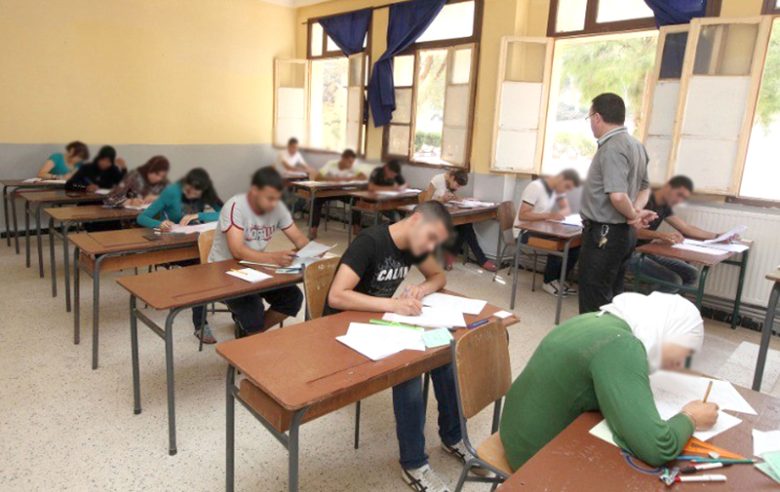
The starting whistle for the June 2026 baccalaureate examinations will blow Saturday across the entire national territory. In total, 876,171 candidates are expected at testing centers to secure the coveted diploma that unlocks the gates to higher education. Hours away from this critical milestone, arrangements have been finalized by both the authorities and the students, who have been gearing up for weeks to face the exam under optimal conditions.
For this session, the Ministry of National Education has deployed a massive organizational framework. Candidates will be distributed across 2,973 examination centers, while 98 grading hubs and 18 centralizing facilities have been activated nationwide to guarantee the smooth operation of this large-scale endeavor.
Central ministry departments, in tandem with regional education directorates, have ramped up preparatory briefings, field inspections, and site evaluations to ensure the availability of all human, logistical, and technical assets mobilized for the occasion.
This preparation has also involved numerous partner sectors, including security forces, transit authorities, telecommunications, public health units, Civil Protection, and energy grid operators.
Regarded as one of the most vital administrative undertakings managed annually at the state level, the baccalaureate commands massive resources. Logistical frameworks specifically cover the outfitting of testing sites, provision of mandatory equipment, candidate reception management, and the deployment of resources to keep all involved structures functioning smoothly. Protocols governing the drafting, printing, safeguarding, and transit of exam prompts were activated several weeks prior to the start of testing, in strict compliance with standing regulations.
Fraud Subject to Legal Prosecution
On the eve of the assessments, the Ministry of National Education renewed its stern warning against any attempts to broadcast or distribute exam materials on the internet or social media networks. In a dispatch directed at candidates, it reiterated that publishing, transmitting, or leaking test subjects during the active examination window constitutes a serious infraction punishable by law.
The ministerial body emphasized the absolute necessity of respecting the guidelines governing national testing to preserve the credibility of the baccalaureate and guarantee a level playing field for all applicants. Authorities also remind the public that bringing or using electronic communication devices within testing locations remains strictly prohibited.
As has become custom, this uncompromising stance is paired with internet connectivity restrictions during the initial hour of each exam window—a decisive technical countermeasure that has become routine to intercept any digital leakage attempts.
This high state of alertness aligns with frameworks established in recent years to combat academic dishonesty and ensure testing proceeds in an environment of total transparency and equity.
The Home Stretch
Simultaneously with the rollout of administrative operations by the governing body, the countdown is firmly underway for future graduates. Following months of grueling preparation, applicants are now focused on reinforcing their existing knowledge rather than trying to digest new concepts at the eleventh hour.
On the ground, study methodologies vary significantly from one pupil to another. Some opt for solitary review to target and patch their final academic weak spots independently, while others depend on peer study groups and collaborative discussions to demystify the most complex concepts.
“We have essentially covered the entire curriculum. This final week was exclusively dedicated to tackling past exam papers and practicing pacing during the test,” shares Sarah, a candidate in the Experimental Sciences track. Like many pupils, she believes that the secret to success at this point boils down to self-confidence and staying alert to avoid repetitive mistakes.
This sentiment is mirrored by Yacine, a Mathematics track student, who feels the primary hurdle now is psychological rather than academic. “The heavy lifting was done throughout the year. Now, the main challenge is simply staying focused and learning how to manage anxiety,” he explains.
On the eve of the exams, stress naturally grips many applicants. In response to this tension, educational experts advise maintaining a steady sleep schedule, banning late-night cramming sessions, and arriving at test locations in prime physical and mental form.
Aware of this mounting pressure, the Ministry of National Education issued a message of encouragement to the applicants, wishing them triumph and peace of mind. The oversight body reminded them that success is built primarily on hard work, perseverance, discipline, and absolute integrity.