

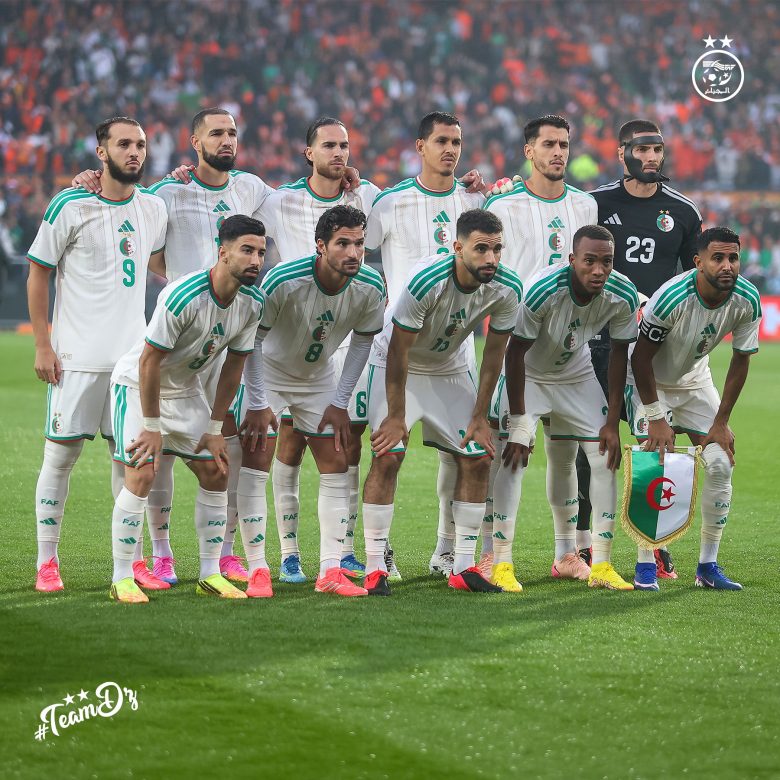
In their penultimate test before diving into the global tournament, the Algerian national football team claimed the scalp of the Netherlands, a side that had remained undefeated on home soil since 2023. This friendly match provided key insights, with several players boosting their profiles while others faltered, putting their starting spots for the World Cup in serious jeopardy. It was a spectacular victory for Vladimir Petković’s men in Rotterdam. Far more brilliant and enterprising in the second half than in a sluggish first period—where they seemed resigned to absorbing heavy pressure—the Desert Foxes secured a prestigious win that re-establishes their international standing and delivers a massive psychological boost ahead of June 17, when they face Argentina in their World Cup opening match in the United States.
On the positive side, it is impossible not to mention Anis Hadj Moussa, the undisputed star of the match. Playing on familiar territory, the Feyenoord winger put on a dazzling display. Despite occasional technical imperfections, he consistently made the right decisions at crucial moments. Similarly, Ibrahim Maza, Rafik Belghali, Farès Chaïbi, and Adil Boulbina all gained valuable points by making a significant impact off the bench. Their introductions also elevated the performance of Nabil Bentaleb, who had endured a highly disorganized first half alongside Ramiz Zerrouki in a midfield pairing that caught everyone off guard.
Meanwhile, Luca Zidane appeared to silence his critics with a highly convincing performance, marked by spectacular saves and unwavering focus throughout the ninety minutes. “I am completely ready for the World Cup. My injury is behind me,” he announced. Notably, the manager made no tactical changes in goal, cementing the starting status of Zinedine Zidane’s son.
Flaws and Tactical Adjustments
Extremely overwhelmed during the opening half and kept afloat primarily by the profligacy of the Dutch attackers, the Algerian squad completely transformed after the interval. Within the initial struggles, Houssem Aouar and Ramiz Zerrouki were the most glaring examples of a midfield in distress. Uncomfortable in his offensive duties and frequently late to track back defensively, Aouar will need to push through a demanding learning curve to find his footing at the World Cup. It remains a similar story for Zerrouki, who continues to struggle to narrow his margin for improvement despite receiving starting nods that are becoming increasingly difficult to justify.
Up front, Amine Gouiri endured a frustrating outing. Hampered largely by the tactical system deployed by the head coach, the Marseille striker found himself completely isolated against an unforgiving Virgil van Dijk.
Football, much like life, is rarely black and white, and several players operated in shades of gray. Chief among them was Amine Amoura, who remains trapped in a period of self-doubt but proved invaluable through his sheer work ethic. Multiplying high-intensity runs and defensive interceptions, he looks to be gradually rediscovering his rhythm. Conversely, that level of intensity was visibly missing from Rayan Aït-Nouri, who had a unusually quiet evening on the flank.
The encounter also proved that certain individuals excel only within a highly specific framework and struggle when pushed outside their comfort zones. This is where the concept of a natural position becomes critical, as seen with Achref Abada, whose influence waned significantly when deployed away from his preferred central defensive axis.
FIFA Rankings: Algeria Safeguards Position in Global Top 30
The national team continues its upward trajectory on the international stage. Buoyed by their valuable 1-0 friendly victory over the Netherlands, the Desert Foxes successfully retained their 28th position in the latest FIFA world rankings, consolidating their status among football’s elite.
This high-profile triumph against one of Europe’s most competitive teams rewards the positive momentum built by Petković’s squad over recent months. It also allows Algeria to close the gap on 27th-placed Australia, sitting less than eight points behind them.
Firmly entrenched in the global top 30, Riyad Mahrez and his teammates continue to gain credibility with the 2026 World Cup just around the corner. Their consistent results solidify their stature among the most in-form teams, allowing them to approach upcoming international fixtures with high ambitions. On the continental front, the Desert Foxes remain within the highly exclusive circle of top African nations, trailing only Morocco (7th globally) and Senegal (14th). Concurrently, Algeria maintains its edge over established powerhouses like Egypt (29th) and Canada (30th).
This stability at the highest level arrives at the perfect moment for the national team as they prepare to return to the world stage for the 2026 tournament. For their fifth appearance in a World Cup final stage, the North Africans face a formidable challenge in a group featuring reigning world champions Argentina, alongside Austria and Jordan.
Just days away from the kickoff of this historic edition—the first to feature an expanded 48-team format—the indicators are incredibly encouraging for the national side. Propelled by positive results, restored confidence, and a solid FIFA ranking, the Desert Foxes head into this global tournament with genuine ambitions of making an impact.