

Two months ago, official Morocco faced a humiliating return on investment, one that continues to collide with the violent reality of the situation. The racist slur “backward Moroccan baboon,” directed at the time by Ziv Agmon, a prominent figure within the Israeli establishment, against a Jewish Likoud lawmaker of Moroccan descent, was neither an accidental slip of the tongue nor a passing anomaly that diplomatic circles could easily sweep under the rug of administrative convenience.
Instead, this outburst—which continues to reverberate today and is increasingly shared across social networks by disenchanted Moroccans—casts a harsh, blinding, and unbearable light on the underlying colonial mindset and structural condescension that shape Tel Aviv’s behind-the-scenes view of its Moroccan partner.
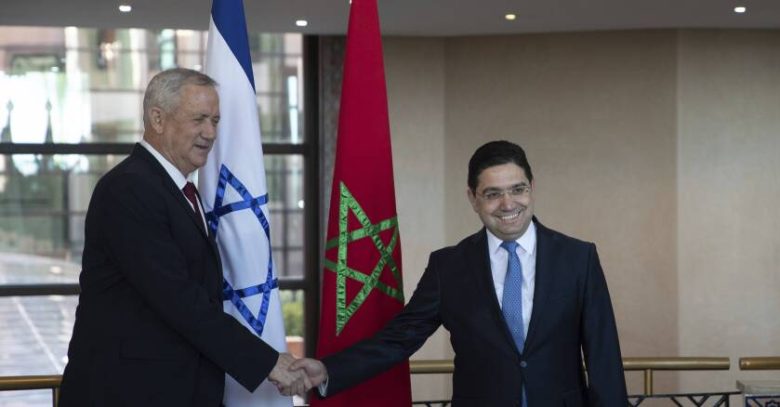
When the Abraham Accords were signed in November 2020, the official narrative pushed by the Makhzen was marketed to the public as a masterpiece of geopolitical realism. It promised a “strategic, historic, and peer-to-peer” partnership. The Morocco of self-proclaimed triumphant diplomacy boasted of bartering its recognition for the crucial acknowledgment of its sovereignty over Western Sahara, occupied since 1975. However, this illusory diplomatic maneuver was executed in the shadows of palaces without any consultation with the Moroccan public, who were excluded from a decision that fundamentally binds their history and conscience. Historically and deeply hostile to the Zionist occupier, ordinary Moroccans saw this alliance imposed upon them from above by decree, ignoring a popular consensus rooted for decades in solidarity with the Palestinian cause. Historical reality now delivers a brutal truth: within the mental framework of the Israeli ultra-nationalist right, there are no Arab allies, only executors.
Herein lies the “original sin” of the Makhzen’s normalization with the Zionist regime. In truth, this unnatural alignment was primarily driven by Rabat’s obsessive ambition to secure unwavering backing from Washington. For the Makhzen, the alliance with Tel Aviv feeds directly into a broader strategy of diplomatic and military hostility against neighboring Algeria. In contrast to an Algeria that maintains its historic stance of defending just causes—beginning with the inalienable right to self-determination for the people of Western Sahara—Morocco sought to break its doctrinal isolation by aligning with security imperialism.
In this regional destabilization effort, Rabat did not act alone. It advanced backed by the massive financial support of the United Arab Emirates. Many observers now describe this Gulf monarchy as a carbon copy of Israel in the Middle East, given that Abu Dhabi shares Tel Aviv’s penchant for interference, technical-security obsession, and disdain for popular Arab aspirations.
Rabat entered this alliance using the language of state realism and the poetry of historical diplomacy. Tel Aviv and its Emirati counterpart, governed by cynical pragmatism and uninhibited state messianism, viewed it merely as a transactional capitulation. For the Israeli security apparatus, fueled by its tech-superiority complex—whether via drones or the Pegasus spyware—Morocco willingly placed itself in a position of servile clientelism. The buyer of security yielded to the psychological dominance of the supplier. The insult from a Zionist chief of staff is simply the verbal expression of this deep asymmetry. To this revisionist Zionist power, the Moroccan, despite all the zeal and deference encouraged by Gulf patrons, remains an interchangeable subordinate.
The Makhzen has thus locked itself into a geopolitical trap and misplaced the key. By linking the Western Sahara issue to the recognition of a regime in full colonial drift, Moroccan diplomacy entered into a “fatal attraction” of captive alignment. Today, the exit cost of this tripartite agreement is prohibitive. Breaking with Tel Aviv would mean acknowledging the total failure of the entire Moroccan diplomatic doctrine and, above all, risking the revocation of the American guarantee in Washington, which is the centerpiece of its confrontation with Algiers. The more Morocco aligns to protect its artificial gains, the more it is condemned to tolerate the contempt of its own ally.
Instead of responding to Agmon’s shameful remarks, the Makhzen attempts to downplay the insult to preserve backstage contracts and alliances, revealing a dramatic admission of weakness. An absolute chasm is widening between a ruling elite willing to confine itself to this strategic trap and a population hostile to the normalization, which regularly voices its anger in the streets. The Moroccan citizen is left in a contradictory and humiliating position, seeing their identity insulted by the very entity their government imposed as a strategic savior.
By trading historic solidarity and good neighborliness for an illusion of security, and by disregarding the deep aspirations of its own people, the Makhzen has not only imported moral instability within its borders. It has allowed its ally and Gulf mentors to remind it, with absolute cynicism, of its true place in this alliance—that of a geopolitical token and a regional tool for division, condemned to look upon the ruins of its own compromise.