

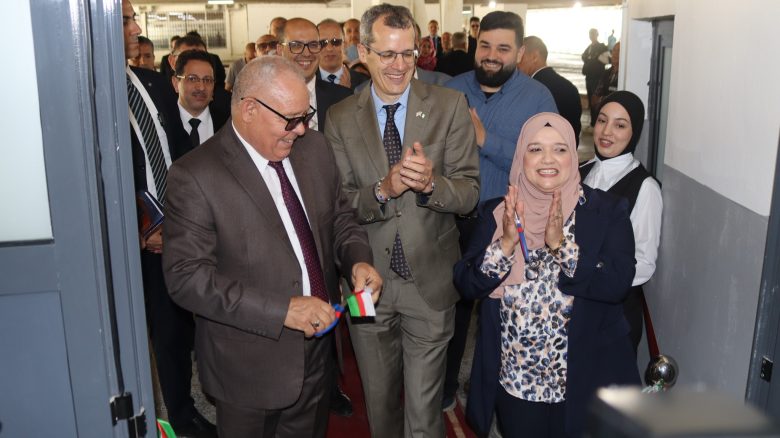
From the ancient ruins of Tipasa to the quiet galleries of the Bardo Museum, Algeria hosted a delegation of American cultural heritage experts this week. The group arrived to explore avenues for enhanced cooperation in the preservation, digitization, and protection of historical property. Following the 2024 renewal of the US-Algerian memorandum of understanding on heritage preservation, this visit provided a collaborative look at the diverse richness of Algerian heritage, while opening new channels for scientific and cultural dialogue between Algiers and Washington.
Composed of specialists from institutions such as the Smithsonian Institution, the Rochester Institute of Technology, the Council on Library and Information Resources, the American Numismatic Society, and the Archaeological Institute of America, the delegation participated on Thursday in a seminar at the Moufdi-Zakaria Culture Palace titled “Study Day on U.S.-Algerian Cooperation in Protecting and Preserving Cultural Heritage.”
The symposium brought together American and Algerian experts, public officials, museum directors, archivists, and researchers. Discussions centered on best practices for heritage conservation, collection digitization, site security, and combating the illicit trafficking of cultural property.
The Chargé d’Affaires at the US Embassy in Algiers, Mark Schapiro, stated, “Today marks an important milestone in our bilateral relations.” He added, “The renewal of this memorandum reflects our shared commitment to safeguarding Algeria’s rich cultural legacy for generations to come.”
In this context, American officials emphasized Algeria’s role in regional frameworks against organized crime and terrorism, highlighting the value of boosting operational cooperation. “Together, we can strengthen the mechanisms that protect both our cultural treasures and our collective security,” Schapiro noted.
According to Sarah Reynolds Anderson Loudin, lead for shared stewardship and ethical returns at the Smithsonian’s National Museum of Natural History, this initiative reflects “a deeply shared cultural richness.” Commenting on her tour of Algerian museums and heritage institutions, she praised how the country’s cultural establishments showcase their legacy. “What is impressive is how these institutions share this culture and demonstrate the sheer depth of Algeria’s history,” she stated.
When asked about specific needs identified on the ground, the expert offered a nuanced perspective. “We did not come to identify deficiencies, but to cooperate, listen, and learn. Above all, we want to understand Algeria’s priorities and see how we can support the efforts already underway,” she explained.
Given the historical complexity of Algeria, shaped by several successive civilizations, Reynolds stressed the importance of international cooperation. In her view, global partnerships remain essential not only for research and institutional networking but also for considering, when appropriate, the repatriation of certain collections to their communities of origin. She also noted that the bond between institutions and local communities is vital to making heritage work meaningful.
A Heritage Requiring Deeper Exploration
For numismatics specialist and art historian Nathan Elkins, Algeria represents an exceptionally rich historical landscape. “It is a place where numerous cultures lived, thrived, and intersected. A true ancient crossroads,” he affirmed, pointing to the wealth of the country’s material and visual culture.
However, he believes this heritage remains understudied on the international stage. Prior to his arrival in Algeria, he indicated that his knowledge was limited, focused primarily on well-known landmarks like Timgad. Discovering locations such as the Royal Mausoleum of Cherchell or the National Museum of Antiquities allowed him to grasp the true scale and variety of Algerian heritage.
Elkins called for an expansion of academic research into specific eras of Algerian history. While Roman heritage receives significant attention, he argues that the Numidian, Punic, and early Islamic periods remain less studied internationally and deserve more specialized scholarship. He also noted that certain historical approaches, particularly during the colonial era, focused predominantly on Roman remains to the detriment of other historical lineages.
When asked about the contributions of numismatics, Elkins highlighted the central role of ancient coins in deciphering past societies. They offer vital insights into local economic conditions, help date archaeological sites, and map population movements. Furthermore, they reveal unexpected trade networks across the territories of the ancient Roman Empire, providing a crucial complement to written records.
Digitization and Heritage Accessibility
For her part, Sarah Reynolds brought the issue of accessibility to the forefront. She pointed out that many institutions worldwide lack accessible digital catalogs, which restricts research and the dissemination of knowledge. In her view, modern technologies and digitization are essential tools for enhancing both the preservation and visibility of cultural artifacts.
Nathan Elkins agreed, noting that digitization helps stimulate scholarly interest and financial investment in conservation efforts.
Regarding future cooperative prospects, the delegation members expressed openness. They maintained they are currently in a “listening and learning phase,” while acknowledging that future joint ventures are firmly on the horizon.
Similarly, the American representatives expressed great satisfaction with their Algerian tour. “We have thoroughly enjoyed this experience and the discovery of these magnificent sites,” they stated, describing the mission as “enriching and exceptional.”
During their stay, the delegation toured several major institutions to exchange expertise and chart future collaboration. These included the National Public Archaeological Museum of Cherchell, the National Center for Archaeological Research (CNRA), the National Higher School for the Conservation and Restoration of Cultural Property, the Roman ruins of Tipasa, the Bardo National Museum, the National Center for Prehistoric, Anthropological and Historical Research (CNRPAH), the National Museum of Antiquities and Islamic Arts, the National Museum of Fine Arts, and the National Library of Algeria.
This visit aligns with ongoing bilateral cooperation projects in heritage preservation, such as supporting the restoration of the Madghacen Mausoleum, launching the anti-looting platform “Turathi,” participating in regional anti-trafficking initiatives, and establishing the first digitization laboratory at the Bardo Museum. Through this mission, the United States reaffirms its commitment to strengthening ties with Algerian institutions to protect cultural heritage, enhance institutional capacity, and celebrate Algeria’s historic legacy.