

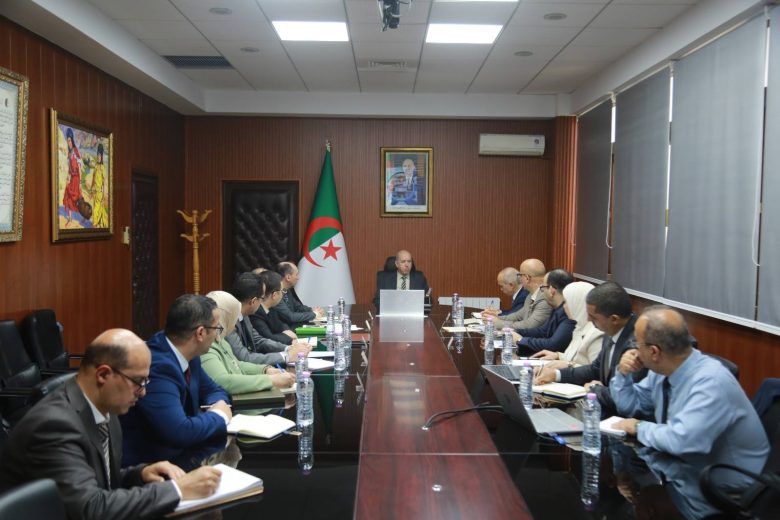
The Ministry of Labor is urging CASNOS to accelerate its digital transition to capture an agricultural population that remains largely excluded from social security benefits. Modernizing, simplifying, and above all, registering a workforce that is historically reluctant or isolated from social protection networks was the core focus of an evaluation meeting led Saturday by the Minister of Labor, Employment, and Social Security, Abdelhak Saihi.
Dedicated exclusively to reviewing measures for farmers, this working session put the National Social Security Fund for Non-Employees (CASNOS) back in the spotlight, emphasizing the need to adapt its mechanisms to the realities of rural life. In line with this, the fund has launched two new digital platforms designed to bridge the gap between the agricultural sector and its services.
According to an official ministry statement, leadership is demanding the establishment of “permanent social and professional support.” For the ministry, the sustainability of the system now hinges on its flexibility and its capacity to integrate into the daily lives of farmers—a sector vital to national food security but one that has historically suffered from under-affiliation.
During the meeting, the Director General of CASNOS presented a report on the newly deployed tools, highlighting the digital platforms “Himayati 5.0” and “Himayati+,” which were developed to digitize registration and payment processes. While the administration praised the launch of yet another national awareness campaign in early May, the minister explicitly pointed out the limitations of the current framework.
For Abdelhak Saihi, the era of purely bureaucratic management is over. “The current phase requires a shift from traditional methods to an integrated field-based and digital approach rooted in efficiency, anticipation, and proximity,” he asserted. The stated objective is to grant farmers streamlined and transparent access to retirement benefits and health insurance.
To achieve this, the ministry is relying heavily on grassroots outreach, characterized by increased field visits and direct engagement with agricultural workers. This awareness campaign will be carried out through mandatory partnerships with the National Chamber of Agriculture (CNA) and its regional provincial offices.
Alongside this localized presence, the administration is pushing a strategy to occupy public spaces during major industry events. This will involve the systematic and structured deployment of CASNOS agents at the heart of agricultural fairs, exhibitions, and trade shows organized throughout the country.
Finally, to guarantee the viability of this initiative, the ministry is introducing mandatory performance audits. The implementation of a rigorous periodic evaluation system will measure the actual impact of these communication campaigns on registration rates. This oversight mechanism will be tasked with identifying and rectifying any logistical or bureaucratic hurdles encountered on the ground in real time.
Behind this digitization drive lies the financial sustainability of the non-employee fund, whose equilibrium depends entirely on expanding its contributor base. By demanding a faster pace of enrollment, the ministry aims to formally integrate the informal agricultural sector into the legal framework.
Reaffirming his personal commitment to monitoring this file, the minister called upon all CASNOS executives to double their efforts on the ground. For the minister, this remains an essential condition for ensuring social justice and building a resilient, equitable protection system capable of safeguarding farmers against occupational hazards.
Algeria, Digitization, Agriculture, Social Security, Public Policy, CASNOS, Labor Ministry, Rural Development