

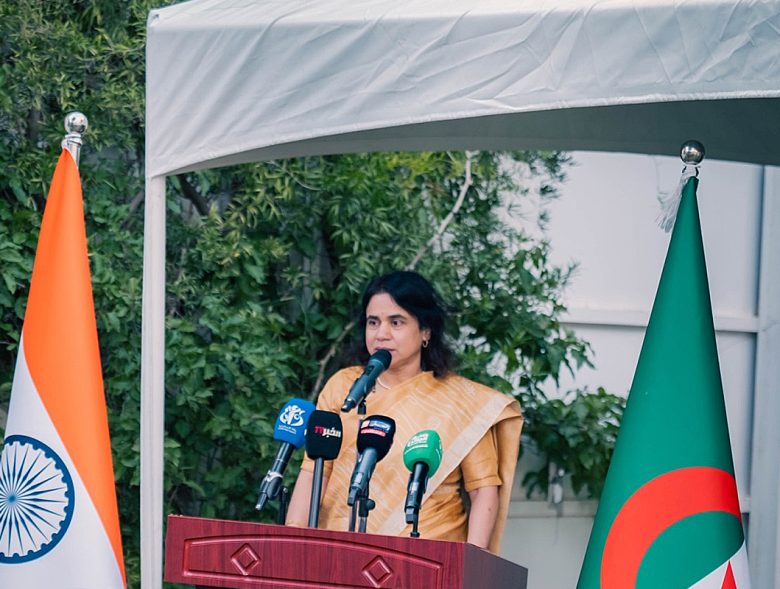
New Delhi is gearing up to host the fourth India-Africa Forum Summit (IAFS-IV) from May 28 to 31, 2026. Organized in collaboration with the African Union Commission, this monumental gathering will bring together heads of state from across the African continent, driven by a shared spirit of South-South cooperation.
New Delhi’s leadership has fundamentally reshaped its commitment to the continent. Prime Minister Narendra Modi previously outlined ten core principles focused on capacity building, generating local opportunities, opening up trade, sharing domestic expertise and best practices, leveraging technology for development, and upgrading education, agriculture, and healthcare. Crucially, Prime Minister Modi stresses that India’s focus centers squarely on the people of Africa—every man, woman, and child across the continent. Under its G20 presidency, India also successfully advocated for the African Union’s inclusion as a permanent member of the bloc.
New Delhi views its alliance with Africa as a natural fit, regularly backing African nations across various international forums. Built on mutual trust and respect, this partnership has increasingly shifted toward sustainable value creation for the direct benefit of African citizens.
Combined, the 3 billion people of India and Africa make up more than a third of the global population. A 3.5-million-strong Indian diaspora serves as a living bridge connecting both regions, rooted in deep, historical ties.
Both regions share aligned interests and shared ambitions. Africa possesses a youthful population, vast natural resources, and expanding consumer markets. Similarly, India boasts a young demographic and stands as one of the world’s fastest-growing economies with a highly dynamic domestic market. The two sides also mirror each other in remarkable diversity and rich cultural heritage, which continues to foster strong people-to-people exchanges.
On the economic front, India has emerged as one of Africa’s largest bilateral trading partners and investors. To date, two-way trade has surpassed 100 billion US dollars, while total investments exceed 80 billion US dollars.
Furthermore, India has contributed significantly to infrastructure development across the continent, executing 206 projects across 43 African nations. These initiatives span irrigation systems, power plants, cement, sugar, and textile factories, technology parks, and extensive rail networks.
During the COVID-19 health crisis, India dispatched medical assistance to 32 African nations. Through the “Vaccine Maitri” initiative, African countries emerged as the primary beneficiaries of these lifelines. New Delhi also supplied medical machinery, ambulances, and specialized cancer treatment equipment.
Humanitarian relief has similarly been extended to nations hit by natural disasters, including Zambia, Malawi, Kenya, and Mozambique.
Defense ties between India and Africa remain robust and continue to mature. India has provided training for military officers from various African nations and helped establish defense academies and colleges in Nigeria, Ethiopia, and Tanzania.
In space technology, India has shared advanced technical solutions, including weather forecasting systems, early warning disaster mechanisms, and precision agriculture models.
To facilitate travel, New Delhi has extended electronic tourist visa facilities to 33 African nations.
In education, India has set up an Indian Institute of Technology in Zanzibar, a National Forensic Sciences University in Uganda, an entrepreneurship development center in Rwanda, and multiple data hubs across various African states. More than 23,000 African students currently reside and study in India. Over the past decade, more than 35,000 Africans—including 480 Algerians—have received professional training in India via the ITEC program.
Culturally, Bollywood cinema enjoys massive popularity across Africa, including in Algeria.
Algeria stands out as a critical pillar in India’s broader African strategy. New Delhi recognizes Algiers’ unique strategic positioning as a “gateway to Africa and Europe.” Relations between the two nations have long been anchored in the principles of solidarity and South-South synergy.
Currently, commercial and investment ties between India and Algeria are experiencing a major boom.
Educational exchanges and capacity-building initiatives under the Indian Technical and Economic Cooperation (ITEC) framework have allowed Algerian professionals to sharpen skills in sectors ranging from information technology to public administration.
Cultural synergy is equally vibrant, with Bollywood films, yoga, and Indian cuisine gaining traction in Algeria, while Algerian music and art find an appreciative audience in India.
Looking ahead, this partnership is poised to diversify into pharmaceuticals, information technology, renewable energy, digital infrastructure, and joint research in agriculture and healthcare. This expansion aligns seamlessly with Algeria’s modernization drive and India’s technological strengths.
The India-Africa bond is built on genuine emotional ties and mutual solidarity. Africa, with Algeria at the forefront, remains a top priority for New Delhi within a framework of respectful, mutually beneficial cooperation.
India eagerly anticipates high-level Algerian participation at the upcoming summit, acknowledging the nation’s pivotal role in shaping the future of the African continent.