

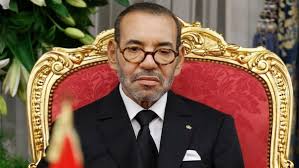
A quarter-century ago, Morocco greeted a youthful king brimming with promise. After Hassan II’s death, Crown Prince Mohammed VI symbolized a break from the “Years of Lead,” ushering in modernity to mend the throne’s rift with its people. Affectionately dubbed the “King of the Poor” to Gold-Plated MonarchA quarter-century ago, Morocco greeted a youthful king brimming with promise. After Hassan II’s death, Crown Prince Mohammed VI symbolized a break from the “Years of Lead,” ushering in modernity to mend the throne’s rift with its people. Affectionately dubbed the “King of the Poor” amid high hopes, that image has faded, as Moroccan political scientist Omar Brouksy dissects with surgical detail in his book. What emerged is a power structure where religious sanctity shields unprecedented financial dominance.
Brouksy’s unflinching probe traces the king’s shift from political mediator to economic overlord, suffocating and all-encompassing. His term “predatory monarchy” isn’t rhetoric—it’s backed by numbers. In mere years, Mohammed VI’s personal wealth quintupled to $2.5 billion, ranking him among the world’s richest, even as Morocco languishes in dismal human development indexes.
The telltale-titled book “Morocco: Forbidden Investigations” unpacks this wealth capture via the Al Mada holding (formerly SNI). From banking with Attijariwafa Bank to retail via Marjane, telecoms, and agribusiness, the king dominates the kingdom’s economy. This blurring of roles breeds chronic conflicts: how can a sovereign who appoints regulators fairly oversee a market where he reaps the biggest gains?
—————–The “Shadow Government” and System Beneficiaries
This web of “cronyism and exploitation” has turned Morocco’s economy into a royal preserve, where competition yields to Palace interests and its inner circle. Brouksy, holding doctorates in public law and political science, outlines a locked-down power base run by a “shadow government” of the king’s former Royal College classmates, whose fortunes rose in lockstep with his. Key figures include Fouad Ali El Himma, royal advisor and close confidant seen as the architect of today’s political and security framework; Mounir Majidi, the king’s private secretary and pivotal manager of royal assets—his name surfaced in the Panama Papers, exposing the global reach of the court’s financial networks.
The author also names Yassine Mansouri, head of external intelligence (DGED), who oversees information control and regime protection; and Aziz Akhannouch, billionaire businessman (Akwa Group owner) and current prime minister, epitomizing the seamless fusion of business and politics under the crown.
A particularly grim chapter targets Western Sahara. Brouksy, once an AFP correspondent, exposes what he calls systematic looting of the territory occupied since 1975. Drawing on Wikileaks diplomatic cables, he details how the regime and top military exploit phosphates and fisheries, flouting international law. Gains bypass local populations, fueling elite corruption. General Abdelaziz Bennani emerges as a key player who amassed riches from this territorial rent, shielded by military secrecy and “reasons of state.”
————-Security Apparatus Serving Capital
The tab for this opulence hits Moroccan taxpayers hard. Brouksy, whose works focus on the monarchy, discloses the royal budget nears €250 million yearly—about €700,000 daily—to sustain a sprawling court and lavish royal tours, with one year’s staging costs hitting €17 million.
Safeguarding this house of cards, the security apparatus under figures like Abdellatif Hammouchi (DST and DGSN chief) has weaponized tools: Pegasus spyware surveillance, judicial intimidation, and financial strangling of independent media holdouts.
Probing a “silent king” who pulls every string, Omar Brouksy delivers a sobering verdict. Morocco didn’t evolve from absolutism to democracy but swapped political authoritarianism for financial tyranny. The “Commander of the Faithful” title now muzzles challenges to this cash empire and territorial plunder, yet it can’t forever hide a system’s brittleness, where the throne hides in balance sheets at its people’s expense.
The “gold-plated monarch” now rules an empire of enforced quiet, but as the book shows, silence signals not strength, but fear supplanting loyalty.