

Strengthening institutional coordination, accelerating digitalization through the ALCES system, reinforcing internal control mechanisms, and launching training programs are the main pillars chosen by Algerian Customs to implement the national strategy for transparency, prevention, and the fight against corruption.
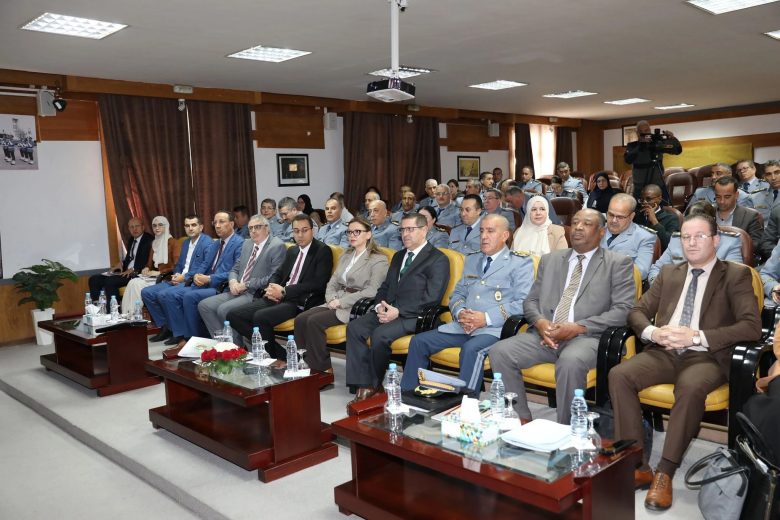
These measures were outlined this Friday by the Director General of Algerian Customs, Major General Abdelhafid Bakhouche, during an information day organized in coordination with the National Authority for Transparency, Prevention, and the Fight against Corruption. The meeting, focused on the practical mechanisms for implementing this national strategy, was co‑chaired by Salima Mesrati, President of the Authority.
In his opening remarks, Major General Bakhouche affirmed that “transparency and the prevention of corruption are structuring priorities for public action.” He stressed that the objective of the session was to “strengthen the foundations of good governance and entrench a culture of integrity within institutions,” while providing a forum to discuss the concrete modalities for applying the national strategy. The event brought together representatives from the Financial Intelligence Unit within the Ministry of Finance, the Central Office for the Repression of Corruption, and senior officials from the customs administration, underscoring a concerted effort to coordinate all structures involved in preventing and combating corruption.
The Director General also recalled that these initiatives reflect “the State’s determination to build a system based on transparency and accountability,” in line with the guidelines set by President Abdelmadjid Tebboune. The President has made the fight against corruption a central pillar of the reform process, embedding it in a broader effort to ensure ethical management of public affairs and to safeguard national resources.
Within this framework, the creation of the National Authority for Transparency under the 2020 Constitution, followed by the definition of its organizational structure in 2022, marked key milestones in the institutional framework. This framework has clarified the Authority’s missions, powers, and intervention mechanisms, assigning it a central role in preventing corruption and monitoring public‑policy initiatives related to integrity.
Major General Bakhouche further emphasized that “civil servants have occupied a central place in translating these principles into practice,” stressing the need to respect professional rules, ethics, and discipline. He underlined that the effectiveness of existing tools depends largely on the commitment and involvement of public agents.
Operationally, the Algerian Customs sector has rolled out several measures. It has strengthened its internal‑control mechanisms, deepened cooperation with specialized institutions, and deployed monitoring instruments to enhance transparency in customs operations. The cooperation agreement signed with the National Authority for Transparency is part of this effort to align all actors and consolidate shared practices.
Digitalization also lies at the heart of the strategy. The launch of the ALCES information system has introduced new standards for handling customs procedures. This platform has reduced direct contacts between officials and traders, simplified administrative processes, and limited opportunities for misconduct. At the same time, new digital services have been developed for economic operators and users, with the aim of improving service quality and response times.
Parallel to this, a nationwide training and awareness‑raising program has been launched for customs staff at both central and local levels. The initiative helps disseminate prevention principles, strengthen staff skills, and ensure that agents fully master the new tools and procedures.
In conclusion, Major General Bakhouche stated that “the implementation of the national strategy rests on collective responsibility,” calling for sustained mobilization of all stakeholders. He stressed that success will hinge on institutions’ ability to translate strategic guidelines into concrete practices that become firmly embedded in day‑to‑day administration.
Summer Season, Water Supply, Elections, Year‑End Exams…
Sayoud Sets Priorities for Algeria’s Wilaya Governors
The Minister of the Interior, Local Government, and Transport, Saïd Sayoud, chaired a video‑conference coordination meeting with Algeria’s wilaya governors to review several files related to local governance. On the agenda were preparations for the summer season, forest‑fire prevention, the harvest campaign, the organization of legislative elections, drinking‑water supply, and security arrangements for end‑of‑year exams. The meeting concluded with a series of directives aimed at improving coordination and the quality of public services.
Regarding the summer season, Saïd Sayoud called for a coordinated effort across all wilayas to ensure conditions that meet “the expectations of citizens and members of the national community living abroad.” He highlighted several priorities, including the cleanliness of beaches and their surroundings, the removal of pollution sources, the stable supply of electricity, improvements in transport services, and better management of road traffic.
The Minister addressed the management of coastal areas, urging greater discipline and a firm stance against disorder. He also commended the level of organization observed during the previous summer season and urged officials to consolidate and enhance it.
On the issue of forest‑fire prevention, the Minister praised the efforts of the relevant security and civil‑protection forces. To counter this threat, Saïd Sayoud stressed that improving operational readiness requires strengthening Civil Protection capabilities through the acquisition of modern equipment, including water‑bombing aircraft. He also called for intensified local awareness‑raising campaigns, activation of forest‑fire watchtowers, and reinforced early‑detection and rapid‑response systems.
For the harvest season, the Minister indicated that rigorous monitoring of the threshing campaign is a priority. He urged strong field mobilization to ensure smooth operations, while acknowledging farmers’ efforts and the favorable weather conditions expected for harvesting.
The meeting also examined the logistical preparations for the legislative elections. Saïd Sayoud affirmed that everything must be carefully prepared and coordinated to ensure that voting takes place under good material conditions and that polling sites are properly equipped.
The Minister highlighted that addressing drinking‑water shortages reported in various wilayas is an urgent matter. He insisted on the need to guarantee a regular supply through a proactive approach based on field monitoring and rapid intervention to resolve any breakdowns.
On the subject of end‑of‑year exams, Sayoud described the period as decisive, calling for the full mobilization of human and material resources to ensure smooth conduct. He stressed that securing an adequate and safe environment for candidates and for exam supervisors is a key priority.
According to the official communiqué, the Minister then gave the floor to several governors, who presented current concerns and questions related to the period.
The meeting was attended by the Director General of Civil Protection, Colonel Boualem Boughelaf, who presented a detailed report prepared by Civil Protection services on the outcomes of past operations and the preparations underway ahead of the summer season.
At the close of the session, Saïd Sayoud issued a series of practical instructions, mainly aimed at reinforcing coordination with security forces, stepping up field monitoring, holding regular meetings with local officials, and intensifying community‑based policing measures to reduce traffic‑related accidents.