

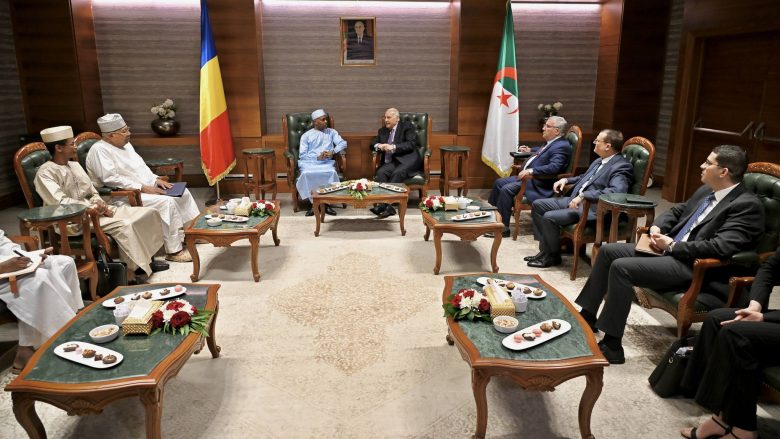
Gathered in Algiers for the fourth session of their joint commission, Algeria and Chad demonstrated a shared commitment to revitalizing their bilateral ties. They laid the groundwork for a robust partnership focused on economic integration, regional connectivity, and tackling Sahel security challenges.
The fourth session of the Algeria-Chad Joint Governmental Commission kicked off this Tuesday in Algiers. It was co-chaired by Algeria’s State Minister for Foreign Affairs, National Community Abroad, and African Affairs, Ahmed Attaf, alongside Chad’s State Minister for Foreign Affairs, African Integration, and Chadians Abroad, Abdallah Saber Fadl.
This gathering comes amid a push to reboot bilateral relations, driven by mutual political resolve to deepen collaboration in a Sahel-Saharan landscape plagued by intense security strains and pivotal economic stakes.
In his opening remarks, State Minister Ahmed Attaf framed Algeria-Chad relations within their deep historical and political roots. “These ties stem from our peoples’ joint struggle against the same colonial power,” he noted, highlighting a legacy of solidarity, shared sacrifices, and aligned perspectives on Africa’s core issues. Still, the top diplomat stressed the need to convert this political closeness into tangible economic gains.
Attaf pointed out that this momentum now enjoys top-level state backing from Algerian President Abdelmadjid Tebboune and his Chadian counterpart, Mahamat Idriss Déby Itno. He outlined a fresh phase aimed at building a partnership around three key pillars: bolstering political dialogue, tapping shared economic potential, and aligning responses to Sahel-Saharan security threats.
To that end, he spotlighted practical steps like ramping up trade flows, spurring investments, and advancing connectivity infrastructure—such as the Algiers-N’Djamena air link. “Our goal is to lift economic relations to the same high standard we’ve achieved in politics,” he declared.
Algeria Banks on Major Projects
Attaf also highlighted opportunities from the African Continental Free Trade Area (AfCFTA), plus ongoing flagship initiatives like the trans-Saharan highway and fiber-optic backbone, poised to serve as true engines of regional integration.
Moreover, the diplomat underscored expanding cooperation across key areas, stating that “prospects are now clear in vital sectors like energy, mining, agriculture, industry, and infrastructure.” He emphasized the human side of the partnership, adding, “We must keep building ties in health, higher education, training, and religious affairs.” He noted Algeria’s hosting of nearly 9,000 Chadian students since independence, cementing its status as an African training hub.
Chad’s minister then took the floor with a candid edge, ditching scripted formalities. For Abdallah Saber Fadl, reviving the joint commission marks “a political signal” of intent to shatter past stagnation. He framed the session against Africa’s crossroads moment, grappling with enduring global imbalances and rising Sahel-Saharan unrest.
Fadl delivered a blunt assessment of traditional African partnerships. “Africa has too often seen unfulfilled pledges, hollow formal structures, and rhetoric without real-world impact,” he lamented.
He urged a radical overhaul of bilateral cooperation, insisting “what matters now isn’t intent—it’s outcomes.” He pushed for a results-driven model centered on value creation, economic chain integration, and delivering flagship projects. Geopolitically, he situated this effort amid surging security risks and shifting global power dynamics, advocating for a linked, stable, and economically fused Sahel-Saharan zone where infrastructure plays a pivotal role.
Concrete Institutional and Operational Gains
The session wrapped with solid deliverables, signaling a scaled-up bilateral partnership.
Institutionally, both sides agreed to permanently revive the joint commission and establish routine political consultations to match the demands of a volatile region.
Legally, they finalized 27 agreements, beefing up an already substantial framework of bilateral pacts. This legal buildup reflects determination to more effectively govern all facets of cooperation.
Operationally, the biggest strides emerged in three priority tracks: growing strategic sectors like hydrocarbons, renewables, and mining; boosting connectivity via mega-infrastructure like the trans-Saharan road and fiber networks; and building human capital through higher education, training, and health collaboration.
Algeria reaffirmed its pledge to support Chad via expertise-sharing and training, including slots for thousands of Chadian students in its universities—a key tool for influence and partnership.
Beyond bilateral lines, Algiers and N’Djamena align on regional priorities: driving Sahel stability, combating terrorism, and advancing homegrown African fixes for African crises. They recommitted to multilateralism and international law’s central role in global affairs.
Closing the session, Ahmed Attaf hailed “tangible and promising results,” declaring it launches “a new chapter in Algeria-Chad relations.” This shift elevates a historic bond of solidarity into a structured strategic alliance, geared toward economic fusion, regional links, and African stability.