

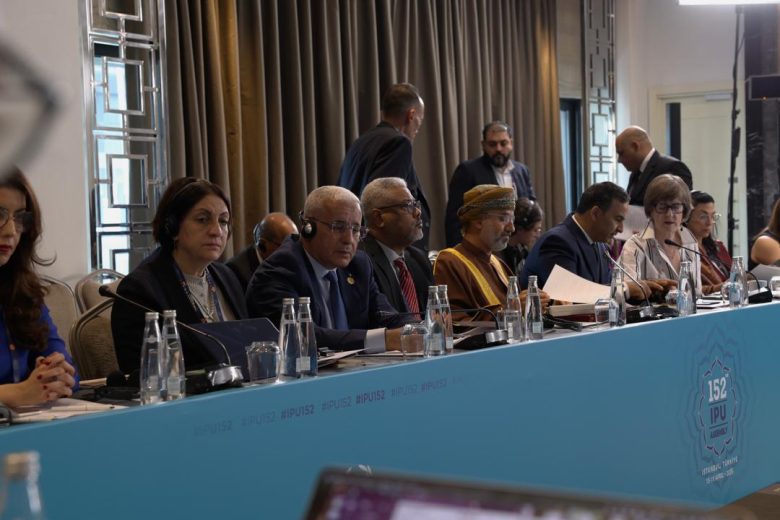
On the second day of the Global Parliamentary Forum, organised jointly by the World Bank Group and the International Monetary Fund, Algerian deputies Youssef Hamidi and Salim Merah took part in the discussions, carrying the voice of the People’s National Assembly (APN) into a forum shaped by the challenges of growth and the financing of emerging economies. This was announced yesterday in an APN statement.
Through its participation in the Global Parliamentary Forum, Algeria has put forward a development vision that links economic reforms, political stability and international openness, at a time when global challenges demand coordinated and long‑term responses.
Speaking before the committee dedicated to “Investment in Emerging Markets,” Mr Merah outlined the main features of Algeria’s experience in economic attractiveness. Drawing on recent assessments delivered by IMF management following an official visit to Algeria, he highlighted the progress achieved over the last few years.
The deputy underscored “a marked improvement in the business climate,” which he attributed to a series of structural reforms affecting both the legal framework for investment and the issue of industrial land. Added to this, he noted the establishment of the Algerian Investment Promotion Agency and the significant advance of the public administration’s digitalisation process.
Continuing his presentation, he pointed to “an encouraging momentum in non‑hydrocarbon exports,” which have more than doubled over five years, a trend he said sits within a broader context of gradual recovery after the COVID‑19 pandemic and a decline in inflationary pressures. The intervention also served to highlight the priority sectors underpinning the national strategy for economic diversification.
Emphasis was placed on digital infrastructure, regarded as an essential lever for modernising the economy and improving competitiveness. The efforts deployed to develop transport and logistics networks, including ports and railways, were likewise presented as key factors in facilitating trade and supporting investment.
The energy sector likewise holds a central place in this vision, with an approach that combines the development of traditional resources and the expansion of renewable energies. To this is added special attention to start‑ups and innovation, with the aim of building an entrepreneurial ecosystem capable of meeting the demands of a transforming economy.
Peace and development, two linked dimensions
Turning to international issues, Mr Merah placed the economic question within a broader perspective, arguing that “global stability is a decisive factor for development.” He maintained that “economic balances cannot be consolidated without a calmer international environment based on cooperation and mutual respect.”
In this light, he recalled the visit to Algeria of Pope Leo XIV, undertaken at the invitation of President Abdelmadjid Tebboune. He described this visit as “highly symbolic,” illustrating Algeria’s vocation to promote dialogue between cultures and religions amid a deeply polarised international climate.
From an economic standpoint, the deputy stressed that “consolidating peace is a prerequisite for sustainable development,” enabling resources to be redirected toward key sectors such as education, health and technology. He also recalled Algeria’s history of struggle and sacrifice, as well as its ability to build a state committed to internal and regional stability. In his view, this trajectory “grants Algeria particular legitimacy to promote dialogue and the peaceful settlement of disputes.”
In conclusion, Mr Merah argued that Algeria’s achievements reflect “solid foundations for continuing the country’s economic transformation.” He added that the prospects for diversification, investment attraction and job creation hinge, in his opinion, on pursuing reforms and continuously adapting public policies.
In this process, the role of Parliament appears crucial in shaping appropriate legislative frameworks, overseeing government action and strengthening trust between the various economic players, with the parliamentary institution contributing directly to an improved business environment.