

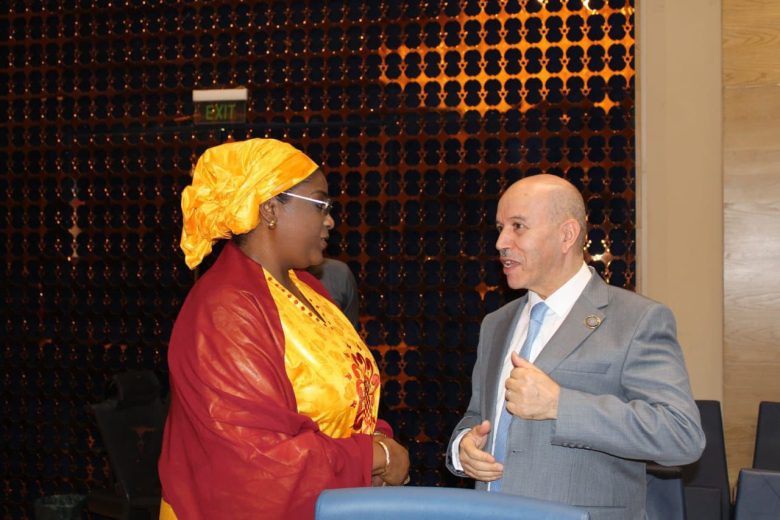
Algeria’s Labor, Employment, and Social Security Minister Abdelhak Saïhi met with his Nigerien counterpart, Aissaoui Abdoulaye Tondi, during a working session on the sidelines of the second Algeria-Niger Joint Commission in Niamey. Their talks centered on strengthening legal frameworks, expertise sharing, and practical steps for job creation and workforce mobility. This was detailed this Wednesday in a ministry statement.
Right from the start, both sides recommitted to elevating their partnership through tailored legal tools suited to today’s labor market demands. A centerpiece was the draft agreement on promoting employment and labor mobility, tabled at the experts’ meeting on March 22 and now under Nigerien review for feedback to finalize it.
The ministers agreed on turning policy goals into actionable systems, as Saïhi emphasized: “Partnerships only deliver if built on precise, fitting tools with rigorous follow-through.”
Talks also highlighted skills transfer and institutional support. Niger’s minister showed keen interest in Algeria’s know-how in labor inspections, workplace health and safety, and job market oversight. She noted that “building institutional capacity is key to updating our employment systems and ensuring better working conditions,” while requesting specialized training for staff and technical aid for national bodies.
Niger further proposed twinning national employment agencies to “enable structured exchanges of best practices and sharpen job placement tools for young seekers.”
Needs-Based Strategy Takes Center Stage
Reaffirming Algeria’s readiness to back Niger’s reforms, Saïhi pushed for a grounded, step-by-step method. He urged clearer priority-setting, stating that “effective collaboration starts with pinpointing the partner’s exact needs.”
He spotlighted Algeria’s successes in employment policy—via placement programs, vocational training, and jobseeker support—fostering an integrated labor market approach ripe for adaptation in Niger.
Both parties pledged deeper institutional and technical exchanges. Niger’s minister voiced interest in an Algerian study tour to directly absorb national practices and expand ties—a move welcomed by Saïhi as “the surest path to robust, lasting cooperation through hands-on experience sharing.”
This session fits a broader African solidarity drive, pooling expertise against shared hurdles in jobs, training, and skills mobility. Algeria and Niger aim to tighten coordination for inclusive growth, cementing a results-driven alliance where employment anchors social stability and economic progress.