

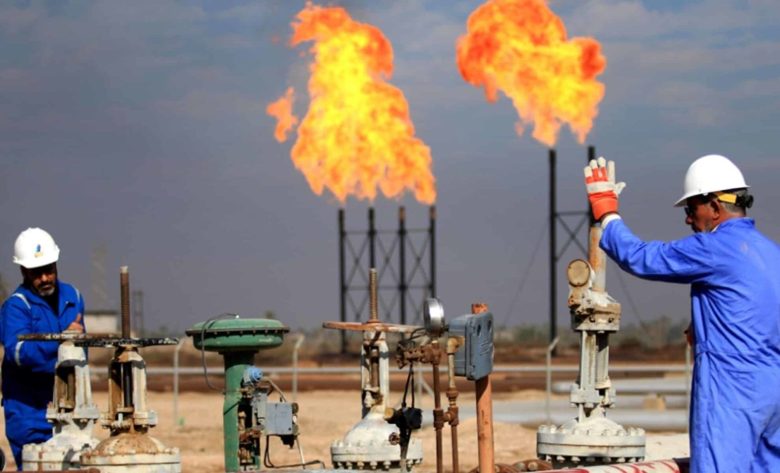
In a context of heightened geopolitical instability marked by the war against Iran—which has disrupted regular flows of liquefied natural gas (LNG)—prices have risen sharply worldwide. At the same time, Algerian gas output has risen by an estimated 7%, since January 2026, as European and Asian markets scramble to offset the shortfall after attacks and temporary shutdowns of gas facilities in Iran and Qatar cut LNG exports.
According to data published on the platform Attaqa, Algeria boosted its natural gas production by 7% in January 2026, up by about 688 million cubic meters (m³) year‑on‑year, reaching 10.44 billion cubic meters, the highest monthly level in nearly three years. This figure clearly exceeds the 9.75 billion cubic meters produced in January 2025, underscoring a meaningful rebound in gas extraction. On exports, Algeria also saw volumes shipped abroad edge up to 3.612 billion m³ in January, compared with 3.580 billion m³ for the same period in 2025.
Pipeline exports remain dominant, at around 3.06 billion m³, while LNG cargoes slipped to 549 million m³, it was noted. According to the same source, Algerian LNG exports showed signs of recovery in February, reaching 673,000 tonnes, after a dip the month before. Projections for March suggest an even stronger momentum, boosted by the imbalances in global markets caused by the interruption of supplies from the Middle East.
Specialized websites point out that the damage inflicted on Gulf infrastructure by the war in Iran has turned the spotlight firmly on Algeria, while also stressing that the room for maneuver is limited in the short term. It will take more time to ramp up additional production and bring extra volumes to market. With the escalation of conflict in the Middle East, many eyes have turned to Algeria, an OPEC member and Africa’s top gas exporter. Unlike Qatar, which mainly ships liquefied natural gas (LNG) via tankers, Algeria relies primarily on the Transmed pipeline to Italy and the Medgaz pipeline to Spain.
Since the Russia–Ukraine war broke out in 2022 and the European Union decided to halt imports of Russian gas, Algeria has become a key supplier to Europe and a cornerstone of the bloc’s energy‑diversification strategy, recalled the analyst Moez Ajmi. In his view, the group Sonatrach has stepped up efforts to maximize the operational capacity of its liquefaction plants so as to capitalize on high spot prices, and “could redirect volumes toward spot markets in Europe and Asia.”
Domestically, Algeria’s total gas consumption has also risen, highlighted Attaqa. Overall consumption reached 6.62 billion m³ in January, compared with 5.98 billion m³ the previous year. On a monthly basis, production jumped by 10.7% between December 2025 and January 2026, amounting to nearly one billion cubic meters more. Consumption for electricity generation and heating rose to 1.661 billion m³ allocated to these uses in January 2026, up from 1.605 billion m³ a year earlier.
Given that the electricity sector is almost entirely dependent on gas, bolstering exploration and production capacity is vital both to meet growing domestic demand and to uphold export commitments.