

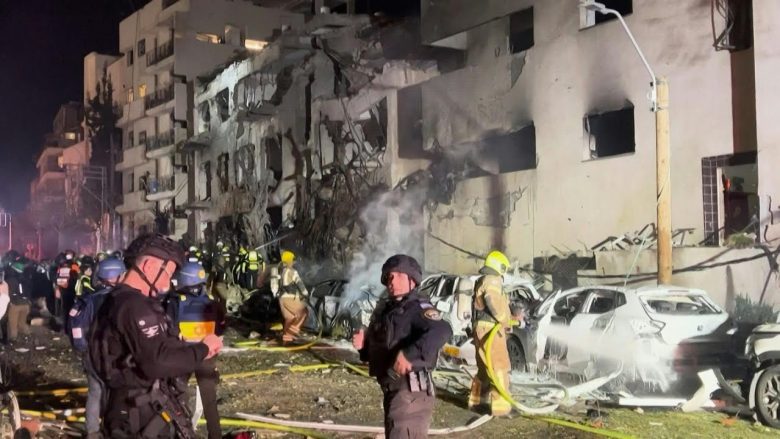
Iran has struck Dimona and Arad in retaliation for Israeli attacks, causing heavy damage and dozens of injuries. These strikes expose weaknesses in Israel’s defences and mark an openly declared escalation. The conflict has now shifted into a direct logic of mutual retaliation. While Israeli military leaders recently claimed that offensive operations carried out with Washington were yielding “strategic” results against Iran, Tehran’s response has directly challenged that narrative. Ballistic missiles hit the southern Israeli cities of Dimona and Arad, inflicting significant material damage and wounding dozens, including several in critical condition. Dimona, known for hosting a highly sensitive nuclear research facility, was directly targeted. Broadcast images show shattered buildings, raging fires and destroyed vehicles. Despite interception attempts, some missiles reached their objectives, revealing gaps in Israel’s defence systems. Iranian officials quickly seized on this point, presenting it as evidence of a new vulnerability.
A new phase of the war
For Tehran, this operation marks a “new phase” of the conflict. It follows a logic of direct retaliation after Israeli strikes on its facilities, including in Natanz. The message is clear: each attack will be met with an equivalent response, in a deliberately controlled escalation pattern. This “tit‑for‑tat” strategy aims to restore a deterrent balance against Israel’s and the United States’ military superiority. On its side, the Israeli government has vowed to keep up its operations, even after a “very difficult night.” This stance contrasts with the on‑the‑ground reality, where the Iranian strikes show that the Islamic Republic’s offensive capabilities remain intact. The scale of the damage and the number of casualties indicate a worrying rise in destructive power. Beyond the immediate effects, these attacks signal a turning point: the conflict is no longer asymmetric but is becoming a direct confrontation, with each side trying to assert its capacity to inflict harm. In this context, the cycle of retaliation appears increasingly difficult to halt, raising the risk of a protracted regional escalation.
Trump’s ultimatum and Iran’s warning
Following the ultimatum issued by Donald Trump, who gave Iran 48 hours to reopen the Strait of Hormuz and threatened to strike its energy infrastructure, Tehran has warned it will respond to any attack. The Iranian military stressed that any aggression against its oil and energy facilities would trigger strikes on strategic infrastructure across the Middle East, targeting sectors such as energy, technology and seawater desalination.