

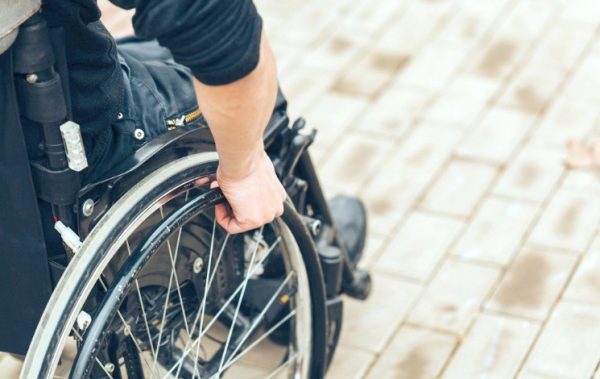
Algeria’s National Day for People with Specific Needs, marked every 14 March, offers an opportunity to take stock of progress in support, social inclusion and access to rights, and to highlight the challenges that remain. It is also a moment to stress that, despite the strengthening of several mechanisms in recent years, the real test now lies in turning legislative and social gains into tangible improvements in the daily lives of the citizens concerned.
On the occasion of the National Day for People with Specific Needs, the Minister of National Solidarity, Family and the Status of Women, Soraya Mouloudji, reiterated this Saturday the State’s unwavering commitment to continuing efforts in favour of this segment of society.
In a message released for the occasion, the minister affirmed that her department “is committed to further strengthening the rights and gains of people with specific needs in terms of social inclusion, so as to enable them to participate fully in public life and contribute to the country’s national and economic development.”
In recent years, care for people with specific needs has seen several significant advances through the introduction of both direct and indirect support mechanisms. A key measure is the financial allowance granted to people with a 100% disability and no income. This aid, set at 12,000 dinars per month under the Flat-Rate Solidarity Allowance (AFS), aims primarily to guarantee beneficiaries a minimum level of income. Added to this is full social coverage, including reimbursement of medicines, medical tests and the provision of certain equipment essential to the autonomy of the people concerned.
Mobility is also a major focus of public policy. People with specific needs benefit from discounts on public transport fares, and these reductions have recently been strengthened. While previous legislation provided for a 50% discount, new provisions now raise this advantage to 80%, under the new law on the protection of people with specific needs. In the housing sector, an implementing text is also being finalised. It provides for reductions of 30% to 40% for eligible people when acquiring social housing, in order to facilitate access to suitable accommodation.
Entrepreneurship as a Pathway to Inclusion
Alongside social assistance, the public authorities are also banking on the economic inclusion of people with specific needs. The Ministry of National Solidarity is working to support project holders from this group, notably through training schemes and support for marketing their products and services. In this framework, 1,773 tailored professional projects have been financed by the National Agency for Microcredit Management (ANGEM), while more than 700 people with specific needs have received funding through programmes run by the National Agency for Entrepreneurship Support and Development (NESDA).
A new executive decree also aims to bolster the professional integration of people concerned. This text, which will implement Article 29 of the law on the protection and promotion of people with specific needs, will set out the procedures for allocating jobs reserved for them. It will also define the financial support available to employers for adapting and modifying workstations, in order to ensure an accessible and suitable working environment. The upcoming decree will further require companies to carry out the necessary adjustments, in coordination with occupational health services and specialised structures in technical adaptation of workstations.
These measures fall within the framework of the new law on the protection and promotion of people with specific needs, adopted in February 2025. This law is one of the pillars of the national inclusion strategy. It aims to improve access for people concerned to healthcare, education, employment and socio-professional integration. The law enshrines several fundamental rights, including the right to schooling, training, employment, leisure and access to specialised healthcare. Several implementing decrees have already been published in the Official Gazette to translate these provisions into practice. They notably address accessibility to public infrastructure and the conditions of access to transport.
One of the most important texts concerns the accessibility of people with specific needs to the physical, social and cultural environment. This decree requires public authorities to integrate accessibility requirements into the design and layout of public buildings, schools, social service centres and urban spaces, with the aim of removing barriers that hinder the mobility of people with reduced mobility and fostering their autonomy in everyday life. To this end, a national commission has been set up to facilitate access to different spaces and services and to monitor implementation of these measures. The text also provides for the inclusion of accessibility standards in the specifications for public infrastructure, particularly roads, transport and open spaces.
Special Focus on Children
Care for children with specific needs is also one of the priority pillars of public solidarity policy. Through a network of specialised institutions across the country, the public authorities provide educational, pedagogical and therapeutic support to thousands of children with various forms of disability, whether intellectual, sensory or motor. These structures, particularly psychopedagogical centres, offer multidisciplinary follow-up by teams made up of specialised educators, psychologists and paramedical staff.
In the wilaya of Algiers, this system has recently been strengthened with the opening of three new psychopedagogical centres in Bologhine, Hussein Dey and Sidi M’hamed, while a fourth centre in Staouéli is also due to come into service. The goal is to meet growing demand from families of children notably affected by autism spectrum disorders, intellectual disabilities or Down syndrome. These new facilities consolidate a network that already includes around twenty psychopedagogical centres in the capital, which care for more than 2,000 children aged 3 to 18.
At the same time, the State is promoting the gradual inclusion of these children in mainstream schools, through the creation of specialised classes and tailored support mechanisms. The objective is to encourage their social inclusion from an early age and help them acquire the skills needed for active participation in society. However, sector stakeholders stress the need to further increase the capacity of specialised centres, train more professionals and expand early intervention, seen as a key factor in improving future autonomy and integration for these children.
Despite these advances, several challenges remain. Associations working in the field of disability care point in particular to the need to strengthen staff training in specialised centres. The creation of multidisciplinary teams capable of providing comprehensive support to children with disabilities is also frequently cited as a priority by sector stakeholders.
Moreover, the success of inclusion policies also depends on changing mindsets and raising public awareness. Accessibility does not stop at infrastructure adjustments. It also requires changes in behaviour to ensure respect for spaces and facilities intended for people with reduced mobility.
With this in mind, the Ministry of National Solidarity is also working to modernise services for people with specific needs. A dedicated digital portal for the national solidarity sector has been developed in cooperation with the High Commission for Digitalisation. The platform will simplify access to various social programmes, digitise administrative procedures and improve support for beneficiaries.
All these initiatives reflect the public authorities’ determination to strengthen the inclusion of people with specific needs and enable them to participate fully in the country’s social and economic life. Yet, despite the progress achieved, genuine inclusion of people with specific needs remains an ongoing endeavour. Beyond laws and mechanisms, the real challenge lies in their effective implementation on the ground, in reinforcing support structures and in evolving attitudes. An inclusive society is not measured solely by its legal texts, but by its ability to guarantee each individual a dignified, active and fully recognised place in collective life.