

Sea water desalination plants play a major role in supplying drinking water not only to the coastal wilayas where they are located but also to neighboring wilayas, as in the case of Bouira, whose water supply will be strengthened by connecting to two desalination stations.
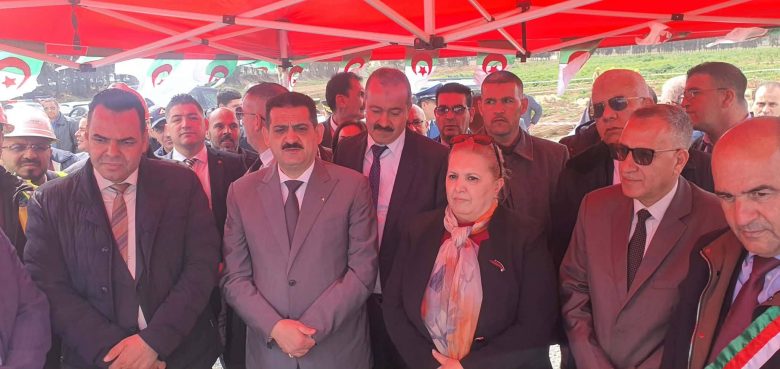
The first connection planned for Bouira will come from the Tighremt desalination plant in Bejaïa wilaya, while the second will come from Cap Djinet 2 in Boumerdès wilaya. This project is on track to quench Bouira’s thirst. During his stop in M’chedallah, which will be linked to Tighremt, Hydraulics Minister Taha Derbal was briefed on the progress of the works, which are advancing at an accelerated pace. In turn, he insisted on speeding up the works and adopting a 3×8 shift system while rigorously maintaining quality.
This emerged from the working and inspection visit he conducted this Saturday in the wilaya, where he reviewed progress on this project, which aligns with Republic President Abdelmadjid Tebboune’s directives to ensure all citizens have equitable access to drinking water. The minister did not fail to emphasize these key directives aimed at “guaranteeing a sustainable water resource less vulnerable to the effects of climate change impacting traditional water supply sources,” he noted, as cited in a statement from his ministry.
Taha Derbal, accompanied by a delegation of ministry executives and local officials, began his trip with a meeting at the wilaya headquarters, where he received a detailed briefing from the local sector director on the hydraulics situation in the region and development prospects aimed at improving public water services.
The presentation covered various aspects of the sector, including “drinking water supply, sanitation, and agricultural irrigation, given the wilaya’s agricultural character and the essential role water resources play in supporting agricultural activity.”
On this occasion, the minister called for accelerating ongoing projects to improve public water service quality and meet citizens’ expectations. He also highlighted the importance of modern, proactive sector management based on rigorous planning and greater efficiency in hydraulic infrastructure operations.
Mr. Derbal further underscored the need to diversify water supply sources, particularly through non-conventional resources. In this regard, he emphasized “the reuse of treated wastewater as a complementary water resource, especially for agricultural irrigation,” while valuing sanitation infrastructure for its contribution to public health and environmental protection.
The minister also reminded attendees of the importance of respecting priority orders when registering new projects to direct investments toward operations with a direct impact on improving public water services. At the end of the meeting, Mr. Derbal commended the efforts of sector officials in the wilaya, particularly the improvements in drinking water supply during Ramadan, thanks to reinforced supplies from dams and the rehabilitation of several boreholes.
The minister also visited the Saharidj commune, where he inspected the Lainsar Aberkane spring development project, also known as the “black spring,” which includes developing outlets and connecting to a 5,000 cubic meter reservoir, as well as rehabilitating a 2,300-meter canal with a water quality treatment and control point. This project will provide nearly 327 liters per second, making it a major initiative that will concretely improve drinking water supply in the wilaya. Mr. Derbal left Bouira assuring that the hydraulics sector would continue supporting the wilaya’s development momentum, as part of the national strategy to strengthen water security and support local development across the country’s wilayas.