

Consolidating social dialogue, improving national health coverage, revaluing human resources, and modernizing hospital governance—these are the priorities reiterated last Tuesday evening during the reception of a delegation from the Algerian Paramedics Union (SAP) at the ministerial department’s headquarters. This was announced this Wednesday in a statement from the Ministry of Health.
Led by its president, Ghachi Lounès, the union delegation was received by the Minister of Health, Professor Mohamed Sadek Aït Messaoudène, in the presence of members of the central commission responsible for dialogue with social partners. The minister described this meeting as part of “a continuous approach to consultation and shared responsibility,” in a context marked by growing expectations regarding the quality, accessibility, and equity of care.
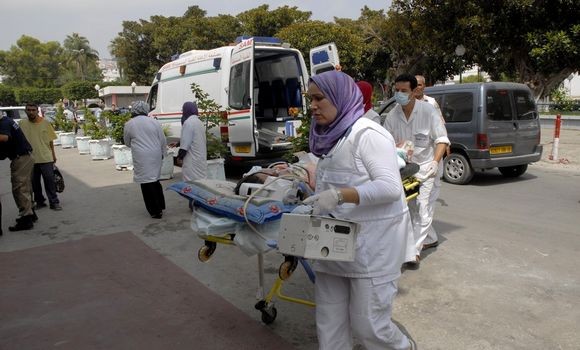
From the start of the discussions, the minister took care to salute the determining role of paramedical personnel in the architecture of the health system, stating that as “an essential link in the care chain,” these professionals ensure the continuity of public health services and patient support at all stages of care. He also emphasized that in hospital facilities as well as in community structures, their presence constitutes a guarantee of stability and efficiency, particularly in emergency situations or periods of high pressure on services. Tribute was paid to their daily commitment.
Furthermore, the minister placed the meeting within a broader vision of reform, underscoring the importance of “strengthening national health coverage by adapting it to demographic, epidemiological, and territorial changes.” The objective is to ensure a more balanced distribution of care services and reduce regional disparities so that “every citizen, wherever they are, can access quality services within reasonable timeframes,” he affirmed. In addition, human resources issues took up a significant portion of the discussions. Professor Aït Messaoudène acknowledged that “the system’s performance first rests on the motivation and stability of its personnel.” Consequently, improving socio-economic conditions, revising the professional framework, and modernizing work environments were raised as priority levers. He also asserted that “valorizing skills is inseparable from improving service quality,” stressing that any structural reform must imperatively integrate the human dimension.
Concerns related to working conditions, workload, and statutory recognition were also addressed. The minister assured that “these demands will be examined within existing institutional mechanisms,” reiterating his commitment to frank and structured dialogue. The issue of union activity, raised by SAP representatives, was discussed from the perspective of respecting legal provisions and consolidating a climate of trust.
For their part, union members expressed their willingness to continue constructive partnership with central administration. They reaffirmed their desire to actively contribute to developing public policies adapted to field realities, highlighting the expertise accumulated by paramedics through direct patient contact.
At the end of the meeting, the minister reiterated his commitment to keeping the doors of dialogue open to all social partners. He insisted on the need to institutionalize consultation as a strategic governance tool, considering that the sector’s stability and reform effectiveness depend on the quality of exchanges between administration and worker representatives.