

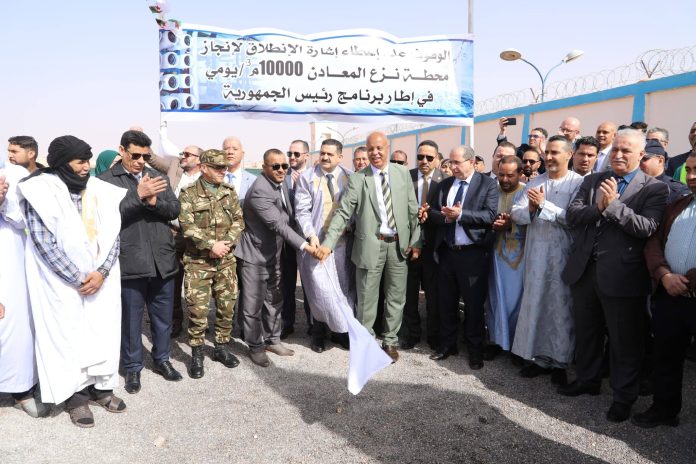
The Minister of Hydraulics, Taha Derbal, launched works in Tindouf for a new desalination plant with a capacity of 10,000 cubic meters per day, a strategic project designed to sustainably strengthen drinking water supply in the wilaya and improve quality.
This working and inspection visit, carried out Tuesday afternoon, comes just days after the launch in In Salah of a similar plant as part of the major In Salah-Tamanrasset water transfer project. It also aligns with implementing the instructions of the President of the Republic, Abdelmadjid Tebboune, regarding the construction of desalination plants in the wilayas of Tindouf and Tamanrasset.
In addition to the new infrastructure, the minister launched a project to expand the old plant, aiming to increase its production capacity from 15,000 cubic meters to 20,000 cubic meters per day. Ultimately, the total capacity will reach 30,000 cubic meters daily, significantly improving the quality of distributed water and ensuring a public service that meets residents’ expectations.
During this visit, Mr. Derbal issued a series of firm instructions concerning adherence to completion deadlines and work quality. He emphasized that these key projects will be entrusted to national companies with the required expertise and skills to ensure compliance with current technical standards.
The minister also stressed the need to shorten execution timelines and strictly adhere to quality standards, to bring the facilities into service as quickly as possible, for the benefit of citizens and in support of local development dynamics in this historic wilaya.
On the same occasion, the minister conducted an inspection visit to the wastewater treatment plant project in the Tindouf commune, where he instructed site managers to accelerate the pace of work to enable the infrastructure to be commissioned as soon as possible.
The same official highlighted the strategic importance of this project for the region, underscoring its expected positive impacts on public health and environmental protection. He also emphasized its role in valorizing water resources through the reuse of treated water for agricultural irrigation.
This approach fits into a logic of supporting local agricultural activity and rationalizing water resource use, in a context marked by the need for more efficient and sustainable management of the hydraulics sector.
It should also be recalled that the plant inaugurated in In Salah, intended to bolster the In Salah-Tamanrasset transfer system, has a capacity of 60,000 cubic meters per day.
This new infrastructure will be located near the old plant. It aims to consolidate quality water supply for In Salah wilaya, whose aquifer is characterized by high salinity levels, as well as for Tamanrasset wilaya, supplied via a 750 km transfer system. The project will also support development dynamics in both communities.
According to the data presented, the plant will have a production capacity of 60,000 cubic meters per day and will contribute to achieving the overall goal of transferring 100,000 cubic meters per day of quality water to Tamanrasset wilaya.
Assigned to specialized national companies, with a 13-month completion deadline, this key project is expected to have a significant impact on improving drinking water quality, increasing water resource mobilization, and securing supply in the region, while boosting socioeconomic development dynamics.