

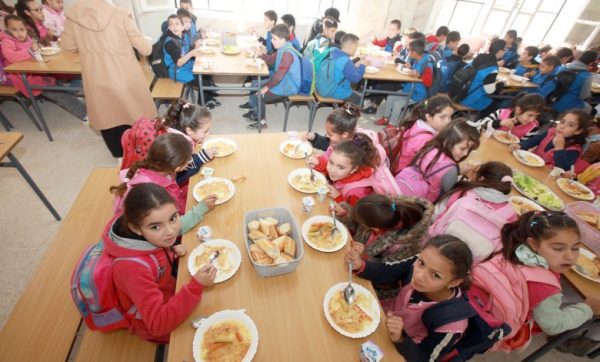
More than mere social assistance, school feeding has become, for Algeria, a “sovereign investment in the future of generations.” This was affirmed by the Minister of National Education, Mohamed Seghir Saâdaoui, during the 11th African Day of School Feeding. Representing the country via videoconference from Algiers, he reaffirmed that pupil nutrition is the indispensable foundation of a resilient education system and a prosperous Africa.
Speaking at this ministerial session organized in Gaborone (Botswana), in the presence of high-level officials from the African Union (AU) and international organizations, the minister emphasized that investing in school meals is a major strategic choice. It directly aligns with the AU’s Agenda 2063 vision, aiming to build a sustainable continent where education and health go hand in hand.
Indeed, Algeria’s experience is not new, but it takes on a new dimension under the guidance of President Abdelmadjid Tebboune. Recalling that school catering has been enshrined in constitutional law since 1965, the minister demonstrated that free and compulsory education are only effective if accompanied by access to healthy meals. This is a model that Algeria not only applies but seeks to export.
Held under the theme “Ensuring access to healthy meals, drinking water, and hygiene: strengthening security and resilience in every school feeding investment,” this edition highlighted the central role of nutrition in the educational journey of African pupils.
The minister noted that the establishment of this African Day, adopted by the heads of state and government of the African Union in 2016, reflects continent-wide awareness. He affirmed that school feeding constitutes a strategic investment at the intersection of education, health, and economic development, directly contributing to Agenda 2063’s goals of building a prosperous and sustainable Africa.
Primary education receives specific attention, in line with the orientations of President Abdelmadjid Tebboune. The nationwide rollout of school catering at this level has been made possible thanks to the financial resources mobilized by the State to ensure optimal schooling conditions.
The minister stressed that investing in school meals represents “a sovereign investment in the future of generations,” resting on three fundamental pillars: healthy food, access to drinking water, and adherence to hygiene rules, supported by sustainable school infrastructure.
In the same spirit, the minister mentioned the organization, at the start of the 2025/2026 school year, of a national school health week, in coordination with the Ministry of Health. This initiative aims to promote hygiene, encourage good eating habits, and strengthen disease prevention in schools.
He called for generalizing this approach across Africa, inviting the African Union Commission to establish a school health week at the beginning of each school year in countries across the continent.
Mr. Saâdaoui used this continental platform to present the Algerian model based on equal opportunities. He recalled that the right to education is guaranteed by the Constitution and enshrined in law.
Organized into three cycles—primary, middle, and secondary—education is compulsory and free from ages six to sixteen, without discrimination. Equal opportunities are ensured for all pupils, including those with specific needs, whose schooling duration can be adapted to their situation.
The official also specified that the right to education extends to foreign children residing on national territory, in accordance with current provisions. He finally affirmed the country’s availability to share its experience and strengthen African cooperation in this strategic area, in service of the continent’s sustainable development.