

High-level authorities in the country are resolutely betting on strengthening the national economy’s capacities, with particular emphasis on agriculture, considered a central lever to increase gross domestic product and generate sustained growth rates. This was stated yesterday by economics professor Ahmed El Hidoussi.
According to him, despite significant resources, the agricultural sector remains marked by uneven progress, alternating periods of growth and decline. This situation led to the adoption of new measures at the latest Council of Ministers chaired by President of the Republic Abdelmadjid Tebboune. Among the flagship decisions is the creation of agricultural cooperatives, based on the results of the General Census of Agriculture conducted last year.
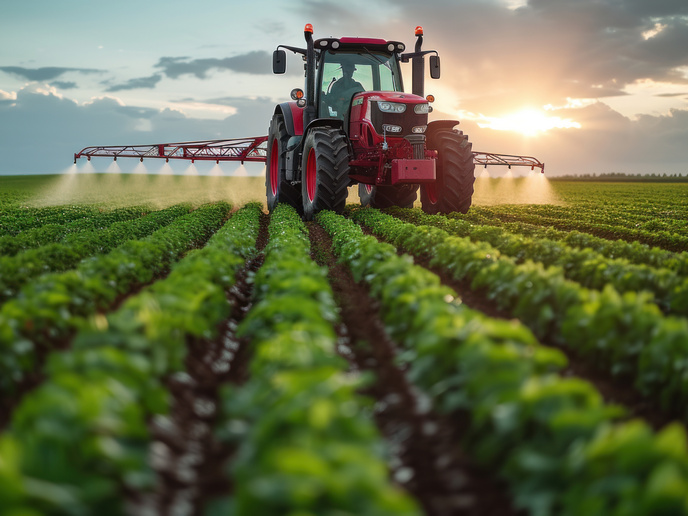
The economics professor explained that this census highlighted several constraints facing farmers, particularly limited access to modern agricultural equipment. To address this, a National Council for Mechanization was decided upon, and the public group Agrodiv was tasked with renting equipment to agricultural cooperatives, with the aim of accelerating the modernization of agricultural activity.
Regarding the scope of cooperatives, El Hidoussi estimated that this model now represents “both a strategic and economic choice, tailored to the organizational specificities of the national agricultural sector.” He stressed that this approach could help reduce the food import bill, estimated at 9 to 10 billion dollars per year, thereby strengthening the country’s food sovereignty and its ability to meet the food security challenge.
Algeria has about 40 million hectares of arable land, of which only 8.5 million are currently exploited, revealing significant potential for agricultural expansion, he recalled on National Radio.
The census also reveals that nearly 1.2 million investors operate in the agricultural sector, about 70% of whom are concentrated in the north of the country. Farm sizes range from 4 to 8 hectares per operator, relatively modest areas compared to the South, where farms exceed 10,000 hectares per investor.
In the North, most operators resemble small-scale horticulturists more than large-scale agricultural investors, due to limited financial capacities that prevent acquiring modern equipment. Yet, contemporary agriculture relies on intensified production supported by mechanization, advanced technologies, and appropriate inputs—hence, according to the expert, the importance of cooperatives as a mechanism for collective production that promotes pooling of resources, complementarity among farmers, and better organization of planting, harvesting, and marketing phases, especially during crises.
In this regard, El Hidoussi indicated that a new legal framework governing the organization and management of agricultural cooperatives should emerge before the end of next March, in line with the orientations of the President of the Republic, aimed at effectively framing this strategic approach and consolidating the modernization of the agricultural sector in service of overall economic development.