

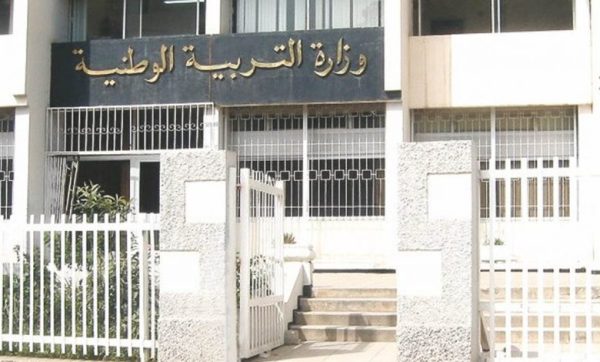
The Ministry of National Education is expected to renew the same scheduling framework for Ramadan 2026 as was adopted last year. The new class hours for each subject across all educational levels have just been unveiled. This organization aims to adapt the school rhythm to fasting conditions while maintaining course continuity.
As with every Ramadan, class hours are reduced in schools across all three educational levels. For the current school year, the Ministry of National Education has set a new class volume. Classes will start at 8:30 a.m. and end at 2:00 p.m. in all schools nationwide.
According to the memo sent to school officials, the Minister of Education stated that, in line with the note from the General Directorate of Public Service and Administrative Reform, for primary education in single-shift schools, morning and afternoon class durations will be cut by 30 minutes, with a 15-minute break in the morning.
The Ministry of National Education specifies that students will have a 1-hour-15-minute rest period daily between morning and afternoon classes.
The same source notes that for double-shift primary schools, morning and afternoon class durations will be reduced by one hour, with a 15-minute break and a 30-minute interval.
Thursdays will feature special adjustments. Specifically, the afternoon session will be shortened and end at 1:30 p.m., allowing teachers and families to better organize the weekend.
This framework seeks to balance pedagogical requirements with the physical capacities of teachers and students during the fasting period.
However, the Ramadan 2026 school calendar stands out due to scheduling second-quarter exams during the holy month itself.
The first phase, dedicated to classes and reviews, will run from February 18 to March 5. This period will serve as the final stretch to complete programs and reinforce learning.
The second, decisive phase will see quarterly exams from March 8 to 12. This key milestone places students and teachers before a major challenge, demanding focus and rigorous organization.
In this context, mobilization from parents and educators appears essential to ensure students a calm environment and avoid burnout, especially since results determine progression to higher grades.
Following this intense sequence, students will enjoy spring break starting the evening of March 19 until April 5.
A highlight this year: these holidays will coincide with Eid al-Fitr, expected astronomically on March 20 or 21, 2026. This overlap will turn the school pause into a double celebration for families, free from evaluation and homework pressures.
A national education inspector highlights that the continuous-day system helps reduce absenteeism often seen during Ramadan. He also believes scheduling exams before vacation allows students to fully enjoy festivities without academic pressure.
By maintaining a unified national schedule, educational authorities aim to ensure equality in public service and harmonized school operations.
Beyond hours, the real challenge now lies in the education system’s and families’ ability to support students during this demanding period split between fasting, reviews, and exams.