

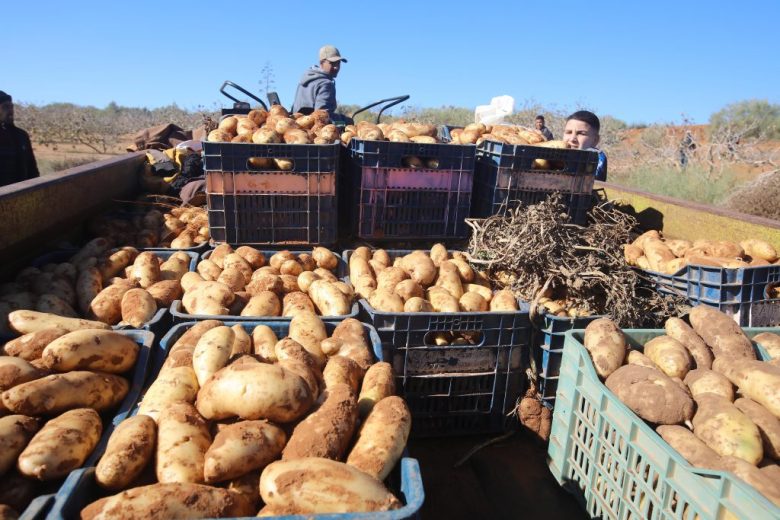
An average potato production of 400 quintals per hectare has been recorded this year, with some varieties exceeding this level. These results stem from increased cultivated areas and the emergence of new production hubs.
This production growth positions Algeria among the region’s top producers. In addition to well-known areas like Mostaganem, Oued Souf, and Biskra, other regions have emerged as production centers, such as Aflou in Laghouat Province, thereby expanding cultivated surfaces and boosting output levels. According to Ibrahim Djeribia, President of the Algiers Province Chamber of Agriculture, this year “we are recording record production with yields of 400 quintals per hectare, and some varieties have surpassed these levels.”
Discussing the dynamism in the agriculture sector in recent years, which has satisfied 90% of national needs in agricultural products, he noted that potatoes are produced year-round in certain areas, and farmers have gained expertise and mastered technical itineraries. However, the main concern for farmers remains marketing this large production.
In this regard, he stressed the need to support this momentum to avoid potential losses for farmers. Mr. Djeribia recommended focusing on two segments: developing processing, which adds value, and opening up exports.
“If we know how to manage crises, we must also manage abundance,” he specified. Noting that potato processing remains “timid,” he announced the upcoming opening of two processing plants, which will undoubtedly strengthen the country’s capacities in this area. “It’s a good thing, but we need to do more to absorb the large production,” Mr. Djeribia added.
Export is also seen as a solution to market the entire production. According to him, it is necessary to move toward exporting potatoes, particularly to African markets. However, export should not be limited to surpluses. “Export must be a policy, not an option,” clarified the President of the Algiers Province Chamber of Agriculture, noting that these solutions also apply to other sectors with production surpluses, such as citrus fruits. Because what matters, in his view, is ensuring product availability at affordable prices locally while avoiding losses for farmers who sell potatoes at 15 DZD per kilo, especially during overproduction.
Highlighting the progress in the agriculture sector, which contributes 15% to GDP, the President of the Algiers Chamber of Agriculture expressed optimism based on measures taken, the interest shown by top national authorities in agriculture, and the “pragmatism of the Minister of Agriculture,” who involves sector professionals.