

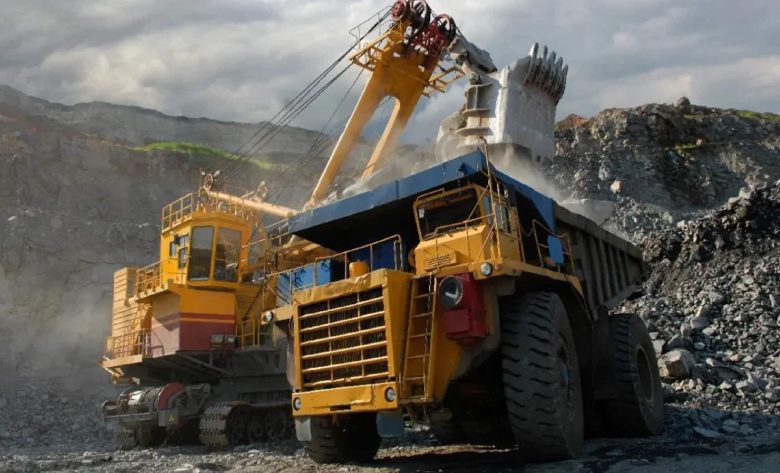
From the extraction of raw ore to its transformation into usable products, the Gara Djebilet project relies on an integrated industrial chain, mobilizing several sites, infrastructures, and processing units across the country. Reda Belhadj, CEO of the National Mining Research and Exploitation Company (Sonarem), presented on Monday, before the Prime Minister and the ministerial delegation, the various stages of this vast mining and steelmaking project.
The mining project covers an area of about 40,000 hectares, divided into three zones: Gara West (15,000 ha), Gara Center (18,000 ha), and Gara East (7,000 ha). Current operations focus on Gara West, where iron ore extraction has begun before its transport to the planned processing units.
The extracted ore is first processed on site through four primary processing units. The first plant, currently under installation, is expected to enter production by the end of May 2026, before the progressive deployment of the other units. The ore is then transported by a 1.5 km conveyor to the railway facilities, where it is loaded into trains of 170 wagons, capable of carrying nearly 17,000 tons per convoy, with loading taking about 90 minutes.
Gara Djebilet ore production will increase progressively, from 8 million tons/year initially to 50 million tons/year by 2040. Of these volumes, 20 million tons will go to the Toumiat site (Béchar) to produce 4 million tons/year of iron concentrate and 6 million tons/year of pellets, in partnership with Feraal and Tosyali. At Harchaya (Naâma), 30 million tons will be transformed annually into 5 million tons of reduced iron (briquettes) and 10 million tons of semi-finished steel products.
A significant portion of the production, estimated at 25 million tons, will then be transported to the Bethioua site in Oran wilaya. This 90-hectare site, near the port and the Tosyali Algeria complex, facilitates supply to national clients, notably the El Hadjar, AQS, and Tosyali complexes, as well as exports.
In parallel, the project integrates a strong environmental dimension. The mine and primary processing units will be powered by a 200 MW photovoltaic plant under construction by Sonelgaz, with energy storage. Solar panels will also be used for lighting on the mine site.
Dust reduction measures, a reforestation program, valorization of sterile waste, industrial water recycling, and gas recovery for electricity production will enable total energy autonomy.