

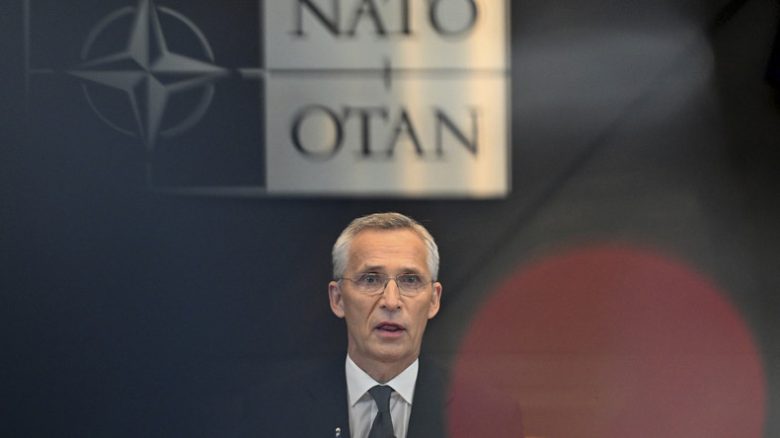
In an interview, Jens Stoltenberg called on Western countries to resume dialogue with Moscow. According to him, discussions are necessary on the Ukraine conflict, but also on arms control. A notable change in tone from the former NATO chief, who had until now adopted a hard line toward Russia. Jens Stoltenberg, former NATO Secretary General and current Norwegian Finance Minister, believes the time has come for Western capitals to resume dialogue with Russia. In an interview published on January 17 by Der Spiegel, he advocated speaking to Moscow “like a neighbor.” The ex-head of the Atlantic Alliance advances three reasons to justify this return to dialogue. First, he deems it indispensable to address with Russia the question of ending hostilities in Ukraine, similar to discussions between the United States and other partners. Second, he mentions the need to rebuild an international arms control framework. Finally, he insists on the geographic reality: Russia is Europe’s direct neighbor, making dialogue inevitable.
A Constant Russia, Divided Europeans
He recalled that even in the most tense hours of the Cold War, the great powers had managed to limit the use of nuclear weapons. Questioned by the Russian media, Foreign Ministry spokesperson Maria Zakharova emphasized that Moscow’s position on the Ukrainian conflict is perfectly well-known and has not changed. She confirmed that Russia remains ready for equal-to-equal dialogue, while lamenting the total absence of will on the part of European countries.
This change in tone by Jens Stoltenberg fits into a broader movement observed in recent weeks in Europe. Emmanuel Macron had already mentioned at the end of December the need to reestablish contact with Vladimir Putin. Italian Prime Minister Giorgia Meloni also called to “talk with Moscow.” German Chancellor Friedrich Merz, for his part, stated that Russia remains “Europe’s largest neighbor” and that it is time to restore some balance in the region.
Moscow has welcomed these developments. On January 16, Russian Presidential spokesperson Dmitri Peskov confirmed that Moscow perceives positive signals from Paris, Rome, and Berlin. He nevertheless specified that a dialogue currently exists with Washington but remains nonexistent with Brussels. A reality that underscores the growing diplomatic isolation of the European Union.
Without the United States, a Return to Realism
In his interview, Jens Stoltenberg also returned to his own experience with Russia. He mentioned his first exchanges with Vladimir Putin in the early 2000s, when he headed the Norwegian government. At that time, agreements had been concluded on energy and border delimitation. “We are very far from that today,” he acknowledged, while calling not to abandon dialogue.
Jens Stoltenberg warned against a possible U.S. withdrawal from NATO, which would considerably weaken the transatlantic link. This scenario, now openly contemplated, is causing growing unease among European leaders, who find themselves facing their own responsibilities without American protection.
In this context of internal divisions and strategic uncertainty, calls to engage dialogue with Russia are multiplying. Even those who, until this Saturday, adopted a hard line toward Moscow now seem overtaken by reality. As Washington’s influence becomes more distant, Europe rediscovers that no stability is possible without Russia.