

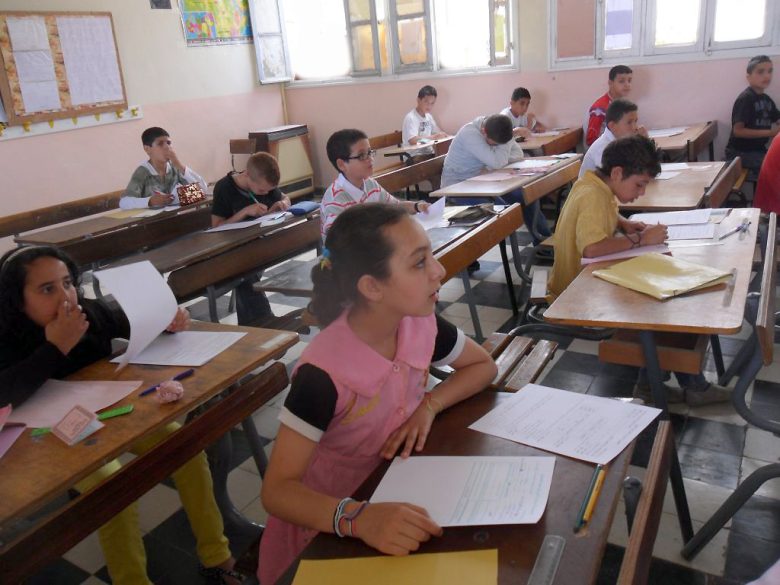
The first trimester exams began this Sunday in all schools across the country, taking place in an overall calm and organized atmosphere. As every year, this period marks an important milestone for students, teachers, and families, all focused on ensuring the smooth conduct of assessments.
This exam week occurs while several education directorates have gradually reintroduced the closed-week format in certain primary schools—a measure that fully dedicates one week to exams and temporarily suspends classes to allow children to take their exams under the best possible conditions.
In several provinces (wilayas), education authorities decided to hold assessments from December 7 to 11 within a framework exclusively dedicated to exams. The stated goal is to clarify the organization of tests and provide students with a calm, overload-free environment, especially for 5th-year students preparing for the national skills assessment.
This measure, outlined in ministerial decision No. 269 of November 11, 2025, primarily aims to unify the educational rhythm and ensure consistent monitoring across different schools.
However, not all education directorates adopted the closed-week format. Some prefer to maintain the usual system with exams spread over several days without suspending lessons, believing that the traditional model better suits students’ age.
This variety in approaches has created some organizational differences from one province to another, but overall, schools have adapted flexibly, favoring what seemed best for the students’ well-being.
Despite these variations, both parents and teachers report a generally peaceful atmosphere, marked by a collective will to preserve children’s focus and serenity.
In schools opting for the closed week, the following arrangements were designed to facilitate the organization of a concentrated exam schedule within a single week: a balanced distribution of tests between mornings and afternoons, time reserved for grading and revision overseen by the teaching team, and maintaining the usual program for the 1st year and preschool to avoid unnecessary disruption.
These measures primarily aim to reduce pressure on students by providing a clear and regular framework.
Supporters of the closed-week format emphasize that it creates an environment conducive to concentration while offering teachers more favorable conditions for grading and student support.
On their side, teachers and inspectors who prefer the classic system point out that it sometimes better aligns with the natural rhythm of primary school and limits fatigue linked to long exam periods.
Both views fundamentally reflect a desire to protect the students’ interests and ensure their psychological comfort.
Education specialists finally call for placing the core concerns at the center of the debate—namely, the quality of education, adapting teaching methods, and preserving children’s balance during this period.
They stress the necessity to evaluate the effects of the closed-week system before making any final decisions, to ensure an organization aligned with the real needs of primary education.