

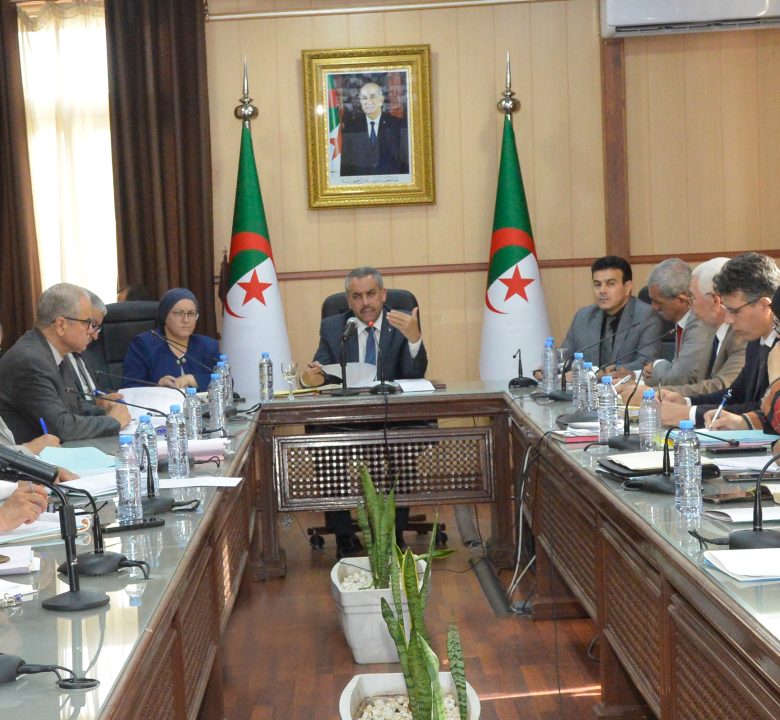
The Minister of National Education, Mohamed Seghir Saâdaoui, issued firm directives this Wednesday during a national conference held via videoconference to strengthen administrative rigor and transparency in the management of schools.
This meeting, which brought together central administration officials, education directors, and deputy directors, focused on the integration of contract teachers, local governance, monitoring of key projects, and protection of students’ rights—priorities outlined in the ministry’s 2025 roadmap.
In his opening remarks, Saâdaoui reminded that all decisions within the sector must strictly comply with legal and regulatory frameworks.
He emphasized that the stability of schools can only be ensured through complete transparency in management, close monitoring of services, and strict enforcement of current regulations. According to him, these principles are essential to protect the rights of students and educational staff, while preserving the sector’s credibility and citizens’ trust in its institutions.
The minister then reviewed detailed reports from education directors on the integration of contract teachers into their positions. He stressed the need for methodical and coordinated management to fill vacancies without compromising the continuity of teaching. Mr. Saâdaoui insisted that every measure complies with the legal framework and primarily serves the students’ interests and the smooth functioning of schools.
He also addressed the monitoring of students from the [Sahrawi Arab Democratic Republic], who are hosted in several Algerian schools. He underlined the importance of specific and ongoing support entrusted to pedagogical teams appointed by education directorates to provide comprehensive academic and extracurricular guidance. This measure aligns with the official commitments of the Algerian state toward these students and reflects Algeria’s educational solidarity.
Regarding relations with social partners, Mr. Saâdaoui called for maintaining a calm and constructive climate with authorized unions, strictly respecting law 23-02 governing union rights. He highlighted the importance of continuous dialogue at the local level to provide quick and concerted solutions to encountered issues.
The minister also reminded of the obligation to immediately respect and apply the same law’s provisions regarding staff allocation, emphasizing that no exemptions will be tolerated.
He congratulated education directorates that have made significant progress implementing key projects listed in the 2025 program.
However, he demanded acceleration of administrative processes, especially the finalization of specifications and the effective start of work at the wilaya level so that these projects can be operational by the next school year.
The minister announced that the next national conference will focus on monitoring the progress of these projects, while programs for the 2026 fiscal year will be reviewed after the adoption of the finance law.
Concerning the administrative aspect, Mr. Saâdaoui instructed education directorates to immediately complete the development and validation of human resources management plans to ensure their effective implementation on the ground.
He emphasized rigorous monitoring of execution and accountability of the responsible officials to ensure efficient use of human resources in the sector.
The minister recalled that reintegrating out-of-school students is a national priority and a key tool for protecting youth. This measure, he explained, aims to offer a second chance to children and adolescents who have dropped out while shielding them from external influences that could affect their educational or social paths. “The welfare of the young student must remain at the heart of our decisions,” he stressed.
In conclusion, Dr. Saâdaoui highlighted the necessity of strengthening education directorates with qualified human resources, considering them the foundation for the sound functioning of the education system.
Effective management, he underlined, depends on competence, discipline, and administrative rigor, which guarantee institutional stability and continuous improvement of the sector’s performance.