

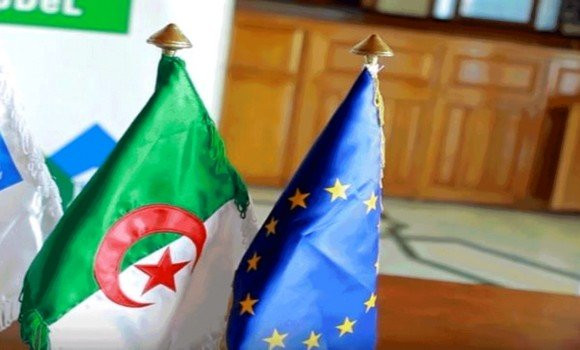
The second meeting of the Algeria-European Union Joint Parliamentary Committee, held in Brussels, highlighted the need to strengthen cooperation and rebalance the interests linked to the Partnership Agreement that came into force twenty years ago. This was stated yesterday in a statement from the National People’s Assembly (APN).
Meeting in the Belgian capital, the Algerian and European delegations held the second session of their Joint Parliamentary Committee, chaired by Mr Sid Ahmed Tammarri for the Algerian side and Mr Ruggero Benedetto Italo Razza for the European side. According to the organisers, the meeting took place in ‘an atmosphere of constructive dialogue and shared responsibility’.
Mr Tammarri reaffirmed that Algeria considers its relations with the European Union to be ‘strategic’, stressing that they are based on geographical proximity as well as historical, cultural, human and commercial ties. On the occasion of the 20th anniversary of the entry into force of the Partnership Agreement, Mr Tammarri stressed that the joint evaluation should ‘make it possible to correct the imbalances identified and restore the balance of mutual interests’.
For his part, Mr Ruggero Razza stated that ‘both sides face common challenges in terms of security, the economy and migration’, calling for ‘a stronger partnership based on mutual understanding and respect’ with a view to serving the best interests of both sides and contributing to stability and development in the Euro-Mediterranean area. He pointed out that ‘the region is going through a delicate and sensitive phase’ that requires ‘increased effort, not only at the governmental level, but also at the parliamentary level,’ which he presented as ‘an essential lever for supporting dialogue and rapprochement.’
The European official also described Algeria as a ‘key partner for the European Union’ and an ‘influential’ regional player in Southern Europe and the Mediterranean region, believing that this position opens up broad prospects for building more balanced and efficient cooperation in the political, economic and security fields. According to him, strengthening parliamentary friendship frameworks helps to consolidate mutual trust and support current regional and international dynamics, in the interests of common stability and development.
The Algerian delegation explained that the reorganisation of tariff dismantling is based on a detailed assessment of the implementation of the agreement, which highlighted ‘growing imbalances and a lack of equilibrium in benefits’. According to the delegation, this finding led Algiers to adopt measures to support domestic production in order to ensure a more equitable partnership.
Algeria also expressed its ambition to develop an ‘advanced industrial partnership’ with the EU, based on ‘technology transfer, capacity building and diversification of the national economy’, with the aim of reducing dependence on hydrocarbons and establishing a competitive model that generates wealth and jobs.
It should be noted that the country has reaffirmed its role as a ‘reliable and regular supplier of energy, particularly gas, to the European Union’, thus confirming its position as a ‘strategic partner in energy security’, according to the statement.
For its part, the European delegation highlighted ‘Algeria’s key role as a major supplier of gas and crude oil’, while also highlighting the strategic importance of new energy projects, particularly in the field of renewable energies and green hydrogen.
In terms of investment, the Algerian delegation pointed out that ‘the new investment law guarantees transparency and security for investors,’ making the national market ‘a promising destination for economic partnerships with shared benefits.’
In closing, both parties affirmed that the institutional structure of bilateral cooperation should be considered a key issue, adding that parliamentary diplomacy was a decisive lever for consolidating Algerian-European relations. Parliamentary dialogue, they concluded, ‘allows for a frank and constructive exchange on issues of common interest and reflects the shared desire to strengthen relations between the two shores.’