

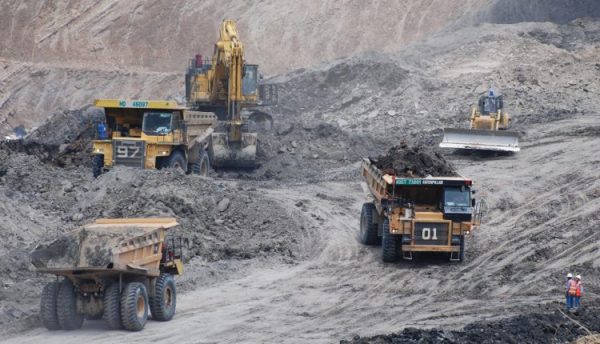
The official launch of the exploitation of the Gara Djebilet deposit is scheduled for the first quarter of 2026, a deadline described as a “national event” by the President of the Republic. At that time, the first ore processing unit will start operating and will inject nearly 4 million tons of iron into the national market, marking the concrete beginning of a project considered one of the country’s most strategic.
According to Djamel Eddine Choutri, Chief of Staff to the Secretary of State for Mines under the Minister of Hydrocarbons and Mines, this launch is part of a comprehensive strategy aimed at reducing the country’s dependence on iron ore imports, currently estimated at nearly 10 million tons. This initial production will gradually replace imported volumes intended for national steel complexes such as Tosyali, El Hadjar, or Bellara. Tosyali’s plant will be the first user of the iron processed in Bechar.
The Gara Djebilet deposit, with reserves reaching 3 billion tons, is no longer just considered a dormant mining resource in the Algerian subsoil. It now constitutes an integrated industrial project covering the wilayas of Tindouf, Bechar, and Naama. According to Mr. Choutri, this project fully aligns with the President’s vision to diversify the national economy beyond hydrocarbons. It is not about replacing oil or gas, he clarifies, but about establishing a strategic complementarity between different sectors, he stated this Tuesday on national radio.
In Tindouf, the first processing unit with a capacity of 4 million tons will begin operation in early 2026, while a second similar unit is planned in the project’s first phase (2024–2032). In Bechar, a processing plant has been launched in partnership with Tosyali and Feral (Sonaram group). It will initially produce 4 million tons of concentrate, then 6 million tons of pellets to reach a total capacity of 10 million tons. Naâma, for its part, will focus on higher value-added products, directly usable by the steel industry or exportable. Funding will be sought following final approval by the Council of Ministers.
One of the main historical obstacles of the project, concerning the transport of the ore, was lifted with the completion of the Gara Djebilet–Béchar railway line, which will come into service in early 2026. This achievement represents a major turning point, as transport had long been considered the “number one challenge,” recalls Mr. Choutri.
The second major challenge concerned the phosphorus content of the ore, which was too high (0.8%). The technologies selected for Tindouf and Bechar will reduce it to 0.2% or less, while Naâma will adopt specific techniques adapted to its production. These solutions were chosen after laboratory, semi-industrial, and industrial trials, notably with Chinese partners.
According to the Chief of Staff, the expected economic benefits are significant, including strengthening industrial sovereignty, reducing the import bill, creating 250 direct jobs at Tindouf’s first unit, 800 in Bechar, and boosting local economies through housing, transportation, services, and subcontracting.
Mr. Choutri emphasizes that the deposit’s exploitation remains entirely Algerian, with foreign partners only involved in constructing the processing units.
The mining sector’s share in the national GDP, currently close to 1%, will gradually increase thanks to the ramp-up of local production and on-site mineral processing. Beyond Gara Djebilet, other projects will contribute to this dynamic: the integrated phosphate project in three wilayas, the lead-zinc project in Bejaïa, as well as several industrial ore processing plants.
The investments made are substantial, approximately 135 million dollars for the Tindouf project (deposit and unit), and about 800 million dollars for the Bechar project. All have been approved following in-depth profitability studies. The state supports these projects by providing the necessary infrastructure (water, gas, electricity) and adopting an incentivizing regulatory framework.
The new Mining Code has simplified procedures, encouraged prospecting, and strengthened guarantees granted to investors. It also includes tax and financial incentives appreciated by several foreign partners interested in gold, manganese, phosphate, or other industrial minerals. The new Investment Code has facilitated the launch of these projects and improved their profitability. The implementing texts of the Mining Code will be finalized before the end of the year, in accordance with commitments made to the President.
On this subject, Mr. Choutri affirmed that all the concerned sectors (mines, public works, transport) are working coordinately to meet the deadline of the first quarter of 2026, placing the Gara Djebilet project at the heart of the national strategy of economic sovereignty and diversification beyond hydrocarbons.