

The Algerian war of liberation succeeded in gathering the unwavering support of several countries and numerous global figures from its inception on November 1, 1954. Arab states and those belonging to the non-aligned movement, such as China, recognized the FLN as the legitimate representative of the Algerian populace. Their assistance subsequently poured in.
For several nations, including China, Yugoslavia, Egypt, Sudan, Syria, Iraq, Yemen, and Saudi Arabia, the Algerian cause constituted an integral part of the struggle of the oppressed. Member states of the Arab League, founded in 1945, committed themselves to Algeria’s independence. Egypt provided steadfast and relentless backing. The declaration announcing the start of the uprising on November 1, 1954, was broadcast across the airwaves of Radio Cairo, as was the official announcement establishing the Provisional Government of the Algerian Republic (GPRA) on September 19, 1958, in the Egyptian capital. Ferhat Abbas made his initial public address there, outlining the circumstances surrounding the birth of this government. Despite difficulties and hurdles encountered in supplying weapons to the Revolution and the pressures facing Egypt, including the aggression against its territory in the autumn of 1956, military aid for the Liberation War never ceased.
Numerous Syrians, including medical personnel, also enlisted alongside Algerians during the uprising. Among the most distinguished was former president Noureddine Al Atassi, who gave his name to the hospital in Bologhine. He served in the maquis, particularly along the Algerian-Tunisian border, before remaining in Algiers during the initial years of independence prior to returning to his home country.
Tunisia hosted the border army and the general staff in its frontier area. The closeness between the two peoples against colonialism was illustrated on February 8, 1958, during the French air force bombing of the village of Sakiet Sidi Youcef in Tunisia, just a short distance from the border. That strike killed 70 Tunisiens and Algerians and wounded 140 others. Tunisia’s shift toward full backing for the Algerian cause enabled the FLN to establish a permanent presence and build a rear military base to secure supplies of arms and personnel for the interior maquis.
The Battle of Issine reflected the genuine picture of cohesion and solidarity between Algerians and Libyans after their blood mingled in the struggle for honor, sacrificing their lives for freedom and independence. During this battle, the blood of Algerians and Libyans merged, becoming a symbol of unity and solidarity between both peoples and irrefutable proof of the sacrifice and support from brotherly nations toward the National Liberation War.
Iraq was the first country to recognize the Provisional Government of the Algerian Republic (GPRA), mere minutes following its proclamation. One must also recall Iraq’s assistance in building the Algerian state after independence, particularly within education and hydrocarbons.
Saudi Arabia demonstrated its backing for Algeria through concrete deeds. King Salman bin Abdulaziz chaired the primary committee for fundraising for Algeria, standing among the most vital personalities who supported and assisted the Algerian Revolution through all its phases. On January 5, 1955, Ahmed Echakiri, representative of the Kingdom of Saudi Arabia to the United Nations, drew attention by highlighting the suffering of the Algerian populace. That same year, he succeeded in convincing 14 African and Asian states of the necessity to place the Algerian cause on the agenda of the UN General Assembly.
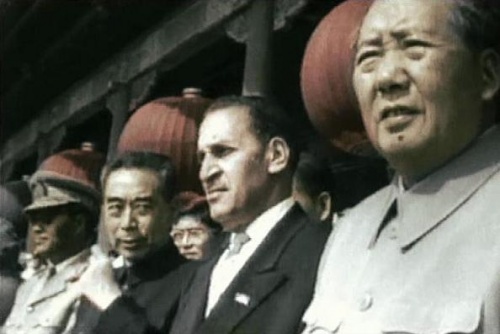
Algeria held a central position in the policy of China, which perceived an affinity with its own colonial past within the Algerian anti-colonial uprising. China thus continuously granted political and military assistance to Algeria, becoming the first non-Arab nation to recognize the GPRA. The initial shipments of weapons delivered to the revolution bore the mark of China.