

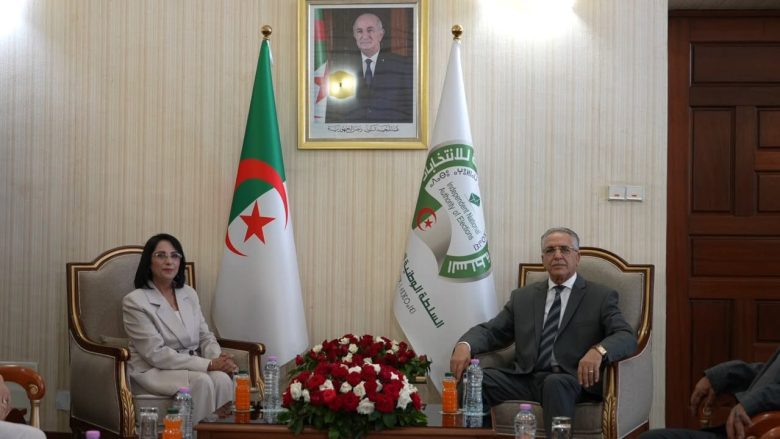
Ahead of the upcoming local elections set for November 28, the president of the Independent National Electoral Authority (ANIE), Saad Arous, is driving an intense round of consultations with the entire national political spectrum. At the core of these strategic deliberations lie the lessons and difficulties recorded during the recent legislative elections, particularly the thorny issue of candidacy criteria, the complexity of sponsorships, appeal procedures, and recurring digital glitches. The primary objective of this effort is to guarantee an election of flawless transparency while permanently restoring citizen trust in the electoral process and the effective expression of their sovereignty.
In line with this ongoing dialogue, the Rally for Culture and Democracy (RCD), following talks with the ANIE president, formulated a series of concrete proposals aimed at ensuring a transparent, fair, and credible electoral process. According to an official party statement, the delegation led by Atmane Mazouz highlighted the absolute necessity of maintaining continuous consultation with political entities, ensuring strict equality among all contenders, and establishing proper conditions to revitalize civic participation.
According to the same source, the RCD delegation presented a detailed memorandum outlining a comprehensive overview of shortcomings and obstacles observed during previous electoral events as well as during the initial preparatory stages of the upcoming local elections. This working document examines in depth candidacy requirements, sponsorships, electoral oversight, digital glitches, procedural transparency, appeals, alongside the imperative neutrality of the administration.
On the same day, the president of the Sawt Echaab party, Lamine Osmani, who also conferred with Saad Arous, described his meeting as constructive, unfolding within a democratic and highly open atmosphere, beyond the respective views of each side. This audience follows one granted to the delegation of Tajamou Amel El-Djazair (TAJ), led by Fatima Zohra Zerouati, demonstrating the governing body’s intent to engage broadly.
To place matters in proper context, it should be noted that ANIE officially announced, on September 8, 2026, the strict eligibility criteria, administrative file requirements, and sponsorship rules for the Communal (APC) and Provincial (APW) People’s Assemblies. Consequently, these hearings fall within a broader framework of active listening and consultation initiated by the institution in recent days.
Prior to meeting the RCD and TAJ, Saad Arous had already met with leaders of several major national political parties. This non-exhaustive list includes the National Liberation Front (FLN) led by Abdelkrim Benmbarek, the National Democratic Rally (RND) led by Monder Bouden, the El-Bina Movement led by Abdelkader Bengrina, the El-Karama party represented by Mohamed Daoui, as well as the Front for Justice and Development (FJD) and the El-Moustakbal Front led by Fateh Boutbig. The latter characterized last week’s meeting with the ANIE president as an ideal opportunity to present his party’s concrete concerns and recommendations regarding preparations for this local electoral milestone.
Ensuring equal opportunity on the ground remains the guiding thread of these gatherings, whose stated purpose is enhancing public and political confidence in the electoral framework. Throughout his various statements, Saad Arous repeatedly reaffirmed the Authority’s steadfast commitment to ensuring a free, fair, and transparent election. This series of discussions aligns closely with Ordinance No. 21-01 establishing the organic law on the electoral system, alongside active legislation governing political party activities and operations. Exchange topics naturally address candidacy file approval criteria, rigorous monitoring of polling operations, and the implementation of strict vote-counting oversight mechanisms to guarantee equal footing for all applicants on the ground.
Furthermore, this concerted initiative follows major institutional activity led by ANIE’s new head. Saad Arous was received last week by Khalida Boufedeche, President of the National People’s Assembly (APN). During that courtesy and working visit, Ms. Boufedeche strongly emphasized the absolute necessity of continuing and intensifying coordination among the country’s constitutional bodies.
Concurrently, ANIE consolidated its operational presence across the entire national territory by finalizing its list of coordinators across the nation’s 1,541 municipalities, signaling complete technical readiness for the crucial November 28 appointment, which comes on the heels of the latest legislative elections.
It is worth recalling that during those previous legislative elections, thousands of candidacies were rejected by ANIE within an exceptionally tight timeframe, sometimes past initial appeal deadlines. Numerous political formations vigorously denounced this measure, targeting its 7th paragraph and criticizing administrative interpretations deemed arbitrary.
Today, political parties stand ready for action as they actively prepare for the local vote, marking a widespread organizational push. All formations are working tirelessly on the ground and within their respective leadership headquarters. Regarding the Workers’ Party (PT), Louisa Hanoune officially declared Thursday during a political rally that her party will fully participate in the local elections on November 28. Following the notable return to the legislative arena by parties that had previously chosen to boycott past contests and subsequently rejoined during the 2026 legislative elections, these formations now naturally form an integral part of the local contest.