

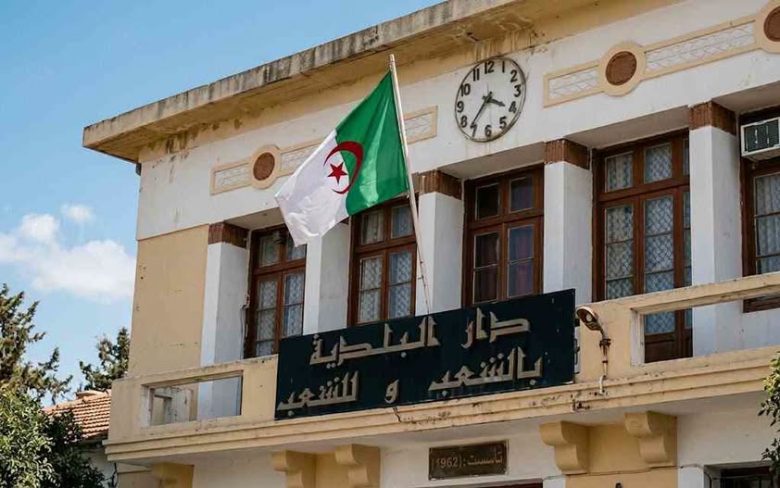
The electoral campaign for the election of members of Municipal People’s Assemblies (APC) and Provincial People’s Assemblies (APW), scheduled for November 28, begins today. Governed by a rigorous legal framework, this campaign opens twenty-three days prior to the voting date and concludes three days before it, a timeframe reserved for electoral silence.
The law dictates that throughout this timeframe, state institutions and public entities must maintain an equal distance regarding all candidates and competing lists, while guaranteeing equitable access to direct expression platforms via media outlets. Regarding this final aspect, the draw for distributing airtime slots allocated to candidates across public audiovisual media occurred several days ago, during which political parties and representatives of independent lists signed the Code of Ethics for Electoral Practices.
Managing local authorities and addressing specific programs impacting daily citizen life will sit at the center of this campaign. For candidates, the challenge lies in convincing voters first to cast ballots and subsequently to make the right choice.
For political parties, these local elections carry capital political weight, equal to legislative contests. This interest was confirmed once more through the strong involvement of party leaders in conducting rallies and gatherings across the entirety of national territory. The unveiled schedule proves quite substantial. For party heads, the campaign will serve to mobilize voters through field actions or door-to-door visits, meeting citizens, hearing concerns, and primarily presenting their candidates.
In this regard, political formations took note of the extent of voter absenteeism during recent polls where turnout rates kept plummeting. Certain observers consider one reason for this “electoral plague” is precisely the apathy of political parties and their intermediate or regional structures in organizing debates and meetings with citizens throughout the year. Parties cease active operations across an entire mandate, wallowing in total political hibernation and waking up only upon the convocation of the electorate by the President of the Republic.
Thus, reports indicate that the General Secretary of the National Democratic Rally (RND), Mounir Bouden, set up an extended tour across the southern region, stretching from Timimoun to Tamanrasset passing through Adrar and In Salah. On his end, Abdelkader Bengrina, head of the El Bina Movement, selected Bouira to launch his campaign, whereas Abdelali Hassani, leader of the Movement of Society for Peace (MSP), preferred El Oued as his starting point. Newly elected deputies are also expected to lend a hand and assist their party candidates in this mobilization drive to shatter the specter of abstention.
As a reminder, the President of the National Independent Election Authority (ANIE), Saad Arous, urged candidates to observe electoral practice ethics, comply with the law, safeguard personal dignity, ban offensive and misleading speeches, as well as anything capable of damaging fair competition or compromising its integrity.
Conducting the electoral campaign must, consequently, comply with strict rules surrounding political speech content, aiming to prevent any exploitation of national values and any incitement to divisions. Hate speech and statements grounded in community, regional, linguistic, or ethnic considerations are strictly forbidden, as is resorting to foreign languages. Utilizing elements of national identity for partisan goals or electoral propaganda remains formally prohibited.
Finally, worth noting is that the national electorate involved in this poll reaches 24,236,959 voters, according to ANIE data. The tally of candidates stands at 141,388 for electing (APC) members and 21,476 for renewing (APW) seats. The proportion of young candidates hits 54.02 percent, women represent 11.86 percent, while candidates holding university degrees account for 48.48 percent.