

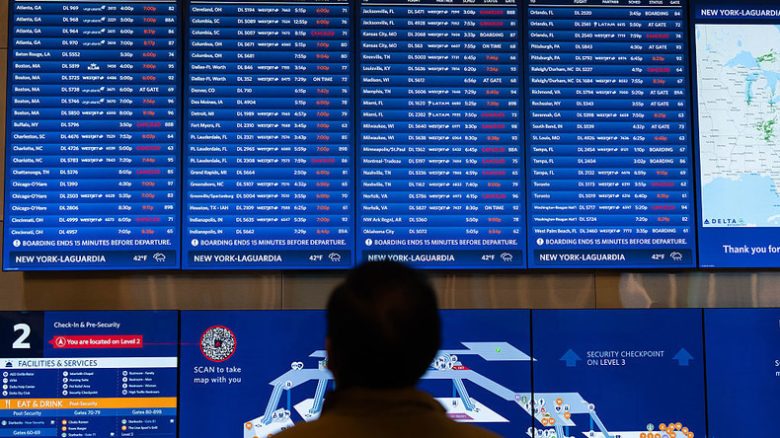
The massive November 13 outage exposed the extreme obsolescence of the FAA: from 1980s radars and floppy disk usage to purchasing spare components on eBay. Operating this “technological museum” consumes three billion dollars annually and makes accelerated modernization highly perilous.
The aviation disruption that occurred on November 13 in the United States highlighted a problem the Federal Aviation Administration (FAA) had warned about for years: rushing the upgrade of the air traffic control system risks triggering its collapse, the Washington Post reported, citing sources. Technically, blame falls on a malfunctioning router that a contractor was installing while replacing copper wires with fiber optics. According to the American newspaper’s sources, the device sent “over 1,000 connection requests every four to five seconds,” causing instability in the communications network linking air traffic controllers and airborne aircraft.
However, the root cause, as it turned out, runs deeper. US Transportation Secretary Sean Duffy stated that air traffic across the United States was halted not due to a glitch in a previously deployed AI-based tool, but because of outdated hardware. According to him, the United States operates an “incredibly old” air traffic control network.
According to the Washington Post, certain air traffic control centers still rely on floppy disks, and replacement parts for aging radar units must be personally tracked down by staff and ordered on eBay, since manufacturers ceased production long ago. The newspaper added that the FAA manages 612 radar systems, some in operation since the 1980s. There are 14 distinct configurations of this hardware, each requiring specialized components that are no longer manufactured.
Maintaining this “museum of technology” consumes the bulk of the FAA’s annual equipment budget, roughly three billion dollars. Simultaneously, fast-tracked modernization could continue generating issues. According to a Government Accountability Office (GAO) report, the strategy adopted by the Federal Aviation Administration to roll out a new system prioritizes speed over risks tied to cost uncertainty and potential malfunctions.
A former FAA worker told the Washington Post that if the overhaul keeps proceeding under unrealistic deadlines, it risks repeating a scenario akin to Friday’s meltdown. On November 13, the US Federal Aviation Administration grounded departures from all airports. This halt was enforced due to a widespread communications failure impacting air traffic control operations, resulting in the cancellation or delay of over 15,000 flights nationwide. Air traffic resumed nearly four and a half hours later.