

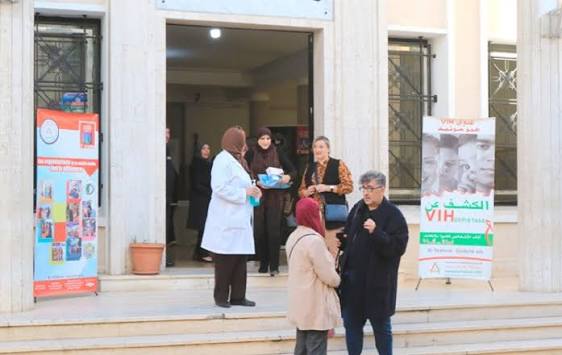
Less than 0.1 percent is the prevalence rate of HIV (Human Immunodeficiency Virus) among the general population in Algeria. While the epidemic remains low-level nationwide, it stays concentrated within populations facing high exposure risks. In this context, the Ministry of Health intends to sustain prevention efforts and bolster awareness. A nationwide information, education, awareness, and testing campaign will thus be held throughout December 2026, marking World AIDS Day.
This operation was announced by the Ministry of Health in a directive dated November 11, 2026, addressed to governors, health and population directors, as well as managers of public and private healthcare facilities. Held under the slogan “Ending AIDS begins with access to prevention, testing, and care without discrimination,” it aims to mobilize all relevant stakeholders, bring citizens closer to prevention and screening services, and combat the prejudices and discrimination still faced by people living with HIV.
Beyond clinical actions, this drive seeks to give significant weight to social mobilization. The ministry stresses the involvement of multiple sectors, notably National Education, Religious Affairs, Higher Education, Vocational Training, Youth and Sports, alongside local authorities and civil society. This cross-sector mobilization should help spread prevention messages, encourage testing, and remove social barriers that keep certain individuals away from health centers.
Combating stigma forms one of the major pillars of this initiative. People living with HIV can still encounter discriminatory attitudes and exclusionary behaviors, likely to deter them from seeking testing or continuing medical follow-ups. The ministry thus reiterates that access to prevention, diagnosis, and care must be guaranteed to everyone, free from stigma or discrimination.
On a national level, HIV prevalence remains below 0.1 percent among the general population, according to the ministerial directive. Although the epidemic is considered low-level, it remains concentrated within populations facing high exposure risks. Health authorities consequently urge maintaining prevention efforts and strengthening community outreach interventions.
This approach falls within the framework of the National Strategic Plan against STIs/HIV/AIDS 2024-2029. Among its seven priorities are reducing new infections, diversifying screening approaches, ensuring continuity of care, and achieving the triple elimination of mother-to-child transmission of HIV, syphilis, and viral hepatitis B.
Globally, the situation remains concerning. UNAIDS estimates for 2025 report 41 million people living with HIV, including 32.1 million receiving antiretroviral therapy. Roughly 1.2 million new infections were recorded during the same year, while 570,000 individuals died from AIDS-related illnesses.
These figures underscore the urgency of ensuring equitable access to prevention tools, testing, and treatments. The new Global AIDS Strategy 2026-2031, titled “United to End AIDS,” notably emphasizes reducing inequalities, protecting human rights, and engaging civil society, particularly people living with HIV.
As a reminder, World AIDS Day has been observed on December 1 every year since 1988, aiming to unite people worldwide in raising awareness about HIV/AIDS, informing the public on the epidemic’s evolution, and encouraging progress in prevention, treatment, and care.
In Algeria, the drive scheduled throughout December must serve as a reminder that ending AIDS is not solely a medical response. It also requires fighting misconceptions, promoting inclusion, and guaranteeing every citizen fair access to prevention and care. A detailed report on organized activities must be submitted to the Ministry of Health no later than January 15, 2027.