

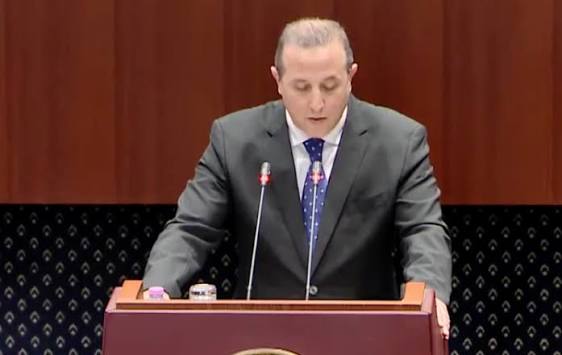
The 2027 Finance Bill seeks to diversify public revenues and attract informal capital, while simultaneously curbing the impact of the worldwide inflationary surge and safeguarding household purchasing power. This vision was articulated by the Minister of Finance, Mohamed Lamine Lebbou, at the National People’s Assembly, where he underlined the key priorities of the proposed legislation while pointing out that budgetary deficits are by no means unique to Algeria.
In his responses to parliamentary inquiries following a three-day debate that succeeded the formal presentation of the finance bill before the lower house, the Minister of Finance specified that this draft reflects the welfare commitments of the state and its pledges regarding the protection of purchasing power for low-income demographics. Concurrently, it aims at streamlining public expenditure, diversifying revenue streams and tax collection, and supporting the transition toward a productive economic structure.
During this legislative session presided over by Assembly Speaker Khalida Boufedeche, alongside several government members, the nation’s chief financial official indicated that the proposed bill contains measures designed to encourage productive investment and support non-hydrocarbon sectors, particularly start-ups, in order to broaden the economic and tax base without raising tax rates.
He added that these measures focus notably on improving tax collection efficiency, boosting the performance of tax administration, combating tax evasion, and enhancing audit procedures alongside regulatory compliance.
The minister also reassured lawmakers that the 2027 Finance Bill assigns paramount significance to supporting economic expansion and accelerating the execution of major high-yield development projects, particularly within mining, transport, manufacturing, agriculture, and agribusiness industries.
Regarding the preservation of citizen purchasing power and the mitigation of inflationary pressures, the minister stressed the determination of the state to ensure price stability, guarantee the availability of essential consumer goods, and fight speculation and monopolies through the continued subsidization of core consumer products and services, the upgrading of wholesale markets, the reinforcement of market surveillance, the creation of strategic reserves, and the advancement of digital monitoring and early warning systems.
Targeted Subsidies Dependent on Digitalization
Pertaining to targeted subsidy policies, Lebbou explained that their full execution remains tied to the completion of the digital transformation process, which will ensure fairness and equity in aid distribution.
Responding to queries from deputies concerning state financial balances, the minister asserted that public debt levels in Algeria remain well below benchmark thresholds set for emerging markets, noting that budget deficits affect many global economies.
On this topic, he emphasized the necessity of assessing public debt levels relative to Gross Domestic Product evolution, recalling that ninety-nine percent of public debt is domestic, which grants significant autonomy in sovereign economic decision-making.
Diversification of Financing Tools
The finance head further commented on managing the fiscal deficit. He affirmed that addressing the deficit occurs through a balanced framework grounded in mobilizing financial resources, utilizing internal debt and the Revenue Regulation Fund, while maintaining the exclusion of foreign borrowing, streamlining expenses, expanding the tax base, and fighting tax fraud.
He likewise cited the strategic shift toward diversifying financial mechanisms, such as sovereign instruments, and enhancing public spending efficiency through structured expenditure prioritization and strict budget execution control. He highlighted key fiscal provisions within the bill, alongside measures targeting the absorption of capital circulating in the informal market and the valuation of state assets.
The minister illustrated, for instance, that his department records over eight hundred thousand real estate publicity transactions annually, prompting the update of the applicable transaction tax rate from one percent to two point five percent.
Concerning the eleven newly created provinces, Lebbou confirmed that these regions received a total financial allocation reaching one hundred fifty-two billion dinars in commitment authorizations and one hundred thirty-two billion dinars in payment credits, underscoring the substantial funding dedicated to building vital facilities and regional infrastructure.