

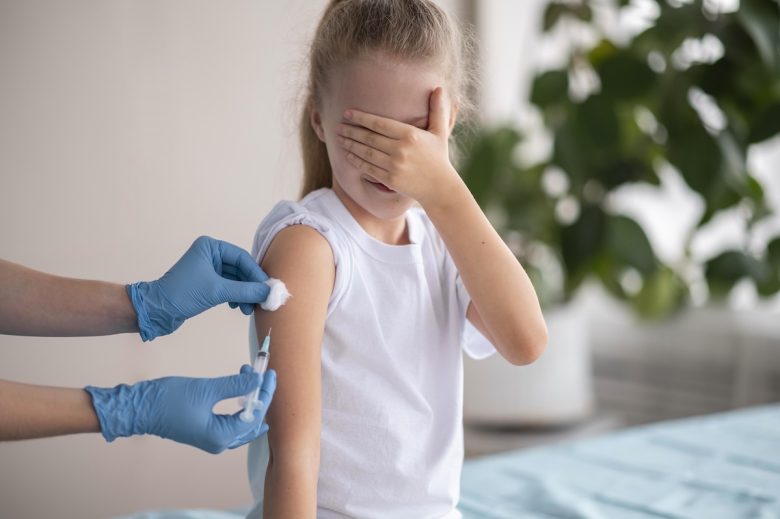
On the occasion of today’s launch of the national seasonal flu vaccination campaign for the 2026–2027 season, the Ministry of Health has detailed the protocol intended for vulnerable children. This protocol considers both age and immunization background, placing specialized focus on children living with chronic conditions or facing an elevated risk of health complications.
Preparations for the seasonal flu immunization campaign are moving into their operational phase. Starting Monday, the effort mobilizes healthcare centers across the entire nation. In line with this drive, the governing ministry has finalized the practical procedures for vaccinating children who exhibit factors of vulnerability.
In an official ministerial directive—issued under reference No. 26 on October 11, 2026, and distributed to CHUs, EPHs, EPSPs, as well as private facilities—the General Directorate of Prevention and Health Promotion outlined the requirements for delivering the influenza vaccine. Supplied by the Pasteur Institute of Algeria (IPA) in single-dose 0.5 ml vials, the vaccine has been available for collection at the institute’s Dely Ibrahim headquarters since October 21.
At the local level, the Health and Population Directorates (DSP) are leading the coordination efforts alongside public primary health establishments (EPSP). Their mission involves assessing the requirements for vaccination hubs, monitoring the progress of operations, and evaluating epidemiological indicators, particularly coverage rates and the reporting of potential adverse side effects.
Polyclinics, health centers, and Maternal and Child Health (PMI) facilities form the core reception network. The deployed medical teams systematically combine one physician, one administrative staff member, and two to three vaccinators, with staffing capacity adjusted to suit user flow.
Vaccination specifically targets children who present risk factors that could aggravate seasonal flu complications. Priority groups include children suffering from cardiovascular diseases, chronic respiratory ailments, metabolic conditions—such as diabetes and obesity—or severe kidney disorders.
The initiative also encompasses children living with congenital or acquired immunodeficiencies, HIV infections, underlying malignancies, asplenia, or sickle cell disease. For these groups, immunization serves as a crucial preventive measure against potentially severe forms of the illness.
A Protocol Tailored to Age and Vaccination History
Administration procedures vary depending on the child’s age and their prior immunization history against seasonal influenza. For children aged between 6 months and 9 years, the vaccine is administered intramuscularly. For an initial vaccination, two 0.5 ml doses are required, spaced four weeks apart. If the child has previously received a seasonal flu shot, a single 0.5 ml dose is sufficient.
For children over 9 years old, the schedule prescribes a single 0.5 ml intramuscular dose. Infants under 6 months old—who cannot receive direct flu vaccinations—must be safeguarded through indirect protection. Consequently, the ministry advises vaccinating their immediate circle under the “cocooning” approach, alongside strengthening preventive habits around at-risk individuals.
The ministry highlights that the provided flu shot is an inactivated vaccine, which can be safely administered at the same time as other vaccines included in the national immunization schedule.
The injection site depends on the age of the child. For infants and children aged 6 months to one year, the shot must be given in the anterolateral aspect of the thigh. For children older than one year, it is administered into the deltoid muscle in the upper arm.
Health authorities stress the strict adherence to this protocol across all participating facilities and its thorough dissemination among healthcare professionals. The ultimate goal is to guarantee tailored immunization for at-risk children and to strengthen their protection against seasonal flu complications.