

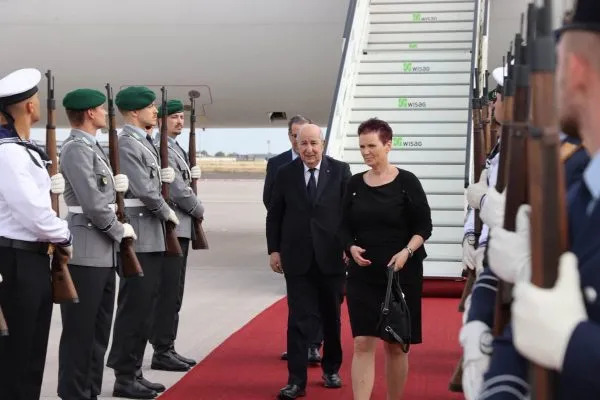
The visit to Algiers by German Foreign Minister Johann Wadephul, accompanied by a major delegation of industrial executives, marks a decisive turning point in bilateral economic partnerships. Received by President Abdelmadjid Tebboune and key energy leaders, the German official arrived to concrete commitments made in Berlin during July 2026. Beyond natural gas and LNG volumes, this strategic engagement lays foundations for a global alliance integrating green hydrogen, desalination, and massive technology transfer to Algerian industry.
Consolidating economic and industrial cooperation stands at the forefront of Algerian-German relations. The arrival of German Foreign Minister Johann Wadephul in Algiers alongside prominent business executives reflects a clear goal: boosting trade flows and accelerating cross-border investments. Energy occupies center stage in this renewed agreement, solidified during President Abdelmadjid Tebboune’s official visit to Berlin on July 16–17, 2026. Both nations are working to match economic exchanges with their high-level political dialogue.
Operational discussions took shape during an expanded working session between Johann Wadephul and Minister of State, Minister of Hydrocarbons Mohamed Arkab. This strategic meeting gathered key sector leaders, including representatives from the National Agency for the Valorization of Hydrocarbon Resources (ALNAFT), the Hydrocarbon Regulatory Authority, Sonatrach, and senior ministry officials. Germany deployed a top-tier industrial delegation featuring executives from technology and energy leaders including Bosch Energy, Thyssenkrupp Uhde, VNG, Siemens Energy, and the VDA association.
This detailed consultation continues the momentum established by both heads of state. Discussions spanned the entire energy value chain: oil and gas engineering, advanced infrastructure development, heavy equipment manufacturing for seawater desalination, and long-term natural gas and LNG marketing. Both partners set strict targets to integrate low-carbon technologies into extraction and processing facilities.
Green hydrogen and clean ammonia represent the technological core of this commercial partnership. Confronted by European Union energy transition mandates, Germany views Algeria as an indispensable partner. Algiers aims to supply 10% of Europe’s hydrogen demand by 2040, reinforcing its intent to diversify the continent’s energy mix.
Joint focus areas include designing, producing, and marketing green hydrogen through Sonatrach and the Energy Ministry, alongside localized manufacturing of specialized equipment such as electrolyzers. This industrial pillar incorporates training programs, technical assistance, knowledge transfer, workforce development, and climate initiatives targeting methane emission reduction and recovery.
The Algerian government reiterated its commitment to accelerating priority projects, specifically structuring a national petrochemical industry backed by German technical expertise. To realize these goals, the hydrocarbon sector provides tailored support and investment incentives for German firms establishing long-term operations locally.
Highlighting Algeria’s ongoing reliability as a major energy provider, the German diplomat confirmed his nation’s intention to participate in large-scale infrastructure projects, such as the South-2 Hydrogen Corridor (SoutH2 Corridor). Following his audience with President Tebboune, Johann Wadephul noted that Algeria holds the necessary advantages to serve as a key green energy hub for Europe. Finally, bilateral discussions covered global geopolitical issues, with the German minister noting consultations regarding the Russia-Ukraine conflict and its direct impacts on global food security.