

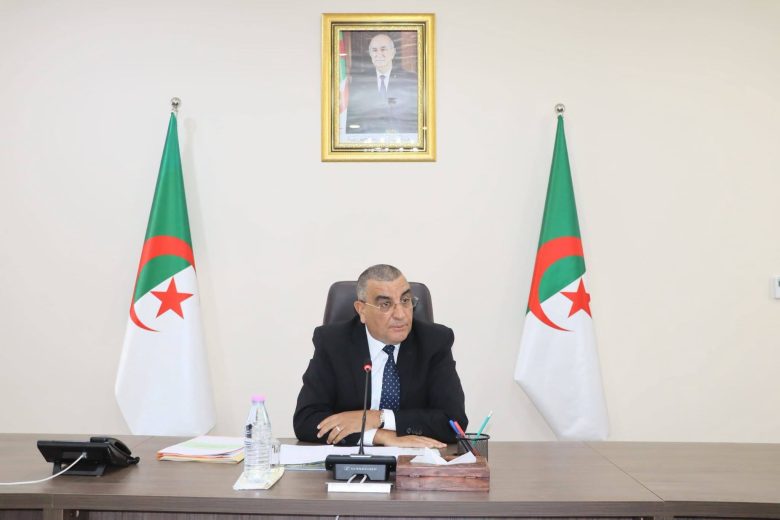
The Minister of Public Works and Basic Infrastructure, Abdelkader Djellaoui, chaired a coordination session on Tuesday dedicated to monitoring the condition and modernization of the national road and highway network. The meeting focused primarily on identifying hazardous high-accident zones, assessing ongoing maintenance progress, and establishing measures to boost safety while preserving infrastructure longevity.
Discussions commenced with a comprehensive presentation detailing the status of the national roadway system. Officials conducted a thorough review covering overall road conditions, segments designated as high-risk black spots, and the status of active maintenance operations.
The session also provided an opportunity to evaluate technical assessment studies already initiated or completed for these designated road sections and key engineering structures. Public works directors, testing laboratories, and engineering consultancies presented findings from their technical evaluations alongside remedial actions undertaken to address black spots, according to a ministry statement. The press release noted that the meeting, conducted via videoconference, gathered senior ministry officials, provincial public works directors, and heads of technical research centers and testing laboratories operating under the sector.
Following the presentations and deliberations, the minister issued a series of directives aimed at accelerating field interventions and tightening network oversight.
He ordered the swift completion of all ongoing technical studies while calling for immediate assessments of remaining roadway sections classified as high-risk locations. These evaluations are intended to pinpoint the root causes of road deterioration and determine suitable engineering solutions.
The minister further stressed the necessity of addressing hazardous zones continuously and conducting routine inspections of engineering structures to maintain their physical condition, durability, and operational availability.
User safety stood as a major priority highlighted throughout the meeting. To this end, Djellaoui instructed responsible officials to enhance both horizontal and vertical road markings across every corridor of the highway network.
Special attention must also be paid to active construction zones, particularly night-shift work sites, through the placement of proper warning signs and protective barriers to ensure the safety of motorists and field workers alike.
Furthermore, the minister urged the rapid completion of ongoing maintenance works while stepping up routine servicing across local maintenance units, regional public works directorates, and Algerian Highways. This approach aims to guarantee rapid response times and keep the national road network fully operational.
In the same vein, Djellaoui emphasized strengthening collaboration among central agencies, regional public works departments, testing labs, engineering consultancies, and partner entities.
He called for mobilizing all required human and material resources to finalize expert studies swiftly, implement emerging recommendations, and ensure immediate repairs on segments and structures requiring intervention.
The minister also directed officials to begin immediate preparations for the upcoming autumn and winter seasons by executing a preventive maintenance plan across the road and highway system.
This initiative will center on regular field inspections to monitor the structural integrity of bridges and overpasses, taking necessary preventive measures to guarantee their preservation, longevity, and uninterrupted operation.
Additionally, the minister reaffirmed that preserving the road network remains a permanent priority for the sector given its vital role in driver safety.
In this context, he called for maintaining continuous field oversight, accelerating work speed, and enforcing strict compliance with issued directives, aiming to elevate service quality and preserve core transport infrastructure over the long term.