

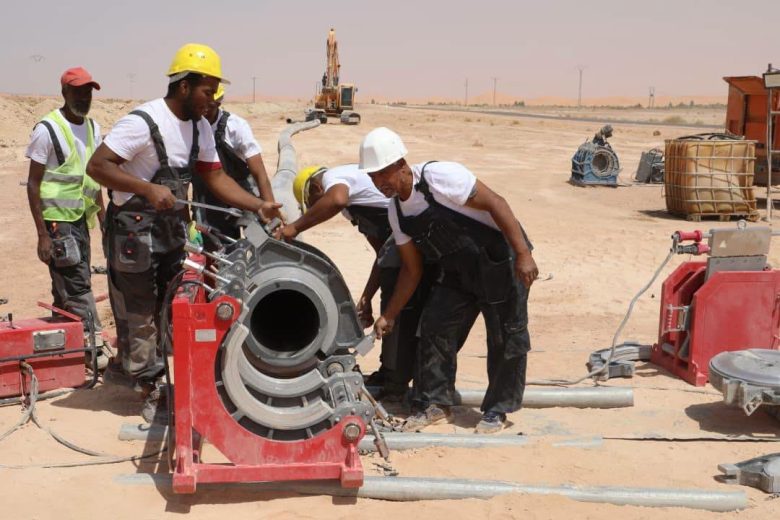
Considered one of the country’s most essential strategic hydraulic initiatives, the South-South water transfer project holds paramount significance. Its primary mission is to sustainably secure drinking water supplies and propel economic development across Saharan regions. Minister of Hydraulics Lounes Bouzegza emphasized the role of this infrastructure in reinforcing water security throughout the South, insisting on the necessity of accelerating operations and adhering strictly to delivery timelines.
Speaking from the province of Beni Abbes, where he conducted a working and inspection visit Saturday, the minister highlighted the importance of the South-South water transfer endeavor, designating it among the premier strategic works designed to fortify water security across southern territories.
Inspecting the drinking water pipeline project running from the Zeghamra area toward the city of Beni Abbes, the minister noted that one of the major programs registered within the sector involves completing the foundational study for the South-South scheme. This vast conveyance grid will stretch across nearly 1,300 kilometers, extending from the province of Bechar through Beni Abbes all the way to Tindouf. The network will strengthen hydraulic interconnection between southern provinces, secure supplemental water resources to support regional urban and economic expansion, and guarantee a dependable drinking water supply.
Accompanied by the governor of Beni Abbes, Mr. Bouzegza insisted on speeding up construction work on the transfer system from Zeghamra and respecting completion deadlines so that residents of Beni Abbes can benefit as swiftly as possible.
The minister also attended a presentation detailing the condition of the hydraulic sector across the Beni Abbes province, delivered by the local director of hydraulics, covering existing water resources, ongoing programs, and scheduled development initiatives.
During his address, Mr. Bouzegza stated that the water sector actively supports the developmental momentum sweeping the province—a trend marked by urban growth and demographic expansion that requires intensified efforts to satisfy escalating water demand. He praised the progress registered in the province and called for a complete mobilization of all stakeholders to sustain this momentum over the long term.
The minister further noted that sector indicators across the province of Beni Abbes remain positive, while re-emphasizing the necessity of ensuring a regular supply of drinking water. Additionally, he underscored the strategic value of reusing treated wastewater, describing it as a vital choice to conserve primary water reserves reserved for human consumption.
Recalling that the province of Beni Abbes has benefited from substantial, structure-defining sectoral programs, the minister underscored the need to bolster coordination among various players, particularly local administrative authorities, to guarantee the optimal completion of these projects and reach established development goals.
Throughout his tour, the hydraulics chief inspected several additional facilities within his domain, including the wastewater treatment plant in the municipality of Beni Abbes. Featuring a operational capacity of 2,000 cubic meters per day, the facility meets the daily needs of approximately 20,000 inhabitants. Following a technical briefing on plant operations, he stressed the necessity of maintaining optimal exploitation standards and keeping equipment in top condition through systematic maintenance routines.